

Renewable energy development has moved fast enough in recent years that site selection has quietly become one of the hardest parts of the whole process. The demand for viable land is outpacing supply in many markets, and the gap between “available” and “actually buildable” is much wider than most developers expect when they start looking. A parcel that checks the size and cost boxes can still fail on grid access, zoning, environmental review, or community support-often more than one of those at once.
That’s why more developers are taking a more disciplined approach to site selection, using platforms like Realmo to look beyond simple availability and identify sites that can realistically move through permitting and into production without costly delays.
Experienced teams have started treating site selection less like a real estate task and more like a strategic discipline. The decisions made early in the search-which regions to prioritize, which site types to evaluate, how to engage with regulators before submission-tend to shape project timelines and economics more than most of the decisions that come later.
What Makes a Site Actually Viable
The starting point is understanding that not all land can support a renewable energy project, regardless of how open and affordable it looks. Each project type has hard requirements that can’t be engineered around, and evaluating those requirements before getting attached to a specific site saves a lot of time.
For solar projects, the non-negotiables typically include:
- Sufficient acreage with flat or gently sloping topography
- Minimal shading from trees, structures, or terrain
- Strong solar irradiance for the region
- Manageable environmental sensitivities (wetlands, habitat corridors)
For wind projects, the list looks different:
- Consistent, measurable wind speeds at viable elevations
- Enough setback distance from residences and sensitive land uses
- Access for large equipment during construction
- Structural capacity in the soil for turbine foundations
For battery storage and grid infrastructure projects, the critical factor is usually proximity to existing transmission infrastructure – which brings us to the variable that filters out more sites than anything else.
Grid Access Is the First Filter, Not an Afterthought
It’s tempting to find a promising parcel and then check on grid connectivity. In practice, the teams that move fastest do it the other way around – they start with the transmission map and work outward. A site that requires a multi-mile interconnection upgrade to reach the nearest substation can add years and millions to a project budget. That math rarely improves over time.
What to actually look for when evaluating grid access:
- Distance to the nearest substation and its available capacity
- Whether transmission lines run through or adjacent to the site
- Current queue depth at the relevant interconnection point
- Whether the utility has a history of timely interconnection approvals in that region
None of this requires a full interconnection study at the initial screening stage, but it requires enough due diligence to know whether a site is grid-viable before deeper analysis begins.
Zoning and Permitting: Know Before You Commit
Zoning for renewable energy varies enormously – between states, between counties, and sometimes between adjacent parcels in the same municipality. Some jurisdictions have created dedicated pathways for clean energy development with clear timelines and defined criteria. Others require conditional use permits, environmental impact studies, and multiple rounds of public comment before ground can be broken.
The permitting landscape can make or break project economics as much as the land cost itself. A few things worth understanding before committing to a site:
- Whether renewable energy is a permitted or conditional use in the current zoning classification
- How long the local permitting process typically takes, including appeals
- Whether the jurisdiction has a track record of approving similar projects
- What state-level requirements apply in addition to local ones
- Whether any protected resources (wetlands, endangered species habitat, historic sites) trigger federal review
Surprises at the permitting stage are almost always the result of insufficient research at the site selection stage. The information is usually available – it just requires talking to the right local planning officials early, which most developers are reluctant to do before they’re further along.
Three Site Types Worth Knowing
Not every renewable energy project needs greenfield land. In fact, some of the most practical opportunities come from sites that have already been used for something else.
Brownfield sites – former industrial properties, closed landfills, contaminated parcels – have a few things working in their favor. They often come with existing grid infrastructure nearby, they typically face less community opposition than developments on open land, and in many states they qualify for additional incentives specifically tied to clean energy redevelopment. The trade-off is environmental remediation, which adds cost and timeline complexity that has to be modeled carefully before the economics make sense.
Agricultural and rural land remains the default for large-scale solar and wind because of scale and cost. Lease rates in rural markets are generally lower than industrial land, zoning tends to be more permissive, and there’s room for the footprint that utility-scale projects require. The limitation is distance from transmission – which loops back to the grid access issue above.
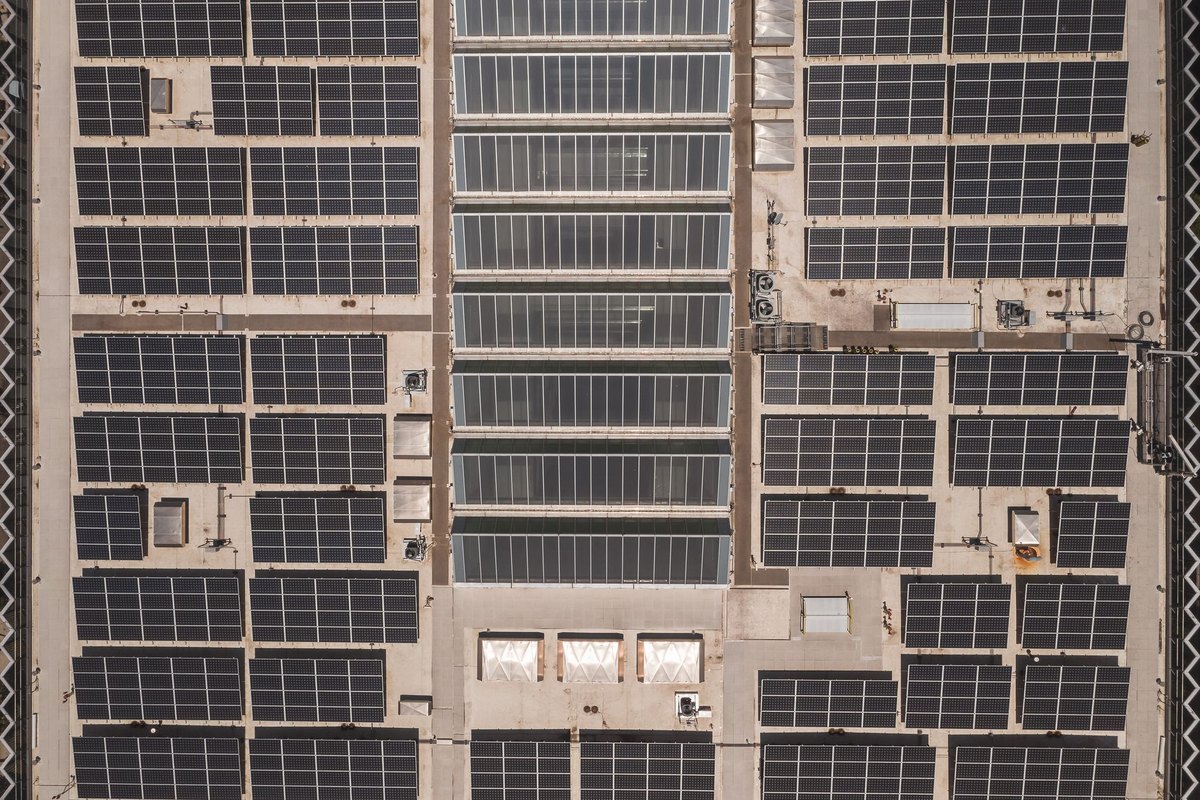
Existing industrial facilities and warehouses are an underused option for battery storage, microgrid installations, and rooftop solar. These buildings already have structural capacity, grid connections, and often the permits needed for energy-related uses. For developers who can move quickly on the right building, they offer a faster path than greenfield development.
How to Actually Find Sites
The best sites rarely come through passive search. A few sourcing approaches that consistently surface better opportunities:
- Working directly with local industrial brokers who understand both the real estate market and the energy development context in their region
- Engaging planning and economic development offices early – they often know about available land before it hits any public listing
- Using GIS mapping tools to overlay grid infrastructure, land characteristics, zoning classifications, and environmental constraints simultaneously
- Reaching out directly to landowners in target areas, particularly for agricultural parcels where owners may be open to long-term lease structures that provide income without requiring a sale
- Monitoring utility interconnection queue data, which can reveal where other developers are already looking – and where capacity may be constrained
Off-market opportunities are where some of the best sites exist. Landowners who haven’t formally listed a parcel but would be receptive to a well-structured lease often don’t know to advertise it. Direct outreach takes more time but tends to yield better terms and less competition.
Financial Viability: What the Numbers Actually Depend On
A site that looks attractive on paper can look very different once all the site-specific costs are in the model. The variables that matter most:
- Grid interconnection costs, including any upgrades required to the local distribution or transmission system
- Land acquisition or lease costs over the project life
- Permitting and environmental review costs, including legal support for complex approvals
- Any remediation costs for brownfield sites
- Ongoing land lease payments, maintenance access, and decommissioning obligations
On the incentive side, federal tax credits for clean energy development remain significant in the US, and many states layer additional programs on top of those. Where a project is located – and when construction begins relative to credit eligibility windows – can have a meaningful impact on returns. These incentive structures are worth mapping out early, not as a reason to choose a site, but as a factor that legitimately influences the economics.
The Mistakes That Slow Projects Down
Most project delays in renewable energy development are predictable in hindsight, and most of them trace back to the site selection phase:
- Assuming grid proximity equals grid access without verifying interconnection capacity
- Underestimating permitting timelines in jurisdictions with complex approval processes
- Skipping community engagement until opposition is already organized
- Choosing the lowest-cost land without fully modeling the infrastructure upgrade costs it will require
- Failing to account for environmental review timelines in the project schedule
The teams that move projects from site selection to construction fastest tend to be the ones who treat each of these as a real risk to be evaluated and managed, rather than a box to check on the way to groundbreaking.
What a Disciplined Site Search Actually Looks Like
In practice, renewable energy site selection that avoids these problems tends to follow a consistent pattern. It starts with grid – identifying where capacity exists before evaluating land. It layers in zoning and permitting landscape – understanding which jurisdictions are developer-friendly and which aren’t. It applies physical and environmental screens to narrow the field. And it reaches for off-market opportunities and local relationships rather than waiting for listed inventory to surface something viable.
The sites that meet all of those criteria are genuinely scarce in many markets right now. Finding them faster, and understanding their real economics more completely, is increasingly the thing that separates projects that get built from ones that stay in the development pipeline indefinitely.