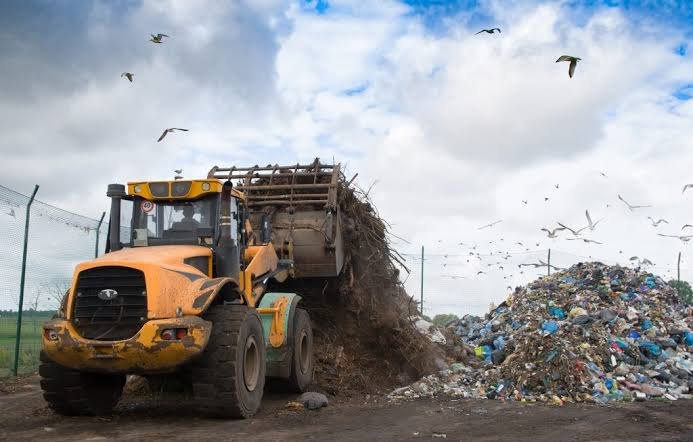

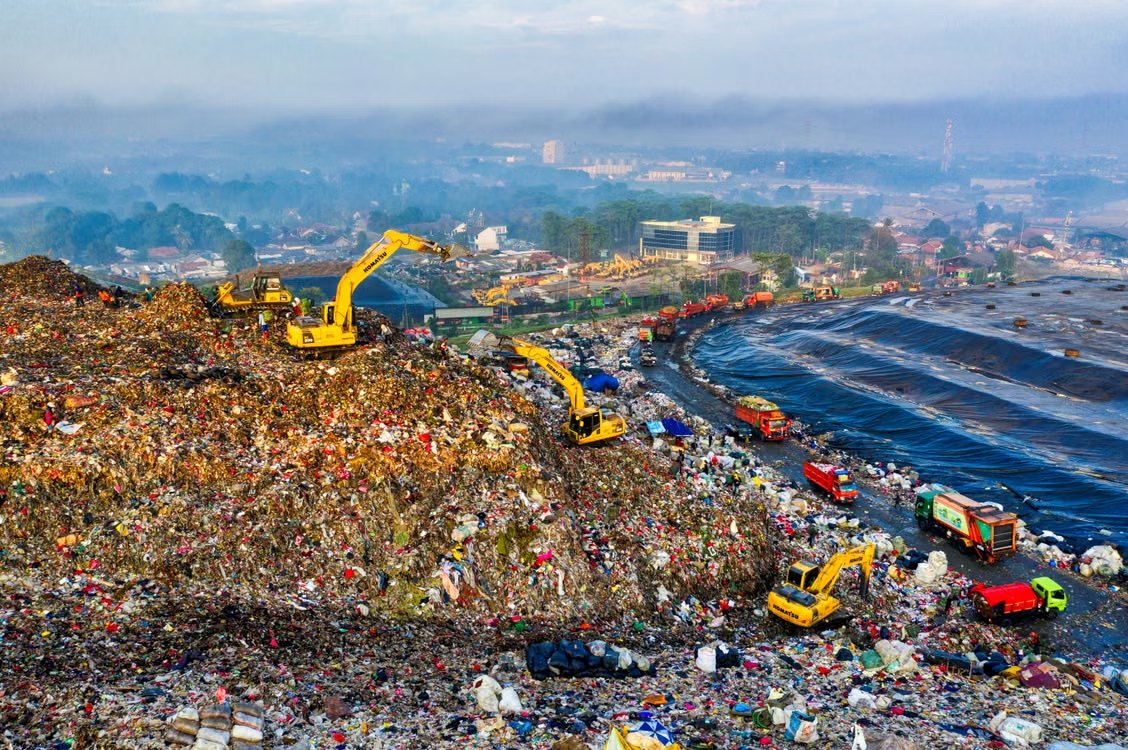
Rain does not simply disappear when it hits a landfill. You might think that the water soaks straight through the rubbish, into the ground below. You may also assume every drop becomes polluted once it reaches the site. Neither is true.
As rain moves through layers of waste, it picks up contaminants. Dissolved chemicals, heavy metals, and organic residues mix with the water and change its composition. This toxic liquid is called leachate.
Some landfills are designed better than others. There are ones engineered to control what happens to rainwater as it falls. Slopes and covers may direct it away to prevent contaminants. That makes effective landfill design a crucial consideration. It spells the difference between water that safely runs off and water that becomes a long-term environmental hazard.
In This Article:
The Two Paths Rainwater Can Take
Two things can happen: it either runs off the surface or sinks into the waste.
Surface runoff is the better option. The goal is to move clean water away as quickly as possible, away from decomposing garbage. Caps and covers push water away before entering the site. It flows through ditches and empties into retention or collection ponds.
The second path is infiltration. Rain seeps into the waste layer and moves through decomposing material. Water starts absorbing contaminants as it happens.
Several factors decide which route rainwater takes:
- Compaction: Densely packed waste leaves fewer gaps for water to infiltrate.
- Cover: Impermeable synthetic materials allow water to run off easily.
- Slope: Steeper grades encourage faster runoff. A flatter area lets water pool and sink.
- Rainfall Intensity: Heavier rains can overwhelm even strong systems.
- Site Maintenance: Older and poorly maintained covers develop cracks and weaken over time.
How Rainwater Becomes Leachate
Rainwater is generally dirty. It becomes even dirtier once it flows downward through different types of waste in a landfill. This initial step is known as infiltration. It happens through the entry of surface water and precipitation.
It is followed by percolation. It is during this state when gravity pulls the water downward. The process becomes slower the denser the waste is.
As the water passes through every layer, extraction or leaching begins. Water dissolves salts, absorbs acids, and picks up heavy metals. It is no longer rainwater by the time it reaches the bottom. It is now leachate.
Types of Leachate
- Young Leachate: Comes from landfills that are less than five years old. Highly biodegradable, making biological treatments effective.
- Intermediate Leachate: Comes from landfills between five and ten years old. The liquid becomes less biodegradable.
- Mature Leachate: Comes from landfills more than ten years old. Very low biodegradability and requires advanced chemical treatments.
Different Strategies for Leachate Treatment
There’s no single approach that works best for managing leachate in landfills. The composition of leachate changes based on the age of the landfill and the waste it holds.
Effective treatment begins with a thorough diagnosis. That’s exactly how ProChem approaches it. A team of chemists and chemical engineers analyses representative water samples to determine the best way to deploy and optimize treatments.
Biological Treatment
This approach relies on microorganisms to break down organic material naturally. Aerobic treatment uses oxygen to speed up the process. Degradation is faster, but it has a high energy requirement because of the need for continued aeration. On the other hand, anaerobic treatment relies on anaerobic bacteria instead of oxygen. No aeration is necessary, so it consumes lower energy.
Common systems for biological treatments include:
- Sequencing Batch Reactors: A single tank processes leachate in timed stages, cycling through phases that include filling, reacting, settling, decanting, and idling.
- Activated Sludge Process: A suspended mix of microorganisms and oxygen breaks down organic matter in an aeration tank.
- Trickling Filters: An aerobic biological reactor uses coarse support media. A rotating distributor sprays to form a biofilm on the surface, allowing air to circulate upward.
Chemical Treatment
When biological treatments or microorganisms prove insufficient, chemical processes may provide a more effective alternative. Heavy metals and resistant organic compounds are harder to break down, making specific chemicals a better choice.
Aside from the removal of toxic metals from the liquid, chemical agents also eliminate obnoxious odors. They work regardless of the leachate’s age. A major drawback, however, is that it is costlier to administer.
The most common chemical treatments include:
- Chemical Precipitation: Added chemicals, such as sodium hydroxide or calcium hydroxide, increase the pH level. They dissolve metals into solid particles for easier mechanical separation.
- Coagulation and Flocculation: Using salts or polymers binds suspended particles into larger clumps that settle or filter out easily.
- Advanced Oxidation Processes: Strong oxidants generate reactive hydroxyl radicals that tear down organic molecules that resist other treatments.
Membrane Filtration
Instead of biological breakdown or chemical reaction, membrane filtration relies on advanced physical separation. Pressure pushes leachate through a membrane. Clean water enters tiny pores. Contaminants are left behind as a concentrated waste stream.
Here are the most common membrane types:
- Reverse Osmosis: Up to 99% of contaminants are blocked by forming the tightest barrier.
- Nanofiltration: Pores are slightly larger compared to reverse osmosis. Some salts can still pass through while it removes most organic molecules.
- Ultrafiltration: Often used as a pretreatment, it uses membranes with relatively large pores to get rid of suspended solids and bacteria.
Integrated Approaches
Success does not hinge on a single effective strategy in most cases of leachate treatment. Optimal results often require a combination of approaches implemented in stages. Each phase removes a different group of contaminants.
Biological treatment is often the first step. The goal at this point is to strip organic load while keeping costs low. What remains moves through chemical treatment, targeting heavier metals that bacteria cannot break down. Dissolved salts and stubborn compounds may remain, promoting the need for membrane filtration.
The approach results in better removal rates compared to using only one treatment. Every phase has a specific target. They also reduce overall costs and energy demands. It may be more efficient compared to immediately resorting to a more intensive process.
Why the Conversation Matters
Understanding what happens to rain after falling on a landfill shapes how communities manage waste and protect everything that surrounds it. Rain only lasts a few hours. Its impact on the landfill, however, has long-term repercussions.
Once water reaches buried waste, the resulting leachate must be properly managed to prevent contaminating soil and water. Gas emissions, odors, and vapors even threaten air quality. As such, proper treatment should not be an afterthought.
Landfills must be designed with leachate treatment in mind. Conversations must center not just on the effects, but on what can be done to mitigate the impact.