
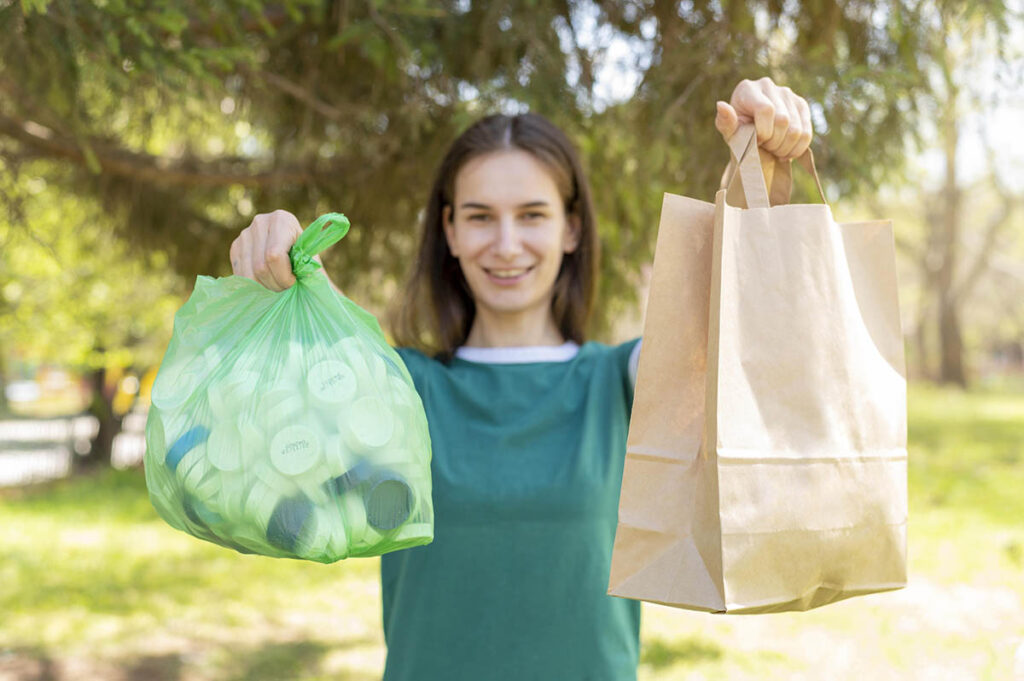
Biodegradable trash bags are made to break down over time instead of staying in the environment for decades like regular plastic. People use them because they want a more practical option for everyday messes, from kitchen waste to dog poop to yard cleanup.
They can be a useful step when disposable bags are still necessary, while reusable options like canvas tote bags can help reduce the need for single-use bags in the first place. That said, not all biodegradable bags work the same way. Some break down faster than others. Some need the right mix of heat, moisture, and air. Some are better for trash, while others are better for compost or pet waste. This guide explains the differences, where these bags make sense, and how to choose the right one.
In this article:
What Are Biodegradable Bags?
Biodegradable bags are single-use bags designed to break down over time. They are often used for trash, pet waste, food scraps, and outdoor cleanup.
That sounds simple, but there is an important catch: “biodegradable” does not always mean “breaks down quickly everywhere.” A bag may break down much faster in the right conditions than it would in a dry garage, a packed landfill, or a cold outdoor bin.
This is why two bags can both be labeled biodegradable and still perform very differently. One may work well for kitchen scraps. Another may be better for daily household trash. Another may only break down properly in a commercial composting system.
The main thing to remember is this: biodegradable does not mean magical. It still matters how the bag is made, how you use it, and where it ends up.
Biodegradable vs Compostable
Biodegradable and compostable are related, but they are not the same.
A biodegradable bag is a bag that can break down over time. A compostable bag is a bag that is meant to break down into natural material under composting conditions.
In everyday terms, compostable is usually the more specific term. It tells you the bag is made for organic waste and compost systems. Biodegradable is broader. It tells you the bag can break down, but not exactly how fast, where, or under what conditions.
A simple way to think about it:
- Biodegradable = breaks down eventually
- Compostable = breaks down properly in composting conditions
When should you use each one?
- Use biodegradable trash bags or biodegradable garbage bags for general waste when you want an option that is better than standard plastic.
- Use biodegradable compost bags or compostable liners for food scraps and organic waste bins.
- Use biodegradable dog poop bags when you need a practical bag for pet waste, but do not assume they belong in your home compost pile.
If you are dealing with food scraps, compostable is usually the better fit. If you are lining a trash can or picking up after a dog, biodegradable waste bags may be the more common option.
Types of Biodegradable Bags
Biodegradable bags come in a few common types, and each one suits a different job.
Trash and garbage bags
Biodegradable trash bags are the most familiar option. These are the bags people use in bathroom bins, bedroom trash cans, kitchen cans, and office baskets.
They usually come in common sizes such as small bathroom liners, 4-gallon, 8-gallon, and 13-gallon biodegradable trash bags. The best ones balance two things at once: they hold up during use, and they still break down more easily than regular plastic over time.
These are a good fit for daily waste like tissues, packaging, paper, and light food-related trash.
Plastic-style bags
Some biodegradable bags look and feel a lot like regular plastic. That makes them convenient because they are familiar, flexible, and often leak resistant.
This category includes many biodegradable waste bags, biodegradable dog poop bags, and small liners for kitchen or bathroom bins. They are useful when you want the feel of a regular bag without using a standard plastic option.
The important point here is that “plastic-style” does not mean they all belong in the same waste stream. Some are made for trash. Some are made for compost. Always check the label before assuming.
Paper bags
Paper bags are another biodegradable option, especially for dry cleanup jobs.
They are often used as biodegradable yard waste bags for leaves, grass clippings, and light garden debris. Paper bags are simple, breathable, and easy to use for outdoor cleanup. They are not ideal for wet household trash, but they can be excellent for yard work and certain dry recycling or storage needs.
If you want a bag for leaves and sticks more than kitchen waste, paper can be the easiest choice.
Common Uses for Biodegradable Bags
Biodegradable bags make the most sense when the job still calls for a disposable bag. Here is where they are commonly used.
Household trash
Biodegradable garbage bags are often used for daily household waste because they are familiar and convenient.
For a bedroom, bathroom, or office can, a light or medium-strength bag is usually enough. For a kitchen can, especially a 13-gallon bin, you need something stronger because the load is heavier and often wetter.
Good uses include:
- daily trash
- paper waste
- snack wrappers
- tissues
- light kitchen waste
For heavy, sharp, or very wet garbage, strength matters more than the label on the box. A weak bag that tears easily is not a good buy, even if it is marketed as eco-friendly.
Kitchen use
Kitchen trash is where many people first try biodegradable bags. That makes sense because the kitchen creates the most daily waste.
A kitchen liner can work well for food packaging, napkins, and light waste. But if your main goal is food scraps, coffee grounds, fruit peels, and leftovers, biodegradable compost bags are often a better match than standard trash liners.
The key is choosing the bag for the actual job. General kitchen trash and food scrap collection are not exactly the same thing.
Dog and pet waste
Biodegradable dog poop bags are one of the most searched-for options because they solve a very specific everyday problem. They are easy to carry, easy to use, and easier to feel good about than regular plastic dog bags.
They are useful, but it helps to stay realistic. They are still single-use bags. They are still handling pet waste. And they are not all meant for home composting.
Choose them for convenience and a better material choice, not because they make pet waste disappear overnight. For dog walks, look for bags that are thick enough to avoid leaks and easy to tear from the roll.
Yard waste
Biodegradable yard waste bags are helpful for leaves, weeds, grass clippings, and seasonal cleanup.
Paper yard bags are often the simplest option here because they are sturdy enough for dry or slightly damp yard waste and easy to fill while working outside. They also sit open more easily than floppy plastic-style bags, which makes cleanup faster.
If your local yard waste pickup accepts paper lawn bags, this can be one of the most practical uses for biodegradable bag products.
Compost and food waste
Biodegradable compost bags are meant for organic waste such as:
- fruit and vegetable scraps
- coffee grounds
- tea leaves
- eggshells
- food-soiled paper, where accepted
These are useful in a countertop compost bin or a small kitchen pail because they keep cleanup easier and reduce the “gross factor” of handling food scraps.
Still, compost bags need the right end point. Some work best in municipal or commercial compost systems. Some may break down more slowly in home compost. It is worth checking the packaging so you buy the right kind for your setup.
Reduce vs Replace
Biodegradable bags are better in some situations, but they are still disposable. That is why the smartest long-term habit is not only to replace some bags, but also to reduce how many you use in the first place.
A simple example is shopping. Instead of using disposable store bags every week, a canvas tote bag can handle groceries, errands, library books, and everyday carry jobs again and again. It is stronger, easier to keep in the car, and better suited to repeat use.
That does not mean reusable bags replace every disposable bag. They do not. You still need bags for trash, dog waste, food scraps, and messy cleanup. But it makes sense to save biodegradable bags for jobs where disposal is actually necessary.
A practical rule is this:
- Use canvas tote bags and other reusables for shopping and carrying
- Use biodegradable trash bags when you truly need a disposable liner
- Use biodegradable dog poop bags and compost bags for specific cleanup jobs
That approach is simple, useful, and realistic.
How Long Do They Take to Break Down?
Biodegradable bags can take weeks, months, or even longer to break down depending on the material and the environment.
A paper yard bag may break down fairly quickly when it gets wet and exposed to air. A compost bag may break down faster in an active compost system than in a regular trash bin. A biodegradable trash bag in a landfill may take much longer because landfills do not always offer the air and moisture needed for fast breakdown.
So the honest answer is: it depends.
The biggest factors are:
- heat
- moisture
- airflow
- sunlight in some cases
- whether the bag is meant for compost or general trash
This is why expectations matter. A biodegradable bag is not an instant solution. It is simply a material choice that can be better suited to breakdown over time than standard plastic.
How to Choose the Right One
The right bag depends more on use case than marketing.
Here is a simple way to choose:
| Use case | Best starting point | What to look for |
| Bathroom or bedroom trash | Small biodegradable garbage bags | Light strength, good fit |
| Kitchen can | 13-gallon biodegradable trash bags | Medium to heavy strength, leak resistance |
| Dog walks | Biodegradable dog poop bags | Tear easily, seal well, no leaks |
| Yard cleanup | Biodegradable yard waste bags or paper bags | Large capacity, stand-up shape |
| Food scraps | Biodegradable compost bags | Compost-friendly use instructions |
A few buying tips make the choice easier.
1. Start with size
A bag that is too small is frustrating. A bag that is too large wastes material.
Check your can size first. Common sizes include small bathroom liners, 3-gallon bags, 8-gallon bags, and 13-gallon kitchen bags. The right fit matters just as much as the bag material.
2. Match strength to the job
Light dry waste does not need a heavy-duty liner. Wet kitchen waste does. Yard debris may need a larger, sturdier bag. Dog waste bags should be thick enough to avoid tearing when you are in a hurry.
3. Read the label carefully
Some bags are made for trash. Some are made for compost. Some are only marketed as biodegradable in a very broad sense.
Look for clear instructions about what the bag is meant for and where it should go after use.
4. Notice quality details
A good bag usually has:
- reliable seams
- decent thickness
- a size that matches the bin
- clear use instructions
- packaging that does not make vague promises
If the claims sound big but the details are missing, move on.
Best Options: General Guidance
The best biodegradable trash bags are the ones that fit your actual routine.
For most homes, that means choosing different bags for different jobs instead of trying to find one perfect bag for everything.
A smart setup looks like this:
- a medium or strong kitchen liner for daily trash
- small biodegradable garbage bags for bathroom or office bins
- biodegradable dog poop bags for walks and pet cleanup
- paper or other biodegradable yard waste bags for leaves and grass
- biodegradable compost bags for food scrap bins
Bulk buying makes sense when you use the same size and type every day. Dog poop bags, small can liners, and 13-gallon kitchen bags are good bulk-buy candidates because they get used regularly. Yard waste bags usually make more sense to buy seasonally.
What should you avoid?
Avoid bags that are too thin for the job. Avoid using compost bags for heavy trash unless they are clearly made for it. Avoid vague “eco” claims with no clear use instructions. And avoid assuming every biodegradable bag belongs in compost or breaks down quickly in every setting.
FAQ
Are dog poop bags biodegradable?
Some are. Biodegradable dog poop bags are widely available, but not every dog waste bag is biodegradable. Check the label, and do not assume a biodegradable dog bag is suitable for home compost.
Are paper bags biodegradable?
Yes. Paper bags are biodegradable and are often a good choice for yard waste, leaves, and other dry cleanup jobs.
What are biodegradable bags?
Biodegradable bags are single-use bags designed to break down over time. They are used for trash, pet waste, compost collection, and yard cleanup, depending on the bag type.
Are biodegradable trash bags the same as compost bags?
No. Biodegradable trash bags and biodegradable compost bags are not always the same. Compost bags are made for organic waste and composting conditions, while trash bags are usually made for general waste.
What are the best biodegradable trash bags?
The best biodegradable trash bags are the ones that match your bin size, waste type, and daily use. For most people, that means choosing the right size, checking strength, and buying from a brand that gives clear disposal instructions.