
Renewable energy assets fight corrosion every day. The tools used to fight it don’t have to create a waste problem of their own.
Wind turbines, hydropower gates, and solar mounting structures share one thing in common: they spend their entire working lives outdoors, in weather, and corrosion never takes a day off. Keeping these assets clean and sound is a permanent part of operations and maintenance — and for decades, the default toolkit has been chemical strippers, wire brushes, and abrasive blasting.
That toolkit works. It also generates a waste stream of its own: spent solvents, used blasting media, and rinse water carrying dissolved coating residues. For an industry whose entire premise is a cleaner energy future, that is an uncomfortable contradiction — and it is one reason maintenance teams across the renewable sector have started looking at laser cleaning.
In This Article:
Where Corrosion Shows Up on Renewable Assets
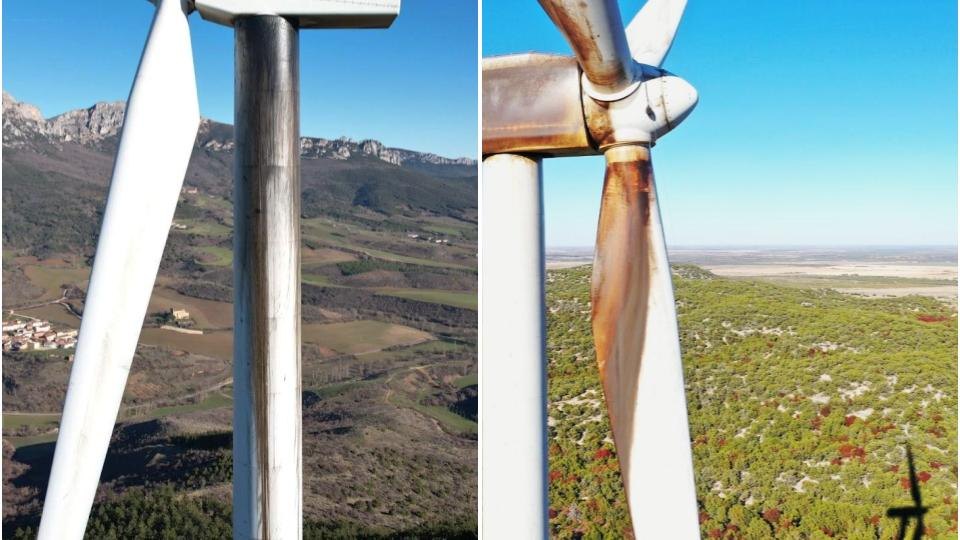
The corrosion problem on renewable energy infrastructure is constant but uneven. Wind turbine towers and nacelle components see coating damage at bolted connections, access platforms, and base flanges, where moisture collects and coatings wear first. Hydropower plants face a harsher case: gates, penstocks, and trash racks sit in permanent or intermittent contact with water, and rust blooms between inspection cycles. Ground-mounted solar structures — particularly in coastal or agricultural environments — develop surface rust on mounting rails and fixings years before the panels themselves age out.
None of this threatens a plant overnight. But surface rust left alone becomes coating failure, coating failure becomes section loss, and section loss becomes a structural repair that costs orders of magnitude more than the cleaning job that would have prevented it.
The Hidden Waste Stream in Traditional Prep
Before any recoating or inspection can happen, old rust and coating have to come off. The conventional methods each carry an environmental bill.
Chemical strippers generate contaminated solvent that must be collected and disposed of as hazardous waste. Abrasive blasting produces spent media — and where the old coatings contained lead, chromium, or other regulated substances, that media is contaminated waste requiring controlled handling. On remote sites, and most renewable assets are remote, every kilogram of that waste has to be hauled out from locations that were expensive to reach in the first place. Runoff control adds another layer of setup: containment, tarps, and wash water management around work that would otherwise take an afternoon.
The result is that rust removal, a task measured in hours, becomes a logistics exercise measured in days.
What Laser Cleaning Changes
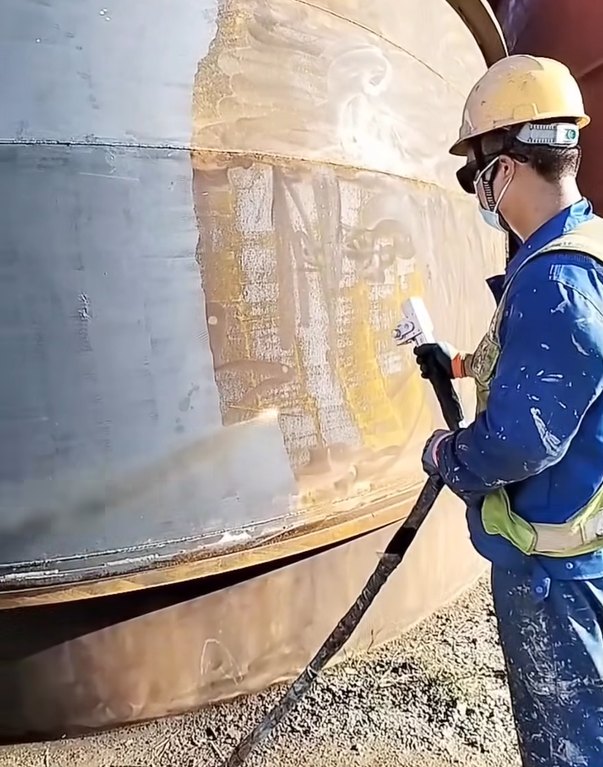
Laser cleaning removes rust, coatings, and contamination by vaporizing them with short, concentrated pulses of light. The substrate beneath reflects most of the energy and stays intact. There is no blasting media to buy or dispose of, no solvent to collect, and the removed material becomes a fine particulate that a fume extraction unit captures at the source.
For renewable energy maintenance, three practical properties matter more than the physics. First, it works in place. A turbine tower section, a gate leaf in its guide, or a mounting rail does not need to be dismantled or hauled to a workshop — a modern laser cleaning machine is portable enough to come to the asset, which matters enormously when the asset is at the end of a mountain road or on a river structure. Second, it is selective. Operators can remove rust from a bolted joint without touching the coating three centimeters away, which is exactly the kind of targeted work remote-site maintenance demands. Third, it is dry. No water means no runoff management, a significant simplification on sites near waterways — which describes most hydropower facilities.
Where It Doesn’t Belong
An honest assessment has to include the limits, because they are real. Photovoltaic glass and anti-reflective coatings should never be cleaned with lasers — the energy will damage the surface, and panel cleaning belongs to brushing and water-based systems. Delicate anodized or galvanized finishes can be altered by aggressive settings. And where corrosion has progressed to significant section loss, cleaning is only the first step; the metal still needs engineered repair. Laser cleaning is a maintenance tool, not a restoration miracle, and treating it as one is how equipment gets damaged.
Surface preparation before recoating remains one of its strongest roles: a clean, dry, profiled surface helps new coatings bond properly, extending the repainting interval and compounding the environmental saving over the asset’s life.
Practical Notes for O&M Teams
Teams considering laser cleaning for plant maintenance should weigh four things. Match the power class to the work: light surface rust on thin sections asks for different parameters than mill scale on thick tower steel. Check access and power supply at the work location, since portable units need a generator or grid connection. Budget for laser safety — eyewear, controlled zones, and operator training are non-negotiable. And run a trial on the actual asset, not a demo plate, before committing to a program.
Manufacturers such as Yihai Laser publish application guidance for exactly these decisions, and a credible supplier will insist on sample trials before quoting.
A Cleaner Fix for Clean Energy
Renewable energy infrastructure is built to last decades, and maintenance decisions made now will run for as long. Rust removal is unavoidable; the waste it produces is not. For O&M teams willing to change one long-standing habit, laser cleaning offers a way to protect valuable assets without generating a hazardous waste stream in the process — which is, ultimately, what the energy transition is supposed to look like.