
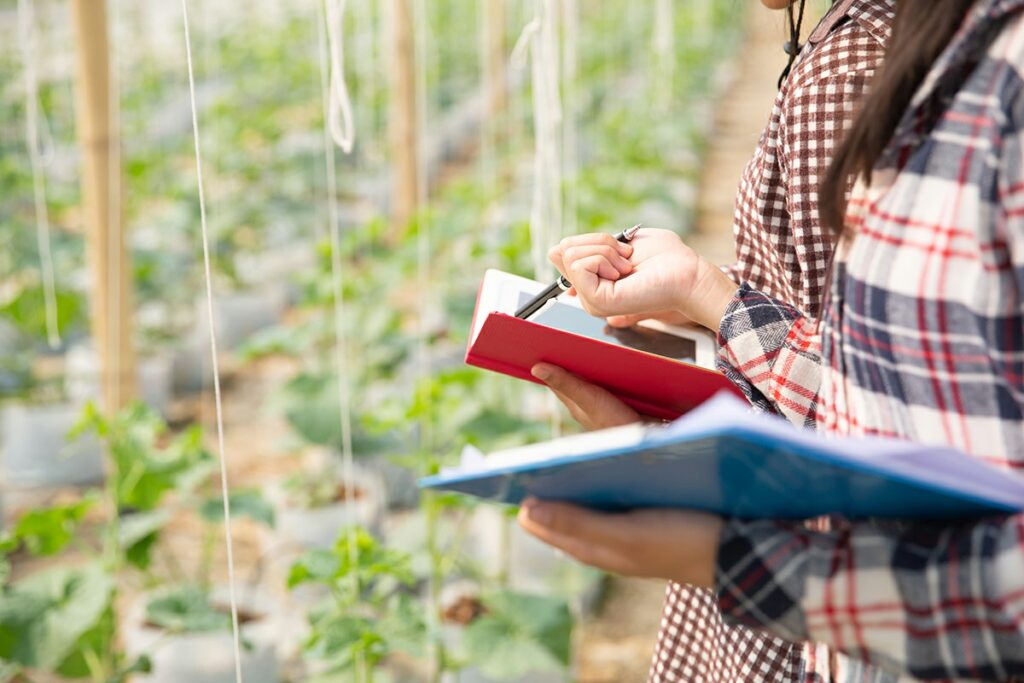
The harvesting of biomass has a very interesting junction between ecology, agriculture and sustainability science. Being a teacher creating a curriculum on the power of renewable energy, a student doing a field research paper, an environmental educator facilitating a community group, you might be doing a good job, but unless you write it down, your work might be a lesson that has no real impact.
And yet the point is that the majority of them, over or under-document (drowning in raw footage and unlabeled photos because these are too raw or taking several blurry photos and considering that a day). Both methods do not work in favor of the learners. And now let us discuss what actually works.
In this article:
Start with a Clear Documentation Plan
You must determine in advance what story you are going to tell before you even step out in a field.
- Are you registering only one harvest cycle?
- Monitoring monthly shifts?
- Comparing various biomass sources such as switch grass, wood chips or agricultural residue?
The purpose of your writing determines it, what you put down, and when, and what form you use. Develop a simple plan on a one page with a list of your highlight moments to capture:
- Site preparation
- Harvesting techniques
- Volume of materials used
- Equipment involved
- After harvest conditions
Such a structure maintains documentation as opposed to being messy.
Use Photography Strategically, Not Randomly
An effective photo record is not merely a demonstration of what was there. It reveals magnitude, situation and time. When taking pictures of the same location on different occasions, must use the same angle with a preferable constant object in the frame. This would render before-and-after comparisons much more significant to students.
Labeling and Organization
Label everything at once. The greatest error that teachers commit is thinking that they will recall what they captured in the photo 2 weeks later. They won’t. A simple naming system as date-location-subject spares a fortune in the long run.
Enhancing Visual Clarity
Background distractions may take attention off the subject in case of making a presentation using photos or educational resources. An AI background removal tool can help isolate key subjects — like a specific plant species or harvesting equipment — so your images communicate more clearly in slide decks or printed handouts.
Video Documentation: Show the Process, Not Just the Result
The process of biomass harvesting is by its very nature a process, and it is possible to capture only so much with still pictures. Where you can demonstrate how a chipper functions, how employees measure moisture content, or how a stand of miscanthus is cut and bundled, is video. These are the details that cannot be transferred in the photographs.
- Be Concise: Make clips brief and to the point. One full-length step of a 90-second video will be much more helpful in a classroom than 20 minutes of unedited video.
- Rationalize: Plan, do, outcome.
- Use Loops: For digital learning environments or social media-style educational content, you might want to convert video to GIF format for quick, looping demonstrations that don’t require students to click play. Examples of looping GIFs that can be embedded directly into a slideshow or online module and slide by without friction include a looping GIF of a harvester moving through a field.
Data Collection That Means Something
The visual documentation has its strength, yet it is the combination of this strength with the quantitative data that will make the field observation experience become actual science education.
Key metrics to record:
- Weights of yields per plot
- Moisture content values
- Fuel or labor used
- Weather conditions on harvest day
The simplest data tables are the ones that students can construct in a spreadsheet, and they can be analyzed and discussed. Why did it have a poorer yield in this section? What do we know about the storage requirements based on the moisture content? These queries make documentation enquired.
In case you are dealing with younger students, simplified data sheets in the form of checkboxes and visual prompts are a possibility. It is also meant to develop the habit of observation, not to overburden learners with sophistication.
Create a Narrative Through Field Journals
Something cannot be replaced by computer field notes. Ask students or participants to maintain a running journal which does not only record measurements, but also impressions, such as:
- What the field smelled like on a rainy day.
- How the biomass texture differed when it was dry.
- What came as a surprise to students about the machinery.
These narrative records provide a human touch to the records that cannot be provided by raw data. They also constitute a good subject matter in compiling a final educational report or presentation. Even a misleadingly abstract lesson may be anchored in something actual and experienced with the help of a well-written excerpt in a field journal.
Organize Everything Before You Share It
The world of great documentation is useless in case nobody can locate it. Install a shared folder system immediately the first day in place of organizing files into folders by date, followed by the type of media (photos, videos, data sheets, journal entries). This is important when two or more individuals are making contributions.
In the classroom context, one might recommend developing an easy-going digital portfolio that learners will be adding to throughout a project. Such tools as Google Sites or even a shared drive with an understandable structure are absolutely suitable. The artifact of learning becomes the portfolio, which the students will be able to revisit, display, and be proud of.
Bring It Together: Final Presentation
A good documentation should have a good audience. Whether presenting a class or a community workshop or a published report, the last process is synthesis, which is a compilation of visuals, data and narrative into a clear picture of what was harvested, how and why it matters.
Have students describe their process of documentation: why did they take the picture they took, what did they learn, what would they change the next time. It is in that reflective layer that the very deepest learning takes place.
Conclusion
Recording biomass harvesting to teach is not merely a matter of record keeping but rather an opportunity to open up a door to a process that the majority of the world does not witness. A good plan, clever application of both visual and written aids, and a bit of planning regarding organization can turn a messy field day into a fruitful and enduring learning process. Keep it simple, keep it steady and allow documentation to narrate itself.