
The process of biomass has never been an easy task. You are working with unprocessed, frequently inconsistent organic products – wood chips, farm waste, energy crops – and attempting to make it useful on a large scale. The parameters are limitless, the frames can be narrow and the need to do more with less is ever present. And it is precisely the reason why automation is an intriguing discussion in this sector.
However, it is not merely the replacement of humans by machines. It has to do with creating smarter facilities that use less energy, operate more reliably and can respond more quickly to evolving circumstances. We are going to divide the ways in which automation is transforming the ground.
In this article:
The Problem with Manual Processing at Scale
Any person having worked in a biomass plant is aware that manual operations have a limit.
- Human Limits: Employees are limited to working as quickly as they can, machines cannot be used by others and can only be managed irregularly, and any quality control process requires one-on-one attention.
- Environmental Hazards: Physical job demands, dust, heat, heavy lifting material, etc. now add in, and you have high turnover, errors out of fatigue, and safety hazards that overtime just get accumulated.
When what you produce is determined by people reporting to work and remaining on the job for as long as eight hours, you are already playing second fiddle to a system that operates at the same rate, regardless of the hour of the day you are operating.
Where Automation Makes the Biggest Difference
Handling and Conveying Material
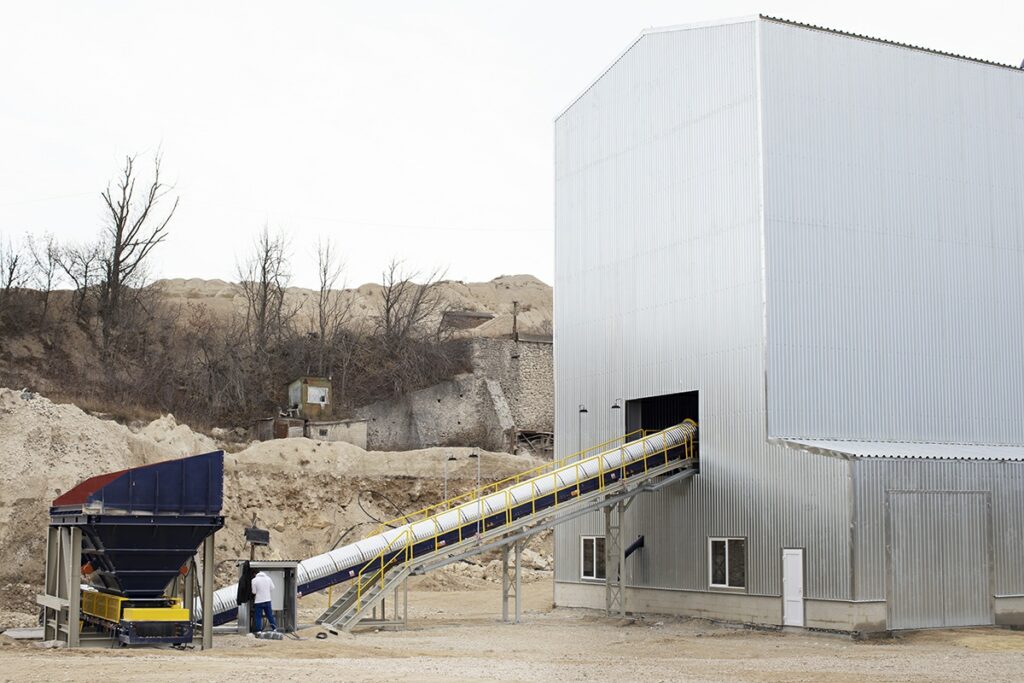
Often, automating mobile material handling results in the most immediate payback. Automated conveyors, bucket elevators, and vibratory feeders are preforming the function which will feed in a very relentless way any given amount of biomass (without imposing any consideration toward stoppage). These systems can be set up perfectly for the feed rate needed in your downstream processing equipment, thus also avoiding jams, reducing waste, and keeping things in the downstream very easily.
Compare that to working with a manual operation where a loader operator is working by feel and controlling flow – it works but never as accurately.
Drying and Moisture Control
One of the most problematic variables of biomass processing is moisture content.
- Excessively wet: Your pellets will not stick.
- Excessively dry: You are wasting power and chances of fire outbreak.
Real-time feedback loop and automated moisture sensors allow dryers to automatically adjust themselves to real conditions in incoming materials and not on pre-set schedules. This type of adaptive control would involve a reliance on the operator all the time. Now it has been done by the system and only those cases that require human intervention have been flagged.
Pelleting and Densification
Pellet mills are workhorses, yet they require the presence of some conditions in order to work. In real time automated systems are capable of controlling die temperature, motor load, and pellet density and changing feeder rates and conditioner parameters dynamically. What will be achieved is a more stable product quality and a reduction in mill stops due to overloads or bridging.
Electrical and Wiring Infrastructure
That is a component of the puzzle that you can always see discussed: the wiring and electrical installation gluing automation together. Making hundreds of thousands of connections, sensors, actuators, control panels, motors, and the quality and reliability of such connections is paramount to modern facilities.
Facilities that have invested in robotic cable assembly for their control systems report:
- Fewer wiring faults.
- Faster installation timelines.
- Greater consistency compared to entirely hand-built assemblies.
It may not be the most glamorous aspect of running but it is basic. Connection quality can be the difference between uptime and an unexpected shutdown when you are dealing with high-vibration environments with dust and heat abounding.
Data, Monitoring, and Predictive Maintenance
The data which is generated with automation is one of the most underestimated advantages of the technology. With your facility running on automated systems, each motor, sensor and conveyor is generating information regarding its own performance. All of that can be assembled into dashboards in SCADA systems and new generation PLCs to provide operators real-time view of what is occurring – and what’s about to happen..
It is here where predictive maintenance will prove to be very exciting. You do not replace parts on a fixed schedule or when they have broken down but instead when the data indicates that they are about to break down. Such a change will be able to cut the unwanted downtime by half, and it is in this category that the facilities lose money at their greatest.
Getting the Integration Right
All this cannot be done without the appropriate electrical and control infrastructure. Selecting a qualified cable harness supplier is one of those decisions that can quietly make or break a project. Badly fabricated harnesses cannot withstand even industrial conditions, and the last thing a company wants is to search for the problem of an intermittent wiring fault in a working plant. It is the additional due diligence in the beginning that would be worth paying because of the ability to work with suppliers that know more than simple electrical specifications.
This also applies to the selection of:
- Control system integrators.
- Sensor suppliers.
- Automation platform partners.
Technology is merely as effective as those people and parts that are behind it.
Human Role in an Automated Facility
Automation does not remove the skills of skilled people, it simply alters the tasks they perform. Operators no longer operate a forklift or feed material manually and they act as system ideologs, trouble shooters and process optimizers. It is a more interesting and less risky job, and it would draw another type of employee in the long-term.
Training is more technical and the investment will be rewarded by having a workforce that can actually manage and enhance the system and not merely run it.
Wrapping Up
Biomass processing automation is no silver-bullet and it does not come inexpensively. However, the facilities that have approached it with care have invested in high-quality electrical infrastructure, intelligent sensors and adaptive controls, as well as robust data visibility, and are operating cleaner, more stable operations with fewer surprises.
It is the actual pitch, not merely a matter of speed or cost-saving, but a facility which is actually easier to operate and is designed to scale.