

Each shipping container already has a considerable carbon footprint before it is reused. Emissions are generated during iron ore extraction, steel production, fabrication, and global transport. Whenever the containers are disposed of prematurely, such emissions are literally replicated.
ISO shipping containers are made from COR-TEN steel, designed to withstand heavy loads, marine exposure, and long service lives. Many remain structurally sound after their initial transport use ends. Extending their service life through reuse allows businesses to meet operational needs while avoiding the most emissions-intensive stages of industrial manufacturing.
Across the USA, organizations sourcing used shipping containers for sale in Tucson at Pelican Containers often treat reuse as a practical emissions reduction decision rather than a symbolic sustainability measure.
In this article:
Emissions Embedded in Shipping Container Manufacturing
The process of steel production is one of the most carbon-consuming industries in the world. It depends on the use of high-temperature furnaces, reducing agents that are composed of carbon, and energy-consuming processes. These gases are totally emitted before a shipping container enters service, meaning they are already a part of the product.
A standard ISO container contains several tons of structural steel. Once manufactured, the environmental cost of that steel cannot be undone. The only way to reduce its impact on total greenhouse gas discharge is to extend the number of years and functions that steel supports.
The Benefits of Shipping Container Reuse
Reusing an existing container avoids the need to manufacture new steel for an equivalent function. This is important because primary steel production generates substantially more emissions than downstream activities such as transport or maintenance.
When reused containers replace newly fabricated storage units, equipment enclosures, or temporary structures, emissions associated with mining, smelting, rolling, and forming steel are eliminated. For businesses that need practical storage without commissioning new steel structures, buying shipping containers for sale can support reuse while meeting operational space needs. These avoided emissions represent the largest single climate benefit of container reuse.
Lower Energy Demand Compared to Recycling
The recycling of steel involves cutting, transportation, melting, and remaking. Although recycling helps decrease the need for virgin raw materials, it still takes a lot of energy and generates emissions, which are associated with the generation of electricity and industrial processing.
Direct reuse avoids remelting entirely. Refurbishment activities such as surface preparation, repainting, seal replacement, or localized floor repair require substantially less energy than recycling or new fabrication. From an emissions perspective, reuse delivers greater reductions when structural integrity remains intact.
Preserving Structural Steel Value
Shipping containers are engineered with conservative safety margins. Corner castings, structural frames, and wall panels often retain load-bearing capacity well beyond their original maritime service life.
Reusing these components preserves the environmental investment already made during production. Scrapping and replacing them discards that value and accelerates additional greenhouse gas discharge through new manufacturing cycles.
Manufacturing Emissions at Scale
The emissions savings from reusing a single container are limited in isolation. The impact becomes significant when reuse occurs across industrial storage, construction sites, logistics yards, and municipal operations. At scale, container reuse reduces demand for thousands of newly fabricated steel units.
Container Reuse Applications
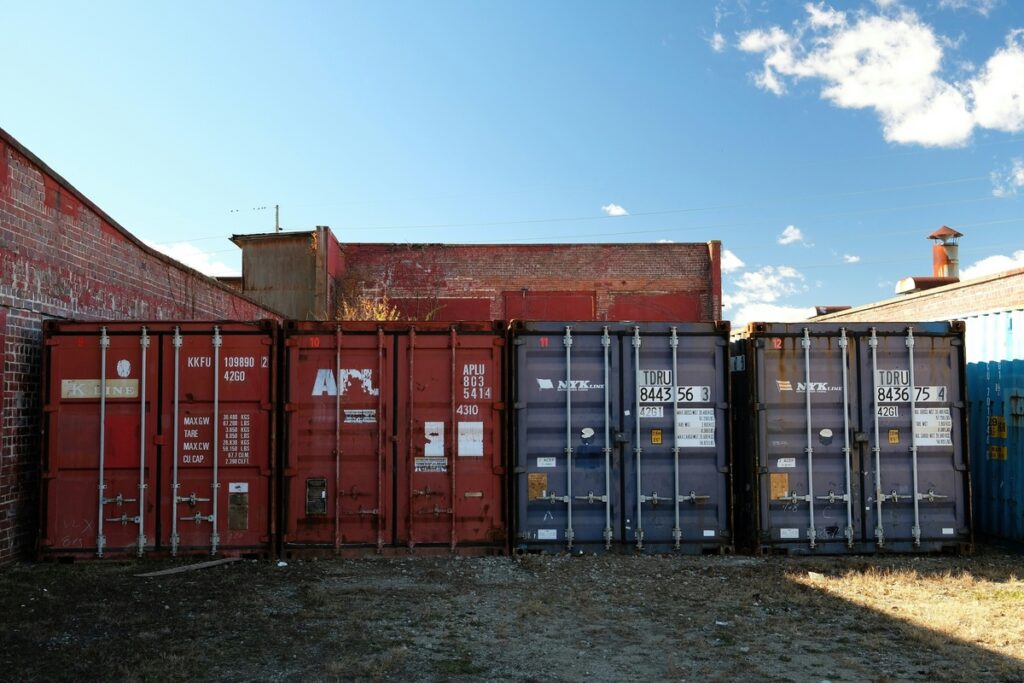
Several reuse applications consistently demonstrate measurable emissions reductions:
- Reused containers replace newly fabricated steel storage buildings and sheds.
- Temporary container facilities reduce emissions associated with permanent construction materials.
- Relocatable containers prevent demolition and reconstruction when projects change location.
- Long-term container reuse delays replacement cycles and lowers material demand over time.
Each of these applications reduces emissions by avoiding new production and minimizing construction activity, with benefits increasing as containers are reused across multiple projects.
Reduced Construction Materials and Processes
Traditional storage buildings and temporary facilities rely heavily on concrete, framing steel, and finishing materials. Cement production is a major source of carbon dioxide emissions due to high-temperature kilns and chemical reactions during curing.
Reused containers often require only basic foundations, such as gravel pads or pier blocks. This reduces the need for poured concrete, formwork, curing time, and heavy construction equipment, lowering both material- and fuel-related emissions.
Extended Lifecycle and Repeated Use
Containers reused for storage, workshops, or infrastructure support frequently remain in service for many additional years. Each year of extended use spreads the original manufacturing emissions across a longer functional lifespan.
This improves emissions efficiency per year of service. Early replacement concentrates emissions into a shorter period, increasing total greenhouse gas output.
Flexible Relocation Instead of Replacement
Containers can be relocated when operational needs change. This avoids demolition, waste processing, and reconstruction emissions associated with fixed structures. Relocation preserves both the steel structure and the emissions already invested in its production, supporting lower-impact operational flexibility.
Measurable Climate Impact Over Time
Lifecycle assessments consistently show that reuse produces lower greenhouse gas emissions than new construction for comparable functions. These assessments account for material production, transportation, construction activity, maintenance, and service life.
For organizations tracking Scope 3 emissions, container reuse reduces emissions associated with purchased goods and capital assets. Public sector projects also benefit from documented reductions that align with environmental reporting and climate policy frameworks.
Why Container Reuse Produces Real Emission Reductions
The benefits of shipping container reuse include lower greenhouse gas emissions due to the prevention of steel production, less construction activity, shorter supply chains, and longer asset life. These benefits arise from existing industrial realities rather than future technology or offsets.
Extending the service life of durable steel assets demonstrates how operational decisions can produce measurable climate benefits while continuing to support practical storage and infrastructure needs.