
Most discussions of climate change focus on what is happening outside — hotter summers, heavier storms, rising seas, shifting ecosystems. But the atmosphere does not stop at the front door. The same physical shifts that are reshaping weather patterns are quietly reshaping the buildings we live and work in, and one of the most underappreciated consequences is a slow, steady rise in indoor moisture. That moisture is becoming an environmental health issue in its own right — one that intersects with pollution control, sustainable buildings, and climate adaptation.
In This Article:
A warmer atmosphere is a wetter one
The underlying physics is straightforward. For every 1°C rise in air temperature, the atmosphere can hold roughly 7% more water vapour — a relationship described by the Clausius-Clapeyron equation. Warmer conditions therefore mean more moisture available for precipitation, higher baseline humidity in many regions, and heavier rainfall events when storms do occur. The IPCC has documented these shifts across successive assessment cycles, and the trend continues to strengthen in observational records. This is not a projection about a distant future. It is a measurable change already visible in the climate data of the last several decades.
From atmosphere to building envelope
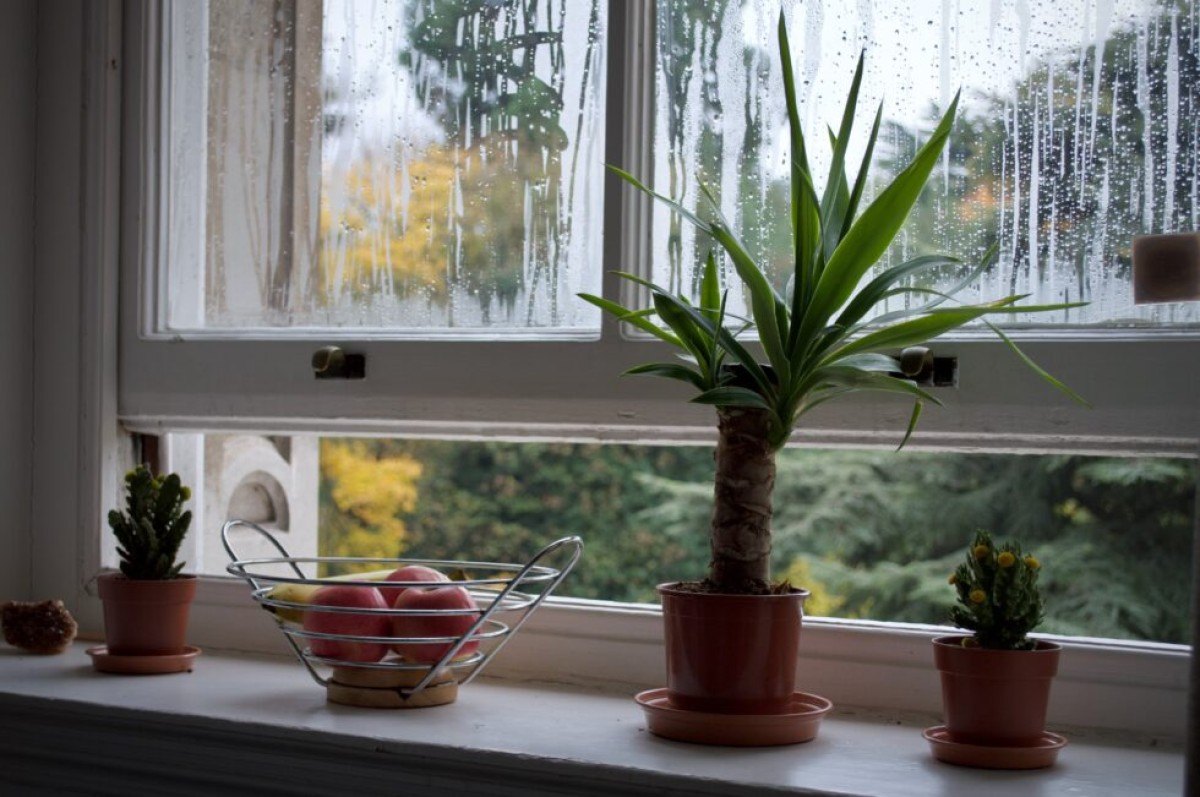
That extra moisture eventually meets the built environment. Heavier precipitation loads roofs, gutters, and drainage systems beyond what they were originally designed for. Rising groundwater pushes moisture up through floors and lower walls. Warmer indoor-outdoor temperature differentials increase condensation on cold surfaces. Wind-driven rain penetrates façades that would have stayed dry a generation ago. Older building stock, designed against the assumptions of a stabler climate, is particularly exposed — and in most countries, the majority of buildings that will exist in 2050 already exist today. Retrofitting them for wetter conditions is not optional.
Fungi as an ecological indicator
Where moisture accumulates in the built environment, fungi follow. This is straightforward ecology: species such as Aspergillus, Penicillium, and Stachybotrys are opportunistic decomposers that colonise damp organic materials — plasterboard, wood, wallpaper, textiles — wherever conditions allow. Their presence is essentially a biological indicator of persistent moisture, in the same way that certain aquatic species signal water quality in rivers. The visible growth is only part of the picture. Spores and volatile metabolic byproducts (mVOCs) enter indoor air and become part of what occupants breathe over months and years of exposure.
Remediation as environmental health practice
Effective response operates at two scales. At the systemic level, updated building codes, improved ventilation standards, better drainage design, and more resilient façade detailing reduce the moisture ingress that starts the problem in the first place. At the building level, professional damp and mould remediation services — such as those offered by specialists like ICE Cleaning and others in the sector — address existing biological growth and identify the moisture source driving it. Neither scale is sufficient on its own. Systemic reform is slow; individual buildings need functional interventions now. Retrofitting existing stock is where much of the practical work already sits, since housing built for a drier past is being asked to perform in a wetter present.
The public health dimension
The health context is well established. The World Health Organization and national health bodies including the UK’s NHS link damp and mould exposure to respiratory infections, asthma, allergic responses, and worsened outcomes for people with weakened immune systems, older adults, and children. Framed correctly, this is an indoor air pollution issue that belongs alongside outdoor pollution monitoring in a comprehensive environmental health strategy. Regular indoor air quality testing can help identify potential air quality concerns and provide useful information for improving the health of indoor environments. Yet indoor air quality remains under-monitored and under-regulated compared with ambient outdoor standards, despite the fact that people in most climates spend the majority of their time indoors.
Fitting into a wider adaptation framework
Indoor moisture management is easy to treat as a household maintenance concern, but the aggregate picture is closer to a climate adaptation question. The buildings sector already accounts for around 40% of global energy-related emissions; making that stock resilient to a changing climate — while also decarbonising it — is central to any credible sustainability strategy. Damp and mould are a visible, immediate expression of climate mismatch between the building envelope and the environment it now sits in. Addressing them is not separate from environmental policy. It is a piece of it, alongside coastal defence, heat resilience, and water-cycle management.
The bigger picture
The story of climate change is usually told as an outdoor story, but the boundary between outdoor and indoor environments is thinner than it appears. Warmer, wetter atmospheres deliver moisture that buildings were not designed for, and biological systems respond as they always do. Treating indoor moisture as an environmental health priority — not just a maintenance nuisance — brings this dimension into the wider frame of pollution control, adaptation, and sustainable resource management. The atmospheric physics will not reverse. The built environment has to adjust to match.