

Across Europe, industrial sectors are facing a common challenge: the growing need for highly qualified engineering specialists capable of working with increasingly complex cryogenic systems. As industries such as energy, industrial gases, scientific research, pharmaceuticals, and advanced manufacturing continue to expand, the demand for practical cryogenic expertise has become a strategic issue for both equipment suppliers and end users.
The discussion is no longer limited to equipment design or system performance. Workforce development has become an equally important factor. In this context, educational initiatives focused on cryogenic engineering are gaining greater attention from industry stakeholders seeking to strengthen technical competencies and support long-term operational reliability.
One example of this approach is the training program developed by Cryoin Europe, which focuses on knowledge transfer, professional development, and practical understanding of cryogenic technologies.
In This Article:
The Growing Importance of Cryogenic Expertise
Cryogenic engineering remains a highly specialized discipline that combines elements of thermodynamics, process engineering, materials science, instrumentation, and industrial safety. Despite its importance across multiple sectors, opportunities for structured professional training have historically been limited.
Many organizations rely on internal knowledge transfer, vendor documentation, or on-the-job experience. While these methods remain valuable, they often create inconsistencies in competency development and make it difficult to establish common engineering standards across projects and facilities.
As cryogenic applications become more widespread, the need for structured education has become increasingly apparent. Engineers, technicians, project managers, maintenance specialists, and operations personnel frequently require a broader understanding of cryogenic principles, system behavior, and operational considerations than traditional training pathways provide.
The educational initiative introduced by Cryoin Europe addresses this challenge by creating a dedicated framework for professional learning within the cryogenic sector.
A Practical Approach to Engineering Education
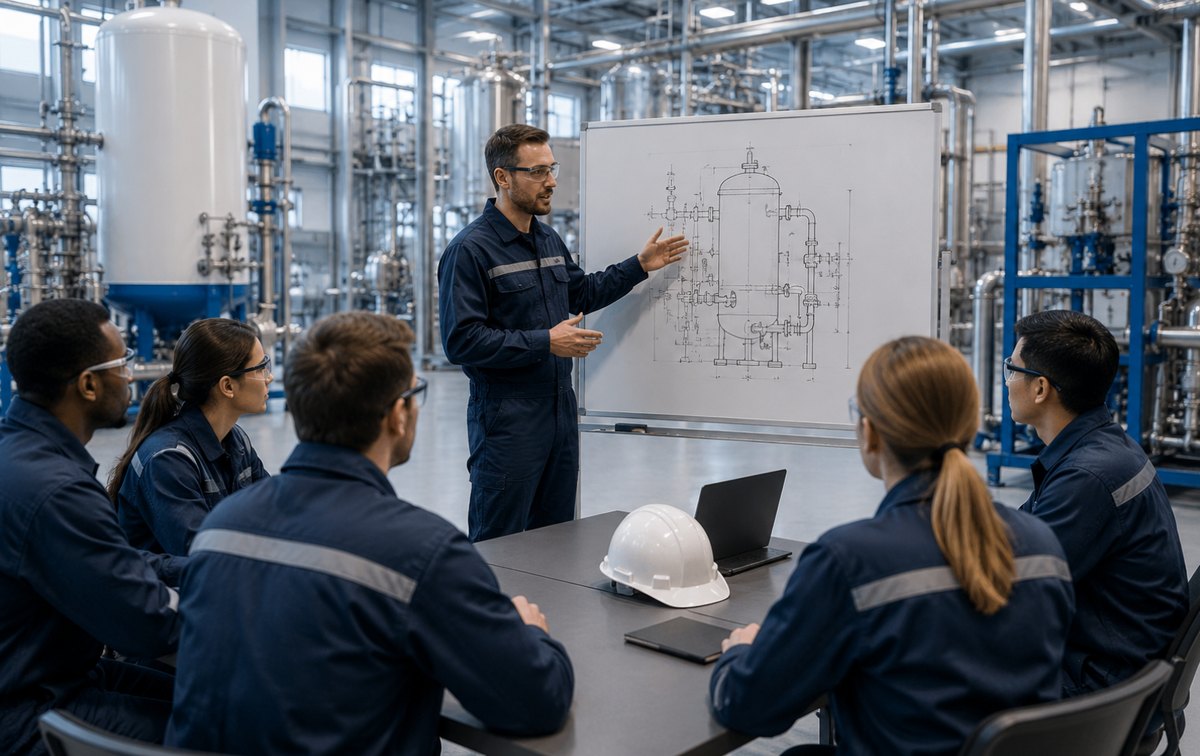
One of the notable aspects of the program is its focus on practical industry requirements rather than purely academic theory. Modern cryogenic facilities require personnel who understand not only the underlying physical processes but also the operational realities associated with system installation, commissioning, maintenance, and troubleshooting.
The training curriculum is designed to support participants with knowledge relevant to real industrial environments. Topics may include cryogenic fundamentals, equipment operation, safety considerations, process understanding, and system integration principles.
This practical orientation reflects a broader trend across European engineering industries, where employers increasingly seek professionals capable of applying technical knowledge within complex operational settings.
By emphasizing practical engineering contexts, Cryoin Europe contributes to the development of skills that can be transferred across multiple industrial sectors where cryogenic technologies are used.
Access Conditions and Participation Requirements
An important feature of the program is its accessibility to professionals at different stages of their careers.
Participation is generally intended for individuals working in engineering, industrial operations, technical services, project management, maintenance, research, or related fields where cryogenic systems play a role. Depending on the specific course structure, participants may range from early-career engineers seeking foundational knowledge to experienced specialists looking to broaden their expertise.
The program is designed to support professional development rather than serve as a traditional academic qualification pathway. As a result, the primary requirement is typically a professional interest in cryogenic technologies and their industrial applications.
Prospective participants are generally expected to demonstrate relevant technical backgrounds or occupational involvement in sectors where cryogenic processes are applicable. Additional enrollment details may vary depending on the specific educational module, training format, or level of specialization.
This flexible approach allows the program to accommodate a diverse audience while maintaining technical relevance.
Bridging Industry and Knowledge Transfer
A recurring issue within highly specialized engineering sectors is the transfer of expertise between experienced professionals and the next generation of engineers.
Many cryogenic installations operate over long project lifecycles, often requiring continuity of technical knowledge across decades. The retirement of experienced personnel, combined with increasing project complexity, has intensified the need for structured educational mechanisms.
Training initiatives such as those developed by Cryoin Europe contribute to addressing this issue by creating opportunities for systematic knowledge sharing. Rather than relying exclusively on informal workplace learning, participants gain access to organized technical information that can support both operational understanding and professional growth.
This approach aligns with broader European industrial objectives focused on workforce resilience, engineering competence, and sustainable knowledge development.
Relevance Across Industrial Sectors
Cryogenic technologies support a wide range of industrial activities. Applications can be found in industrial gas production, energy infrastructure, healthcare systems, scientific facilities, metallurgy, electronics manufacturing, food processing, and transportation-related technologies.
Because these sectors often share similar engineering principles despite different operational environments, educational programs that focus on core cryogenic concepts can provide value across multiple industries.
For employers, this creates opportunities to strengthen internal capabilities and improve technical understanding among personnel involved in project planning, operations, maintenance, and asset management.
For individual professionals, specialized training can support broader career development by expanding familiarity with technologies that remain essential to many advanced industrial processes.
The growing interconnectedness of European industrial markets further increases the value of transferable engineering knowledge and standardized technical understanding.
Looking Ahead
The future of cryogenic engineering in Europe will depend not only on technological progress but also on the availability of qualified professionals capable of designing, operating, and maintaining increasingly sophisticated systems.
As industries continue to invest in advanced infrastructure and specialized process technologies, workforce development is likely to remain a central consideration. Educational initiatives represent one practical response to this challenge by helping bridge the gap between theoretical knowledge and industrial application.
The training program offered by Cryoin Europe reflects this broader shift toward structured professional education within the cryogenic sector. By supporting technical competency development and knowledge transfer, such initiatives contribute to the long-term sustainability of engineering expertise across Europe’s industrial landscape.