
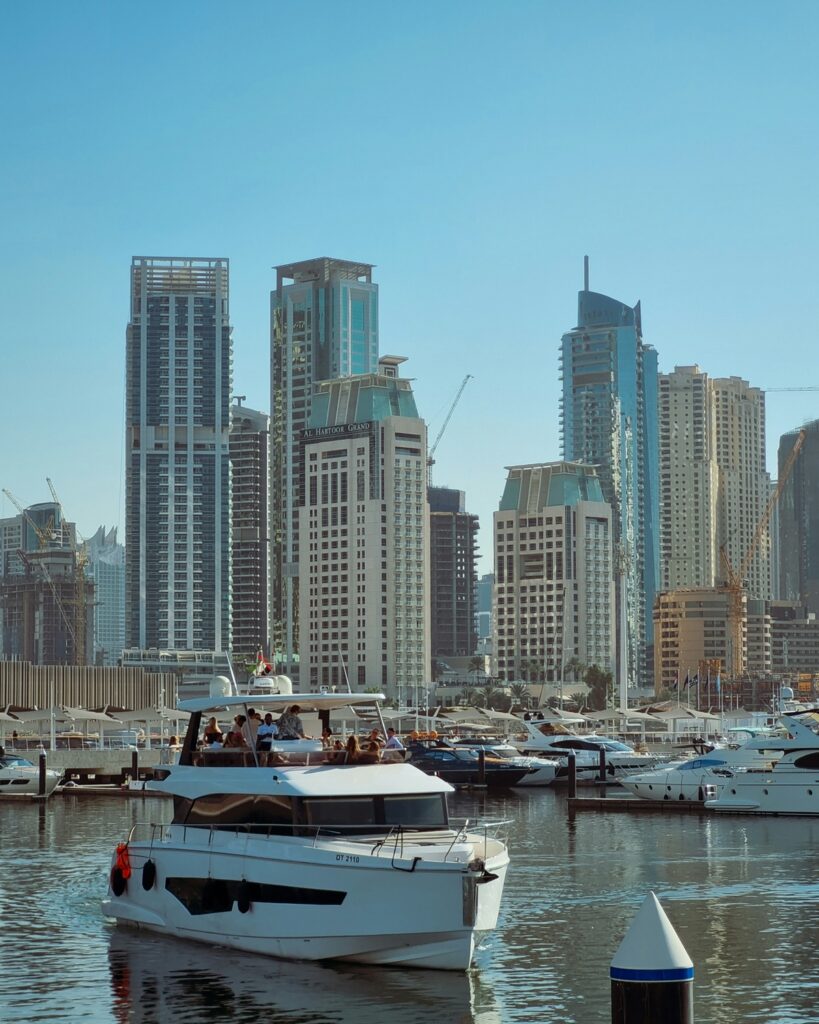
At first light, Dubai Marina sits quiet as crews prepare for another round of fuel trials. Yacht charter traffic in the UAE runs steady loops—from yacht rental to day boats—so teams can track change with less noise. The setup looks like a yacht rental company afloat, yet it works like a living lab for marine biofuel and hybrid power.
In this article:
What Counts as a “Sustainable Yacht”
Cleaner fuel sits at the core, and HVO often drops into existing engines with little drama and steady pull. FAME blends can work too when tanks stay clean and filters get a closer look, while bio-methanol supports purpose-built or converted setups with clear operating rules. Shore power cuts generator hours in port and trims local noise, and lifecycle emissions stay honest only with strong certification that proves feedstock quality—a habit any yacht rental company keeps in fleet checks.
Why Dubai and the UAE Are a Useful Testbed
Dense marinas, short routes, and year-round traffic turn small vessels into repeatable trials that make data clear. Hot summers stress cooling, batteries, and hotel loads, so real gains show up fast and carry to other warm ports. Houseboat rental Dubai is among other popular options. The same service culture shows in marinas through quick parts, fast swaps, and clean logs.
Fuel and Power Notes
HVO keeps torque feel steady and often cuts smoke, which helps crews work cleaner shifts and keep parts in better shape. Bio-methanol needs tight systems and trained teams, yet it gives a clear path for spark-ignited or converted engines and supports accurate emissions logs. Many visitors come to rent a yacht or book a yacht charter, and they expect simple fueling and clear bills; crews aim for the same with metered shore power and plain, reliable records.
What the Bioenergy Community Gains
Consistent routes let engineers compare fuels on the same load and speed, which sharpens models for lifecycle emissions and cost per hour. Maintenance logs track seals, injectors, oil life, and filter changes, so planners see the real cost of cleaner fuel instead of guesses. The process mirrors how a yacht rental company tracks duty cycles and wear in a hot city, and the same method helps scale supply and cut risk.
Reality Checks (the quick list)
Crews here meet limits early and often. Heat, tight berths, and mixed fuel supply test gear and people, and they expose weak spots fast. Short, honest checks keep boats safe, protect data quality, and guide the next upgrade.
- Confirm certified supply for marine biofuel and verify chain-of-custody
- Match engine materials with planned blends and bio-methanol systems
- Standardize test routes, speed, and load for clean comparisons
- Meter shore power and track generator hours after plug-ins
- Plan bunkering around heat, storage limits, and turnover rate
- Watch methane slip when testing LNG or bio-LNG and compare net climate impact
- Train crews on fuel handling, sensors, and emergency steps
- Schedule refits off-peak and keep spare parts to control downtime
Policy and Market Outlook
Port air goals in Dubai and Abu Dhabi push cleaner work near homes, beaches, and promenades, which supports shore power and better fuels. Planners already mine charter data from every rented yacht and marina logs; they can use those records to guide tariffs, bunkering, and training. Insurers and finance teams read the logs, reward strong proof, and help move proven setups from leisure craft to ferries and port tenders.
Bottom Line
Sustainable yachts in the UAE matter because they turn ideas into measured outcomes that other fleets can copy. Crews test HVO, FAME blends, and bio-methanol, log results, and share what holds up in heat, short hops, and heavy hotel loads. That proof lets the bioenergy community scale what works, skip what does not, and build real gains beyond the marina.