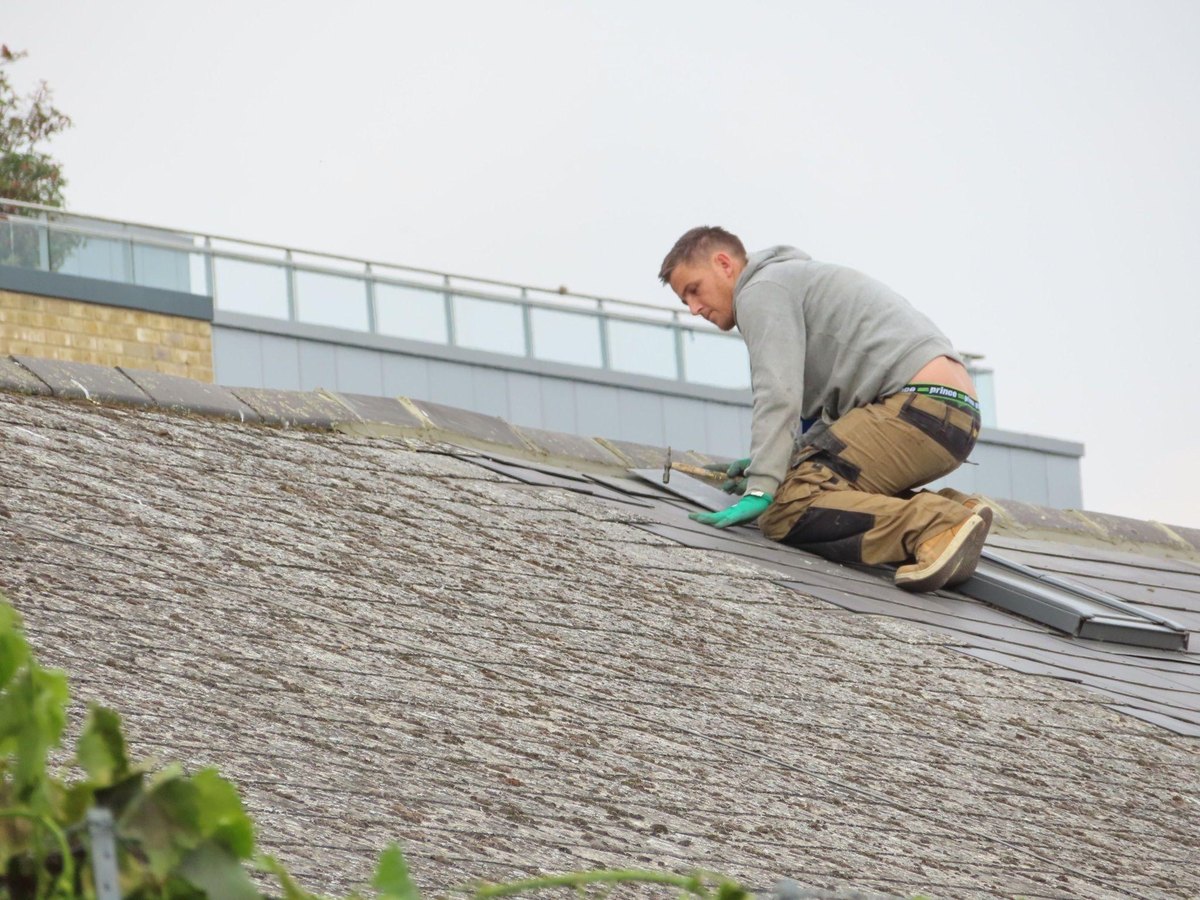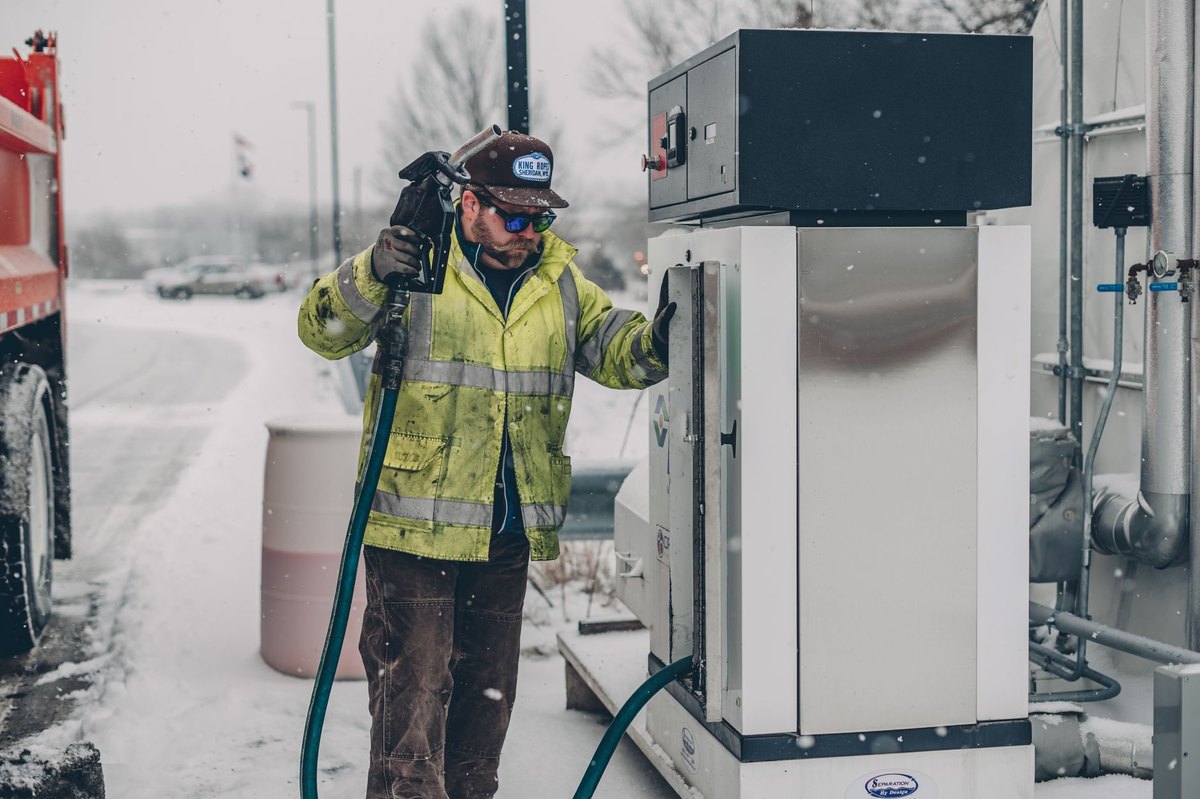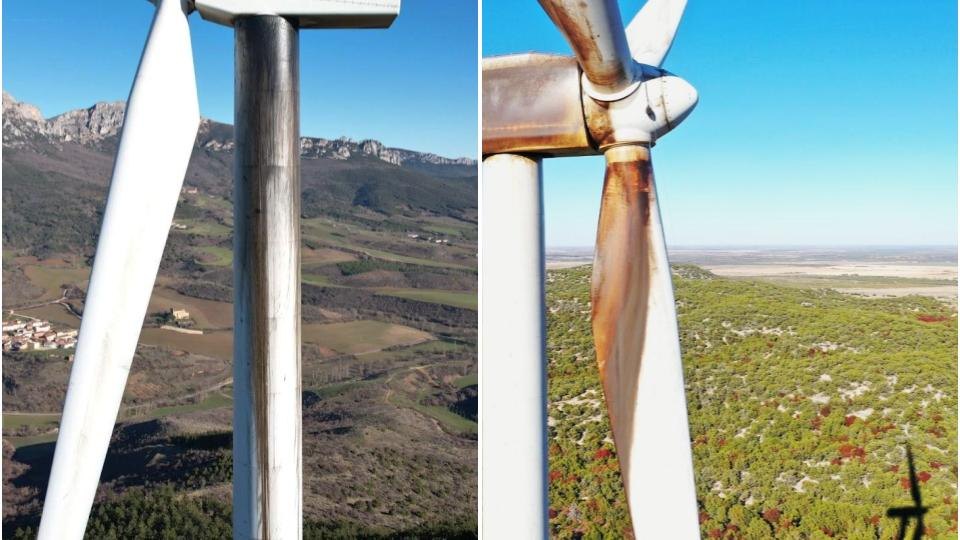

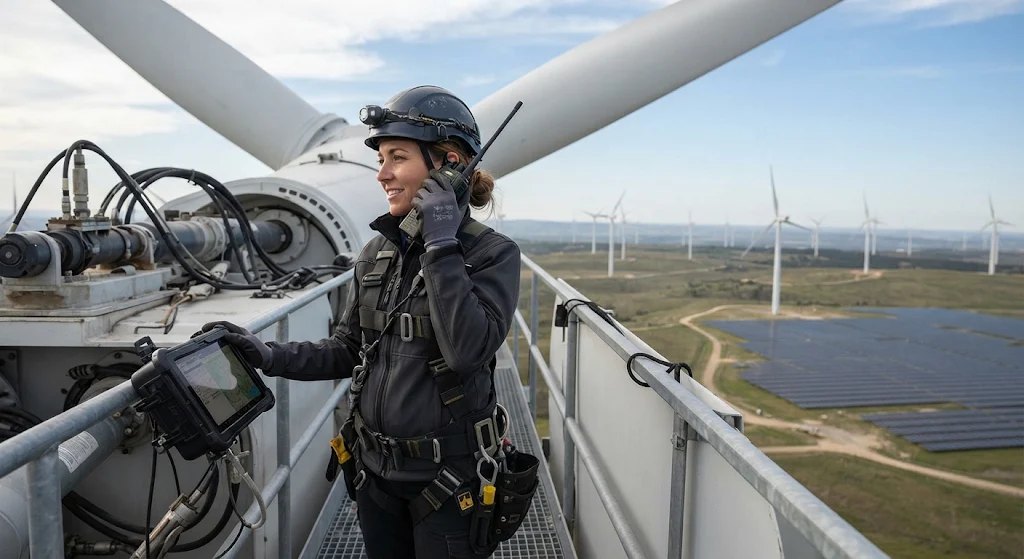
The U.S. Bureau of Labor Statistics projects that employment of wind turbine service technicians will grow by 49.9 percent from 2024 to 2034, the fastest pace of any occupation, with solar installers close behind. That means more people on sites picked for strong wind and steady sun, rarely for good cell service.
Careful site selection puts turbines on exposed ridges and arrays across open rangeland, which suits output and punishes phone signals. Technicians climb, splice and troubleshoot in gloves, heat and noise, often in pairs and sometimes alone.
Dead zones, flat batteries and confusing call chains can stretch a simple repair into a long shift, or worse. So which features matter most once the truck leaves the paved road?
In This Article:
Coverage That Reaches Every Corner
A tool can only help if it connects where the work happens. On wind and solar sites, the weak spots tend to be predictable:
- Inside steel towers and nacelles, which block signals
- Low ground and far corners of large arrays
- Access roads, transfer vessels and sail routes offshore
Some operators solve this by bringing the network with them. Hornsea Two, off the Yorkshire coast, runs its own private LTE network built by Vilicom with Vodafone, serving hundreds of operations and maintenance staff along the sail route and across the wind farm. Its neighbor, Hornsea One, got its private LTE network from offshore operator Tampnet.
Onshore teams with smaller budgets can start with a coverage walk: test every turbine pad, inverter station and gate with the devices crews will carry, then map the gaps before buying anything.
Hardware Built for Gloves, Grit and Long Shifts
A climber on a ladder keeps three points of contact, so a touchscreen that needs two free hands can be close to useless at height. Technicians tend to value:
- Large, tactile push-to-talk buttons that work with gloves
- IP67-rated housings that shrug off dust, rain and washdowns
- Speakers and microphones loud enough to beat wind and inverter hum
- Batteries that last a full shift, plus spares in the truck
Cold mornings on a ridgeline and hot afternoons on an array can both drain batteries faster than spec sheets suggest. Crews based in site trailers far from the grid sometimes keep chargers running on portable solar panels, which can be a tidy fix if trailer power is unreliable. The best radio on paper loses its value the moment it dies mid-climb, so battery checks belong on the pre-shift list.
Instant Group Talk Across Long Distances
Phone calls work for one-to-one chats, but most site traffic is one-to-many: “turbine 14 is locked out,” “crane is moving,” “storm cell to the west.” Traditional two-way radios do the job inside their range, yet hills, towers and distance can call for repeaters and licensing.
Push-to-talk over cellular takes another route. Push to talk providers like Peak PTT run group talk over 4G LTE and Wi-Fi, so a supervisor in the O&M building can reach a crew at the far end of a site without extra radio infrastructure. Talk groups can be split by crew, contractor or job site, and recorded calls allow quick playback if a message got lost in the wind.
The trade-off is clear: if carrier coverage drops out, so does the service, which is why many offshore projects lean on private networks or satellite backup.
One Channel and One Voice in an Emergency
The fatal accident inquiry into the 2017 death of wind technician Antonio Linares at Kilgallioch Wind Farm in Scotland shows how messy emergency communication can get.
A call for help went out over the radio in Portuguese and was overheard by nearby workers. An inspector told the inquiry there was no apparent coordination at the turbine and no single point of contact, and the determination described the rescue as “unnecessarily chaotic.”
The sheriff concluded the injuries were probably not survivable, yet still recommended joint rescue drills. For tool choices, the lessons can be practical:
- A dedicated emergency talk group everyone knows
- One named coordinator per shift
- Plain, agreed phrases that work across languages
- A clear way to relay updates to ambulance crews
Location Details Responders Can Act On
Emergency crews rarely know a wind farm’s internal roads. Turbines carry ID numbers, but a dispatcher needs a gate, a route and ideally live coordinates. GPS-enabled radios and apps can help a site lead see where every team is and send responders to the right pad, and that kind of operational visibility can also cut wasted driving on normal days.
In August 2026, RWE and the Hamburg fire brigade ran a rescue exercise at the Grauen wind farm southwest of Hamburg, simulating an injured technician in a nacelle. The drill covered alerting emergency services to a remote site, communication between responders and the handover of the casualty on the ground, and both sides plan to refine procedures afterward.
If a drill exposes confusing directions or a missing contact list, fixing that in calm conditions beats discovering it during a real call.
Video When a Second Opinion Is Far Away
Some faults need more than a voice description. Ørsted has used Microsoft HoloLens 2 with Dynamics 365 Remote Assist to support field technicians.
In one case, a simple cable swap on a turbine turned into troubleshooting. Three onshore experts joined remotely, worked with the supplier and found that the supplied cable was wrong. The issue was settled in about two hours, where shipping the cables onshore could have added a day or more. Vestas took a similar route with RealWear headsets, whose cameras let remote colleagues see what the technician sees.
These setups need bandwidth, though. Live video from a nacelle only helps if the connection can carry it, so remote assist plans usually go hand in hand with better site coverage.
Tools a New Hire Can Learn in One Shift
Growth means a lot of first-year technicians. In solar, pv magazine reported in April 2026 that the U.S. industry was roughly 53,000 workers short of what it needed to hit installation targets. When crews include many newcomers, complicated apps with nested menus can slow everyone down. Useful traits include:
- Radios that arrive preprogrammed with the right talk groups
- The same device and layout on every site the company runs
- Icons and voice prompts that work for multilingual crews
- Short, hands-on training during onboarding
Ask the people using the gear. Which button do they reach for first when something goes wrong? Their answers can reveal more than any spec sheet.
Check-Ins for Heat and Lone Work
Solar technicians face a different set of risks than climbers, but communication sits at the center of them too. OSHA notes that solar workers often work in very hot weather, where dehydration, heat exhaustion and heat stroke are real hazards.
Cal/OSHA’s heat illness guidance calls an effective communication system a critical part of prevention and lists cell phones, walkie-talkies, two-way radios and satellite phones as options for remote locations, with training for workers and supervisors.
On a large array, a technician checking combiner boxes alone can be out of sight for long stretches. Scheduled check-ins, lone worker timers and man-down alerts can help supervisors spot trouble early. A missed check-in should trigger a call, not a shrug, and the tool should make that easy.
From Nacelle to Inverter Pad: Building a Comms Kit That Holds Up
The right setup depends on the site. An offshore cluster may need private LTE and satellite backup, while an onshore wind farm with decent carrier coverage might do well with push-to-talk over cellular and a handful of rugged handsets. Solar teams spread across wide arrays may care most about check-ins and location sharing. A few habits can help in every case:
- Test coverage with the actual devices before rollout
- Set up emergency talk groups and drill them with local responders
- Treat radios like any other equipment upkeep task, with scheduled checks and battery swaps
- Collect feedback from technicians after the first season
Communication gear rarely gets the attention turbines and panels do, yet it can shape how safely and quickly every repair gets done.