
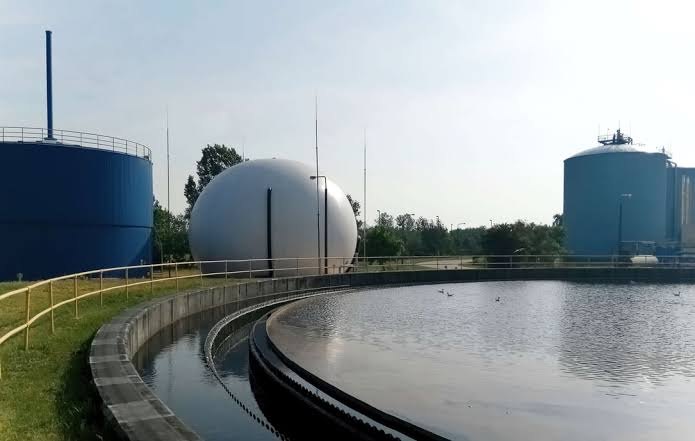
Bioenergy gets sold, fairly, as part of the answer on climate. A digester takes waste that would rot and release methane anyway, captures the gas, and burns it for power or cleans it up for the grid. The catch is that a plant only delivers on that promise if the gas it makes actually stays inside the pipework. A fair amount does not, and a lot of what escapes goes out through the joints.
In This Article:
A leak is lost product and lost climate benefit at the same time
Fugitive methane is the industry’s quiet problem. It seeps from digester covers, seals, valves, pipelines and flanged connections, rarely in dramatic amounts, usually as a slow bleed that nobody sees. Studies of biogas plants have found losses running anywhere from under one per cent of the methane produced to around six per cent, and some put the average closer to the top of that range than operators would like.
That matters twice over. Methane is the product, so anything that escapes is revenue drifting into the sky. It is also a far stronger greenhouse gas than carbon dioxide over the years that matter most, so a leaking plant is quietly eating into the very benefit it was built to provide. Get the losses high enough and you can undo a real chunk of the environmental case for the plant in the first place.
The flange is where a lot of it happens
Strip a biogas plant back and it is a large network of pipework, and that network is held together by bolted flanged joints. Every one of them is a place where gas can find a way out. Gaskets harden and shrink with age, bolts relax over time, and joints that get opened up for maintenance do not always go back together as well as they came apart.
The good news is that this is fixable. A walkover leak survey, the same idea the oil and gas sector has used for years, can pick out exactly which components are leaking, and a proper detect-and-repair routine can bring fugitive emissions down by more than ninety per cent. Finding the leak is only half of it, though. The other half is opening the joint and closing it again without creating the next one.
Opening a flange without making things worse
Maintenance means flanges have to come apart. Gaskets get replaced, valves get swapped, faces get inspected. How that is done decides whether the joint seals cleanly afterwards or starts weeping the week it goes back into service.
For a long time the tools of choice were a hammer, a chisel and whatever could be jammed into the gap. The problem is that prying a flange open like that scars the sealing faces and chews up the gasket seat, and a marked face never seals quite as well again. So the crew fixes today’s leak and quietly builds in tomorrow’s.
This is the argument for a set of proper flange spreaders. They sit in the gap between the two faces and push them apart with slow, even force, enough to work but never enough to distort the flange or damage the surface. Lighter mechanical versions handle smaller joints and jobs where there is no hydraulic power to hand, while hydraulic units take on the bigger diameters and higher-pressure lines, holding the faces parallel as they open so nothing gets bent out of true. They are compact enough for the awkward, boxed-in runs that plant pipework always seems to end up in, which is exactly where a hammer does the most harm.
Re-making the joint is where the seal is won or lost
Getting the flange apart cleanly is only worth anything if it goes back together properly. The faces need to be clean, the right gasket has to go in, and the bolts want lubricating so the load actually reaches the joint instead of being lost to friction in the threads. Then they get tightened to a real, engineered figure, worked round in a criss-cross pattern rather than one after another, so the gasket is squeezed evenly all the way round. A joint pulled up unevenly is a joint that will leak, no matter how good the gasket.
None of this is glamorous, and that is rather the point. The climate case for bioenergy does not just rest on the big decisions about feedstock and grid connection. It also rests on the unshowy discipline of keeping every joint tight, opening flanges without wrecking them, and closing them so they hold. Clean energy only stays clean if the gas stays in the pipe.