
Anyone who has walked past a construction site, quarry operation, or earthmoving project knows that dust is an inevitable by-product. What many people don’t realise, however, is that dust from these activities poses genuine health and environmental risks, comparable to those resulting from industrial and vehicular emissions.
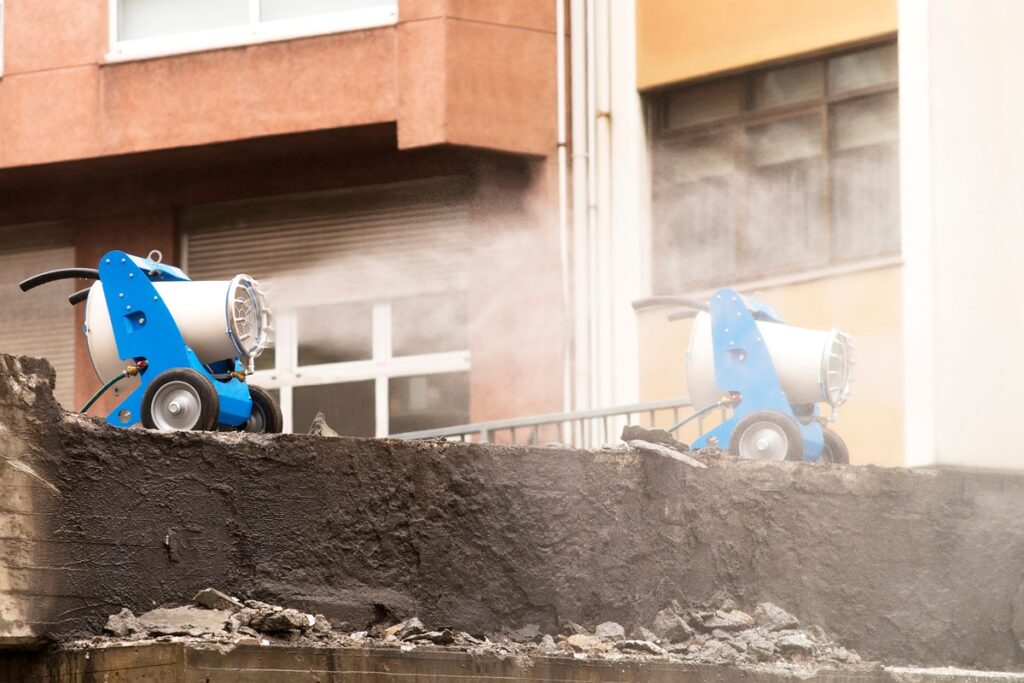
While a completely dust-free construction site isn’t always possible, a well-engineered dust suppression system can significantly mitigate these challenges. These systems spray a fine mist of water at key areas, reducing airborne particulates at the source and keeping projects sustainable, safe, and consistently on schedule. Let’s look at why dust suppression is a key component of modern construction projects.
In this article:
Protecting Worker Health and Safety
All dust is hazardous when inhaled. However, certain types of dust, such as crystalline silica dust resulting from concrete cutting or quarrying, are especially hazardous. Long-term exposure to construction dust can lead to conditions like silicosis, chronic obstructive pulmonary disease (COPD), and other serious health conditions. Properly implemented dust suppression systems limit airborne particles, creating a healthier atmosphere on site while also helping them comply with workplace safety standards.
Meeting Environmental Compliance
Many countries have already tightened their regulatory framework on airborne pollutants generated by different activities. More than ever, construction firms must show that they are taking proactive measures to minimise dust, particularly on large infrastructure projects near populated areas or sensitive ecosystems. A properly designed dust suppression system shows regulators that a contractor is serious about sustainable practices, helping with project approvals and avoiding downtimes for compliance activities.
Preserving Community Relations
“Not in my backyard” or NIMBY sentiments are a serious roadblock to infrastructure development, but they’re also understandable. Residential areas and places with protected natural features are not used to massive influxes of workers and machinery, with noise complaints and privacy concerns being extremely common wherever construction projects take place. Indeed, few things sour community relations faster than clouds of harmful dust blowing across fences, cars, and homes.
Communities today expect developers to minimise negative impacts and communicate openly about mitigation strategies. Deploying visible dust suppression systems demonstrates responsibility and consideration for nearby residents. These deployments may reduce complaints and help projects avoid becoming the subject of negative press or local campaigns.
Supporting Sustainable Water Use
Even today, many dust suppression systems are nothing more than garden hoses pointed at problem areas. While these systems do work, they often require massive amounts of water, straining local supplies and creating increased runoff problems.
Fortunately, modern systems are designed for efficiency. They atomise water into fine droplets that bind more effectively with dust particles, which means far less water is needed to achieve optimal dust control. Many dust suppression systems can also be integrated with recycling systems that reuse captured water or adapt flow rates depending on environmental conditions.
Improving Onsite Productivity and Efficiency
It should be said that safer, healthier workers are also more productive. However, dust suppression also increases efficiency in more direct ways. For instance, controlled dust clouds mean better visibility and less debris clogging up equipment. With more visibility and fewer downtimes for equipment maintenance, workers are freer to concentrate on the task at hand. This leads to faster project completions and, thus, fewer extended impacts on surrounding communities and ecosystems.
Future-Ready Construction Practices
Regulators now widely consider modern dust suppression as a visible benchmark of responsible, future-ready construction. As green building certifications and sustainable procurement policies become more common, early adopters in modern dust control can stand out for their sustainability practices, enabling them to secure contracts with the growing pool of environmentally conscious clients.
Key Qualities of a Suitable Dust Suppression System
Every construction site faces different dust management challenges, and what works on one site may not be appropriate for another. Project managers should consider the following when selecting a dust management system.
- Mobility and coverage: Can the system be repositioned as work progresses?
- Water efficiency: Does it use atomisation or recycling subsystems to minimise consumption?
- Durability: Will it endure site conditions for the duration of the project? Will it be used for other projects beyond the current one?
- Integration: Can it connect with existing water systems without extensive retrofitting?
- Maintenance needs: How much expertise, downtime, and specialised servicing does it need
A system that balances these considerations helps guarantee effective dust control without compromising the project’s operational efficiency.
Construction Sustainability Begins at Ground Level
Energy efficiency and waste management tend to dominate sustainability discussions, both inside and outside of the construction industry. However, sustainability is really about protecting people, communities, and ecosystems from everyday impacts. Dust suppression may not be the first thing decision-makers prioritise for sustainability, but it has outsized effects on all those areas when left unmanaged.
Once that is understood, we can see how a well-planned dust suppression system transforms a potential liability into a real opportunity to safeguard worker and environmental health, while also preserving community trust. And with regulators now taking dust more seriously, it’s only a matter of time before all infrastructure companies give dust suppression the importance it deserves.