
There are few predictors of extreme seasonal weather conditions as reliable as El Niño, and this year’s El Niño is expected to be record breaking. For Australian’s, this is alarming due to the devastation that we’ve seen in years with similar conditions. Bushfires and drought have affected all of us. But, it’s only recently that we’ve started to talk about the side-effects of these conditions – their impact on air quality.
In This Article:
The link between El Niño and air quality
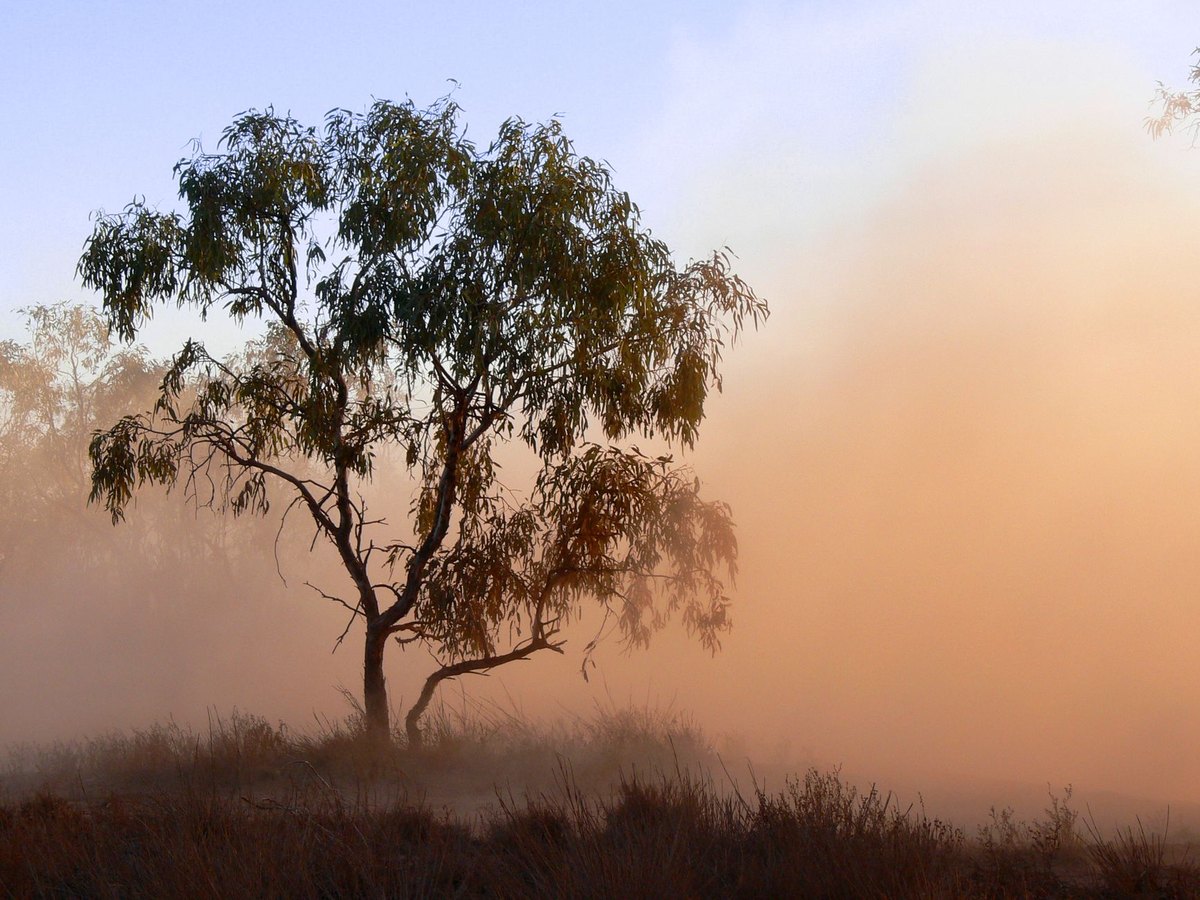
Where there are bushfires, there is smoke. Where there is drought, there is dust. It’s part of the Australian way of life, but years with extreme conditions – like those often attributed to strong El Niño years – can dial the likelihood of these events up to 11. It’s not that it’s a certainty, but it is certainly more probable.
To get an understanding of the impact of extreme weather conditions on air quality, we spoke with Martin Parsons, Director of MRP Technical Consulting, and one of Australia’s leading air quality consultants.
Martin informed us that smoke and dust massively diminish air quality because they fill the air with particulate matter, but smoke is especially harsh due to the tiny size of its particles.
Just how bad is smoke and dust for air quality?
To understand the true impact of these conditions on air quality, you need to understand that there are two types of particles.
- Small particles: Particulate matter (PM) that is less than 2.5 micrometres diameter (PM2.5).
- Large particles: Particulate matter (PM) that is less than 10 micrometres diameter (PM10).
“We measure the concentration of these particles in µg/m³, meaning micrograms of particles (µg) per cubic metre (m³) of air. For example, a PM2.5 of 25µg/m³ indicates a concentration of 25 micrograms of small particles in a cubic meter of air” Martin informed us, “Anything under 25 µg/m³ for PM2.5 and 50 µg/m³ for PM10 is considered the ‘benchmark’ or ‘good’, but we don’t like to see those numbers grow beyond that”
For reference, Australian modelling estimates that a daily average PM2.5 concentration of 145 µg/m³ is associated with approximately 30% more respiratory hospital admissions compared with relatively clean air at 8 µg/m³
“With this understanding, we can see the impact of a bad bushfire season on the air quality in Australia” says Martin, “The bushfire season in 2020 was intense, it carried PM2.5 levels above Australia’s national air quality benchmark for a significant portion of the year.”
During the 2019-20 bushfire season, daily average PM2.5 concentrations exceeded Australia’s national air quality benchmark of 25 µg/m³ on 99 days across New South Wales’ standard monitoring network. That represents more than half of the spring and summer period, with exceedances recorded in both metropolitan and regional communities.
On 5 January 2020, Wagga Wagga North recorded a 24-hour average PM2.5 concentration of 560 µg/m³, more than 22 times the national benchmark. It marked Australia’s highest daily average PM2.5 level since 1994, and this wasn’t even an El Niño year.
Australia’s recent El Niño events
Australia’s five most recently completed El Niño events (2002-03, 2006-07, 2009-10, 2015-16 and 2023-24) all coincided with significant drought conditions and bushfires in parts of the country. The 2002-03 and 2006-07 events were particularly severe, contributing to widespread drought and destructive bushfire seasons.
Even still, the data doesn’t indicate certainty. While El Niño increases the likelihood of hotter, drier conditions and elevated bushfire risk, other climate drivers and local conditions also influence the outcome. Eight of the past ten complete years (2016-2025) recorded above-average rainfall in regions across Australia.
What does this tell us about El Niño and bushfires?
The only hypothesis we can take away is that El Niño events increase the likelihood of extreme weather, which increases the likelihood of bushfires
Global warming adds even more uncertainty. Australia has warmed approximately 1.5°C since 1910, increasing extreme heat and dangerous fire weather. Climate projections also suggest more extreme El Niño events, although their future frequency and impacts on Australia remain uncertain.
What to expect this summer
Australia is about to enter a summer with a strong El Niño and a forecast of above-average temperatures across most of the country. It’s quite likely we’re going to see cities and towns across the country suffering from poor air quality. “How severely air quality will deteriorate depends on the weather conditions that occur, and if they occur in regions with dense bushland” says Martin. “Also, factors like where fires start, how long they burn, prevailing winds and if weather conditions allow smoke to disperse are the real factors that affect the severity of bushfire smoke in populated areas”.
Prolonged fires, stagnant air and persistently elevated particle concentrations would indicate an increasing risk of widespread smoke pollution. “Communities hundreds of kilometres from active fires can still experience poor air quality, all we can do is monitor fire activity, wind patterns, temperature inversions and PM2.5 concentrations, and allow residents to adjust their lifestyle,” said Martin, “but I’m hopeful that we’re spared any significant bushfires this year”.
As the planet continues to warm, we’re likely to experience more extreme heat and dangerous fire weather, El Niño or not. For countries like Australia, where bushfires are a regular occurrence, this means a growing risk of prolonged smoke events and deteriorating air quality.
While we can’t predict exactly where the next major bushfire will occur or which communities will be affected by its smoke, we can prepare. Make sure you understand air quality readings and can recognise when they become dangerous. Most importantly, if the conditions allow it, make sure you get outside and enjoy the weather while it’s warm!