
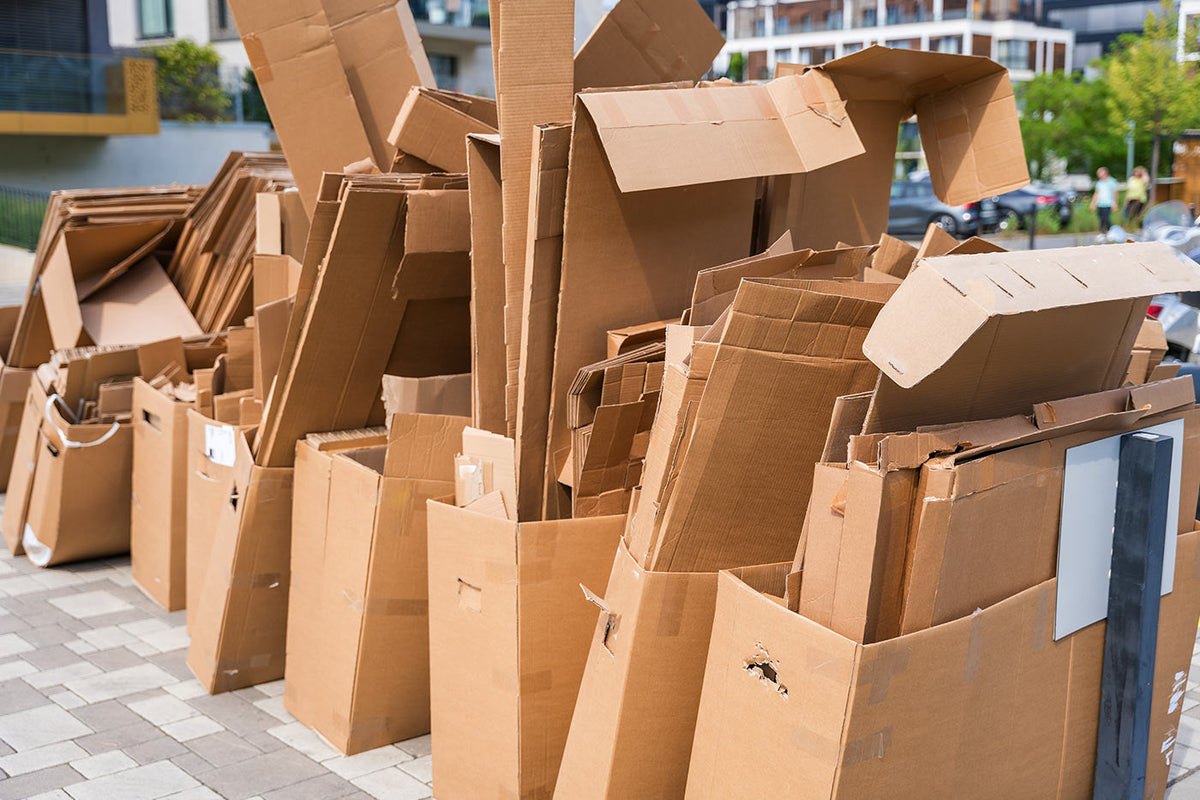
For decades, waste management has largely followed a simple pattern: resources are extracted, products are manufactured, goods are consumed, and unwanted materials are thrown away. The circular economy challenges this approach by asking a different question: what if materials that appear to be waste could remain useful for much longer? Cardboard is a good example of how that shift can work in practice. Instead of treating used boxes and packaging as the end of a product’s life, businesses can recover the material and return its valuable fibres to the production cycle.
This matters because cardboard is deeply connected to modern commerce. Warehouses, retailers, manufacturers, restaurants, distribution centres, offices, and e-commerce businesses can generate substantial quantities of corrugated cardboard every day. When that material is separated and recovered properly, it becomes part of a larger resource-management system rather than simply another load destined for disposal.
In This Article:
Understanding Cardboard’s Role in a Circular Economy
The circular economy is built around keeping products and materials in use for as long as practical while reducing unnecessary waste and dependence on virgin resources. Recycling is one of the mechanisms that makes this possible. Rather than allowing useful materials to leave the economic system after one use, recycling gives them another route into manufacturing.
Cardboard fits naturally into this model because it is primarily made from paper fibres. Once used packaging is collected, sorted, processed, and prepared for recycling, recovered fibre can become a feedstock for new paper and packaging products. The exact environmental benefits depend on factors such as collection systems, transportation, processing methods, material quality, and the products eventually manufactured from the recovered fibre. Even so, the basic principle is straightforward: a material that still has useful properties should not automatically be considered waste.
This idea also connects with the broader concept of sustainable resource management. A circular system looks beyond the immediate act of disposal and considers the entire journey of a material, from production and use to recovery and eventual reuse.
Why Cardboard Waste Has Become an Important Business Issue
Cardboard is not a minor waste stream for many commercial operations. A single shipment may contain several boxes, protective sheets, dividers, and other paper-based packaging materials. Multiply that by hundreds or thousands of deliveries, and the amount of cardboard generated can become significant.
For businesses, the challenge is not simply finding somewhere to put the material. Effective recycling requires a system that fits the way a facility actually operates. Cardboard needs to be identified, separated from incompatible materials, stored appropriately, and collected on a schedule that matches the volume being produced.
This is particularly relevant for businesses with predictable cardboard flows. Warehouses and distribution centres, for example, may receive packaging throughout the day and accumulate large amounts of corrugated cardboard in a relatively small area. Retailers and manufacturers can face similar patterns.
A structured program can therefore turn an everyday operational problem into a more manageable resource stream. Instead of mixing cardboard with general waste, businesses can create a dedicated pathway for material recovery.
From Used Box to Recovered Resource
Cardboard recycling may look simple from the outside, but the quality of the material matters. Clean and dry corrugated cardboard is generally easier to recover than material that has been heavily contaminated with food, liquids, plastics, or other waste.
The process begins with collection. Cardboard is separated from other materials and gathered in a way that protects it from unnecessary contamination. Depending on the operation, businesses may use dedicated collection areas, compactors, balers, or other equipment suited to their volume and available space.
Once collected, the material can be sorted and prepared for processing. Recyclable cardboard is then handled through the appropriate recycling system, where fibres are recovered and prepared for use in manufacturing. Those fibres can eventually contribute to the production of new paper-based materials, helping maintain the value of the original resource.
The important point is that recycling does not make cardboard disappear. It changes its role. A used shipping box can become part of another material cycle instead of representing the final destination of the resource.
The Connection Between Recycling and Sustainable Resource Management
Sustainable resource management is about using materials efficiently while considering environmental, economic, and operational impacts. Cardboard recycling supports this approach because it encourages businesses to look at waste streams as resources that need to be managed carefully.
When companies separate recoverable cardboard from general waste, they gain a clearer understanding of what their operations are actually generating. This information can help identify opportunities to reduce unnecessary packaging, improve sorting practices, change collection schedules, and measure diversion from landfill.
The benefits can extend beyond environmental considerations. A well-designed recycling program may also improve workplace organisation and reduce the amount of material entering general waste streams. Depending on market conditions, material quality, volume, transportation, and other factors, certain commercial cardboard programs may also provide rebate opportunities.
This does not mean every load of cardboard will automatically generate revenue. Recycling markets change, and the value of recovered material depends on several variables. The more useful takeaway is that responsible material management can sometimes combine environmental goals with practical business benefits.
Why Contamination Is Such an Important Issue
One of the less visible challenges in cardboard recycling is contamination. A box may technically be made of recyclable fibre, but its condition can affect whether it can be recovered efficiently.
Food residue, liquids, excessive plastic, chemicals, and other materials can interfere with recycling. Wet cardboard can also become damaged and lose some of its usefulness. For businesses handling large quantities of packaging, preventing contamination at the point where waste is generated is therefore much easier than trying to correct the problem later.
Employee awareness plays an important role here. Staff members do not need to understand every technical stage of the recycling industry. They simply need clear instructions about what belongs in the cardboard stream and what does not. When those practices become part of everyday operations, the quality of collected material can improve.
This is one reason successful recycling programs involve more than placing a container in a warehouse. Collection, storage, employee education, monitoring, and ongoing adjustments all contribute to the result.
Cardboard Recycling in Ontario and the Commercial Opportunity
Ontario has a large and diverse commercial sector, ranging from manufacturing and logistics to retail, hospitality, distribution, and e-commerce. These industries can generate significant amounts of packaging waste, making material recovery an important part of practical waste-management planning.
Businesses exploring cardboard recycling in Ontario can benefit from looking at their operations before selecting a service model. The right approach depends on how much cardboard is generated, how frequently it is produced, where it accumulates, how much storage space is available, and whether the material is already being separated.
Sol Recycling, for example, describes its cardboard program as a tailored service based on cardboard volumes and packaging methods. Its program includes assessment, collection planning, recycling, documentation, and potential rebates, while its broader zero-waste approach focuses on diverting materials from landfills.
Its commercial guidance also highlights the importance of material quality, storage, pickup requirements, and volume when developing a cardboard recycling program for Ontario businesses.
This type of approach reflects an important principle of the circular economy: recycling systems work better when they are designed around real material flows rather than treated as a one-size-fits-all solution.
Moving Beyond Cardboard Alone
Cardboard can be a practical starting point, but sustainable resource management should not end there. Once a business understands how one major waste stream moves through its facility, it becomes easier to examine other materials.
Paper, metals, plastics, organics, and other recoverable materials may also have separate recycling pathways. Sol Recycling lists cardboard, paper, plastics, metals, and organic waste among its recycling programs, illustrating how businesses can approach waste management as a broader system rather than focusing on a single material.
The objective is not necessarily to recycle everything regardless of cost or environmental impact. Instead, businesses can examine their waste streams, identify realistic recovery opportunities, and build systems that reduce unnecessary disposal while remaining operationally practical.
Better Resource Management Starts With Everyday Materials
The circular economy can sometimes sound like a distant concept involving advanced technology, new manufacturing systems, and major policy changes. In reality, it can begin with something as ordinary as a cardboard box.
Every box that is correctly separated represents a small decision to keep a material in circulation. When thousands of businesses make similar decisions every day, those individual actions become part of a much larger resource-management system.
For businesses, the next step is to understand their own cardboard waste rather than assuming that disposal is the only option. Measuring volumes, identifying contamination, improving storage, training employees, and selecting an appropriate collection system can create a stronger foundation for material recovery.
Cardboard recycling will not solve every waste-management challenge, but it demonstrates how a familiar material can move from being viewed as a disposable product to being recognised as a recoverable resource.
Conclusion
The transition from a linear economy to a circular economy depends on changing how society thinks about materials after their first use. Cardboard provides a straightforward example of that transition. Instead of sending valuable fibre to disposal, businesses can separate, collect, and recycle cardboard so that it has an opportunity to re-enter productive use.
For commercial organisations, the benefits go beyond landfill diversion. Better cardboard management can improve resource efficiency, support more organised waste operations, create opportunities for material value, and contribute to wider sustainability objectives.
The most effective approach is practical rather than complicated. Understand the waste stream, keep recyclable cardboard clean and separated, choose collection methods that fit the operation, and continue improving the system over time. When these steps become part of normal business practice, cardboard stops being just another waste material and becomes what it really is: a resource with another useful chapter in its life.