
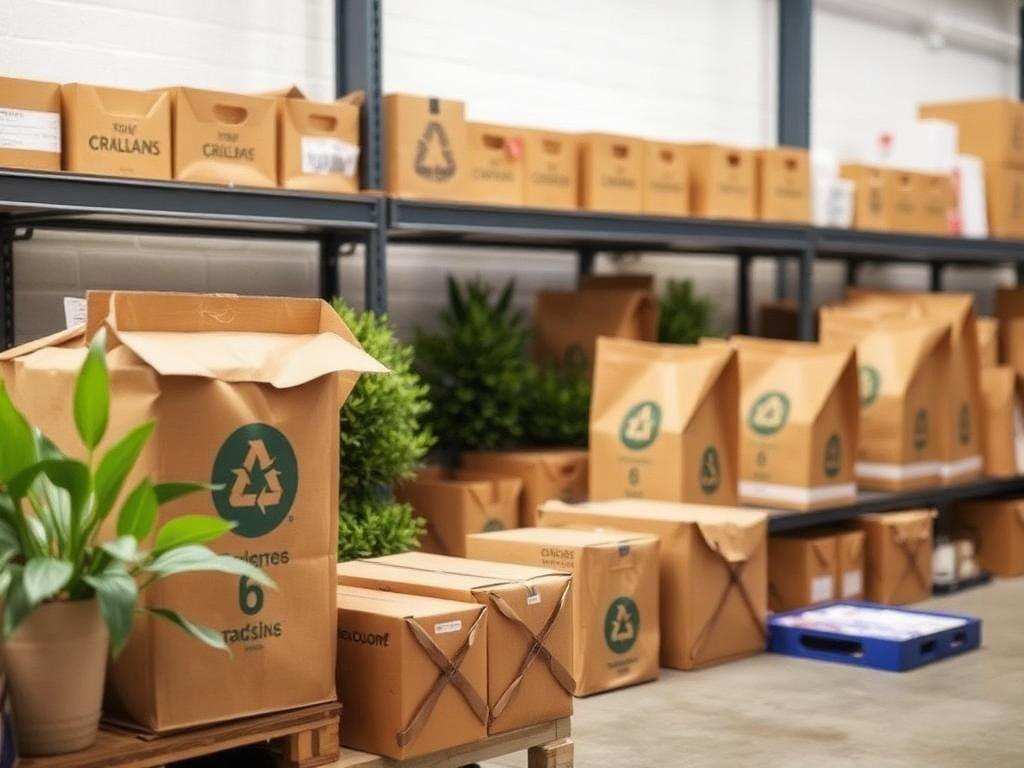
The packaging industry is at a crossroads. Every packaging material choice made by brands has implications that go far beyond the initial transaction. Governments, businesses and consumers alike are increasingly aware of the impact that their actions have on the environment through the consumption of resources and generation of waste. As a result, the case for switching to recyclable cardboard packaging has never been more apparent. As environmental pressures continue to build, while eco-friendly materials continue to improve, and as the attitudes of informed consumers evolve, businesses that seek environmentally friendly packaging solutions can find that switching to recyclable cardboard packaging is both necessary and rewarding. Those businesses that research alternative sustainable packaging options through suppliers such as Shop Cardboard Boxes can find tangible gains across multiple areas of the business.
In This Article:
Tackling the Global Packaging Waste Problem
We examine why shifting to recyclable packaging is important by first examining the current scope of packaging waste generated throughout the world by the global economy. Packaging accounts for approximately one third of all municipal solid waste in the developed world, and much of this packaging waste is made from materials that cannot be recycled or are potentially recyclable but lack the infrastructure needed to recycle them.
Whilst plastic packaging often dominates the waste conversation, the long term consequences for a generation who are increasingly denied the environments that foster effective learning are far more persistent than plastic in the environment. However, the environmental effects of waste thrown away for recycling do not cease at the point where they cease to be visible on television news. The production of packaging made of virgin plastic requires the use of large amounts of petroleum, so increases consumption of fossil fuels and emissions of greenhouse gases. Each item of packaging going to waste is also an item of packaging that could have been recycled, and so potentially an item from which energy could have been recovered.
Why Cardboard Outperforms Plastic Environmentally
Cardboard packaging has an entirely different environmental profile to plastic at every stage of the life cycle from sourcing right through to reuse, recycling or landfill, making it one of the most credible and sustainable packaging options available for businesses today across many industries.
One of the key environmental benefits is the source of the raw materials used in our boxes. Cardboard is made from wood fibre which comes from trees — a renewable biological resource actively absorbing carbon while still growing in the forest. Responsible harvesting of trees from well managed, certified FSC forests continues to reap environmental benefits long after the timber has been felled. These forests are sustained for future generations allowing continued absorption of atmospheric carbon as well as preserving precious ecosystems, sustaining watersheds and a huge variety of wildlife. The complete opposite to the petro-chemical plastics that are extracted from the earth in just a few hundred years and then depleted forever in just a handful of decades.
Cardboard production in the manufacturing process releases fewer tonnes of greenhouse gas per packaging unit than plastic, particularly if the packaging manufacturing plant is powered by renewable energy. For every tonne of recycled cardboard used in manufacturing, 17 trees are not cut down, 4,000 kilowatts of energy are saved and massive amounts of water are not consumed as they would with virgin fibre production.
One of the biggest environmental benefits of cardboard over plastic is its end-of-life performance. Cardboard is designed to fit into the existing recycling infrastructure found in almost every developed country and increasingly in many developing countries. Recovery rates for packaging made from cardboard and paper far exceed that for plastic packaging, and the packaging types where recycling is most developed are cartons and cardboard. Countries in Europe achieve cardboard recycling rates well in excess of 80% compared to the best recycling rates achieved with plastic of around 30%.
The Carbon Footprint Calculation
For businesses and individuals choosing the packaging options for their products, an informed decision about the environmental impact can no longer mean simply assuming that a particular material is sustainable and therefore choosing to use it. A proper assessment of the carbon footprint of each material must be carried out before making a decision. Such an assessment reveals that in comparison to plastic packaging, cardboard comes out on top. When considering the carbon footprint of cardboard, it is important to consider the carbon that is stored within sustainably harvested forests.
Our sustainably sourced, recyclable cardboard packaging has contributed 300g of carbon savings to our overall carbon balance. Trees are felled in forests that are certified to various environmental standards, such as FSC. During their growth trees absorb carbon from the atmosphere and then the wood fibre from felled trees is used to make products such as paper and cardboard. The carbon locked into these products is released during consumption but when these products are recycled the carbon is locked in and saved in the new paper product. Eventually the product will make its way to landfill, or be composted. However cardboard is biodegradable and will decompose more quickly and cause less environmental damage than the persistent presence of plastic in landfill or the environment.
The carbon footprint of the transportation required to move cardboard packaging through the supply chain is lower than for many plastic alternatives. For starters, the lower density of corrugated cardboard relative to many plastics means it requires lighter packaging materials which in turn reduce the amount of fuel required to move these packages through the various stages of the distribution system. Moreover, the flat-pack nature of much cardboard packaging that assembles itself at the point of use dramatically reduces the volume and weight of packaging that must be moved through the system. The cumulative effect of these transportation emission savings occurs with every million shipments that are moved through the supply chain.
Kraft Packaging and the Circular Economy
When it comes to choosing the right options from the numerous cardboard packaging options, kraft packaging materials are an excellent option for their alignment with the most ambitious vision of a circular economy for sustainable use of initial resources. By adapting packaging through suppliers like Kraft Box Pack, businesses can choose materials that are sustainably sourced, fully recyclable, biodegradable, and most importantly need minimal processing.
Kraft packaging is manufactured using chemical pulping, which retains the long wood fibres that give kraft its superior strength and rigidity. As a result, its safeguarding properties exceed those of heavier or more processed packaging materials on an equal weight basis, requiring fewer materials to provide the same level of protection. Reducing the amount of materials required to deliver the same protective value translates to a lower environmental impact during manufacture, distribution and disposal.
The natural unbleached appearance of our kraft packaging materials reflects its low environmental impact as well as its lower processing cost relative to white-coated packaging materials which require a bleaching process. Bleaching consumes significant amounts of energy and water and creates toxic by-products during production that need to be treated before discharge. Our unbleached kraft packaging materials have a reduced environmental footprint that is genuinely showcased by its natural, distinctive brown colour.
Recyclability in Practice: Making It Work
Many people are now aware of the environmental benefits of cardboard packaging and its conversion to waste material for recycling. It is, however, vital that people understand exactly how packaging achieves full environmental potential: this means entering the recycling stream and being processed to completion, not being sent to landfill after becoming contaminated with other packaging materials. Those moving to a cardboard packaging method will need a practical understanding of the material’s potential for recycling for their particular packaging configuration.
Key factors that determine real-world recyclability:
Material purity: Single-material packaging made of cardboard that does not contain any plastic coating, laminating or mixed materials recycles best in the paper recycling stream
Adhesive selection: Water-soluble adhesives used in box manufacture such as starch pastes, dispersion adhesives or solution adhesives dissolve during the repulping stage and do not contaminate the recycle furnish, however some synthetic adhesives can cause processing problems
Ink and coating compatibility: Vegetable-based and water-based inks and coatings are compatible with standard paper recycling, while UV-cured coatings and heavy metallic inks can reduce the quality of the recycled fibre
Consumer communication: Clearly displaying consumer recycling options on-pack is likely to increase the proportion of packaging going into the correct waste stream rather than going to landfill as mislaid packaging
Local infrastructure alignment: Packaging should be designed to be suitable for the local recycling facilities that end-consumers have access to and not designed with assumptions about wider, more advanced recycling infrastructure
The Business Case Aligned With Environmental Goals
There is an increasing congruence between environmental drivers to move to recyclable cardboard packaging and commercial drivers. Research has found that there is a strong consumer preference for products to be packaged in a sustainable way and that this preference is being driven by real purchasing behaviour across all age groups with many willing to pay a premium for packaging that is eco-friendly and truly recyclable.
As regulations are implemented around the world, they are merely reinforcing the market trends that are already driving businesses to adopt more recyclable packaging. As extended producer responsibility schemes, plastic packaging taxes and a mandatory percentage of recycled content become the new normal, financial incentives will only increase for companies to adopt these solutions in order to avoid further disruption and cost to do business. However, those that move voluntarily will capture considerable brand value along the way.
Retailers and other supply chain partners are increasingly imposing sustainability requirements on suppliers. As a result, suppliers with certified recyclable cardboard packaging are now a standard requirement to get into retail distribution sites, rather than simply an extension of offerings. Those who have already made the leap are finding the conversation relatively straightforward, while those that have not are starting to find out that failing to use conventional packaging can cause real friction in relationships with retailers and even how your products are priced for shelf space.