
Power outages are no longer rare, and that is a big reason more households are looking at solar generators. Average U.S. power outages hit 11 hours in 2024 (double the past decade), with 80% caused by hurricanes Beryl, Helene, and Milton.
A solar generator handles that problem differently than a gas unit does. Solar units store energy in batteries, recharge via sunlight, and provide quiet, exhaust-free power compared to traditional gas units.
In This Article:
What a solar generator is and how it works
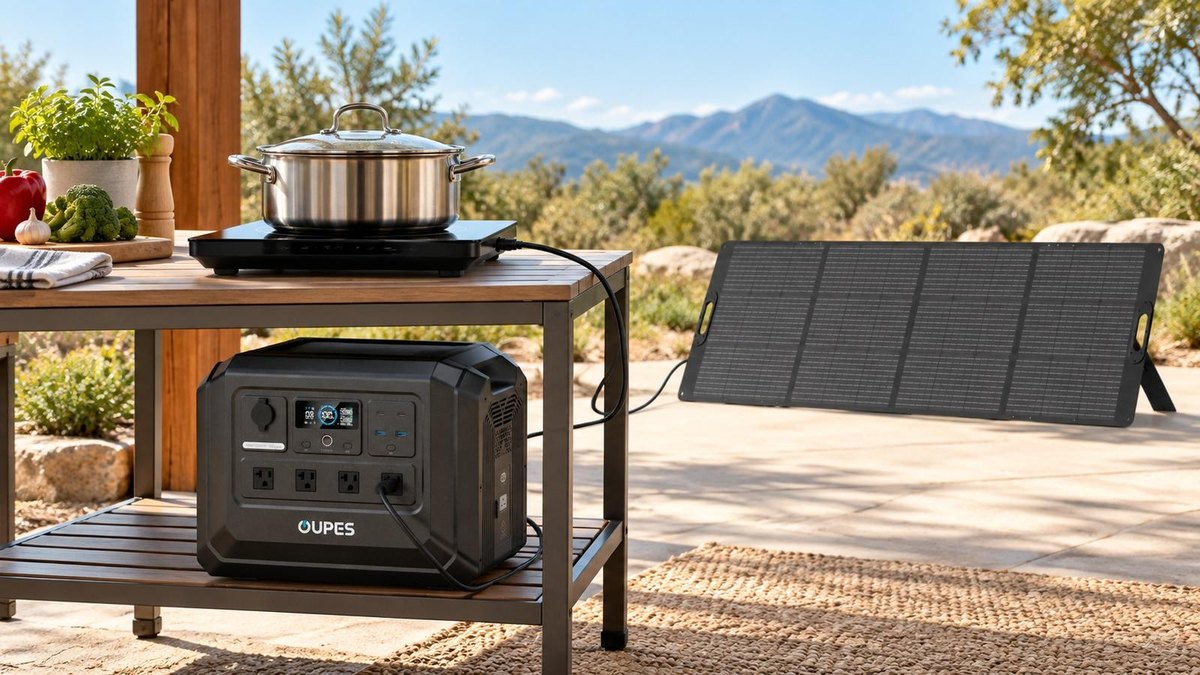
A solar generator is not a generator in the old sense. There is no engine, and nothing burns. It is a battery-based power system paired with solar panels. The box that stores and delivers the power is usually called a portable power station, and once you add panels, you have a solar-powered generator. SolarReviews and Enphase describe it the same way.
If you have ever wondered how solar generators work, the flow is simple.
- Solar panels turn sunlight into direct current (DC) electricity.
- An MPPT charge controller adjusts the incoming voltage and current so the battery charges efficiently.
- A lithium iron phosphate (LiFePO4) battery stores the energy.
- An inverter converts that DC power into 120V AC, the same kind of power your wall outlets deliver.
- AC outlets, USB ports, and a DC port send the power to your devices.
You can also refill the battery from a wall outlet or a car, which helps on cloudy days. A rooftop grid-tied system behaves differently. It shuts down during a blackout for safety unless it includes battery backup. A solar generator is self-contained, so it keeps working when the grid does not.
The main advantages of solar generators
Quiet power with no exhaust
Gas generators are loud, and they produce carbon monoxide. The U.S. Consumer Product Safety Commission (CPSC) reports that an average of about 85 people a year die from carbon monoxide poisoning tied to portable generators. Most of those cases involve a unit running in a garage, a basement,t or too close to a window. The CPSC keeps a helpful carbon monoxide information center if you want to learn more.
A solar generator makes no exhaust, so there is no carbon monoxide to worry about. You can run one in a living room or bedroom as long as you keep its vents clear and follow the manual. Most units only produce a soft fan hum under heavy load, which makes them a good fit for nighttime outages, campsites, and shared spaces.
No fuel to find, store,e or pay for
After a hurricane or ice storm, gas stations often close or run out. A solar generator needs only sunshine, or a wall outlet once the grid is back. There is no gasoline to rotate through storage, no propane tank to swap, and no late-night trip in bad weather.
Sunlight costs nothing, so your running cost after purchase is close to zero. That changes how the math looks over five or ten years, even though the upfront price is higher.
Very little maintenance
There are no oil changes, spark plugs, carburetors, or pull cords. Gas generators that sit for months can be stubborn to start when you finally need them. A solar generator mostly asks for a dry place to sit, a temperature range that matches the manual, and a quick top-up charge every few months.
Portable, flexible use
Portable solar generators range from palm-sized units to cart-sized home backup systems. SolarReviews gives a handy rule of thumb. A unit around 300Wh weighs about 10 pounds, one near 1,000Wh weighs about 29 pounds, and one near 2,000Wh weighs about 53 pounds.
That range explains why people use them in so many places.
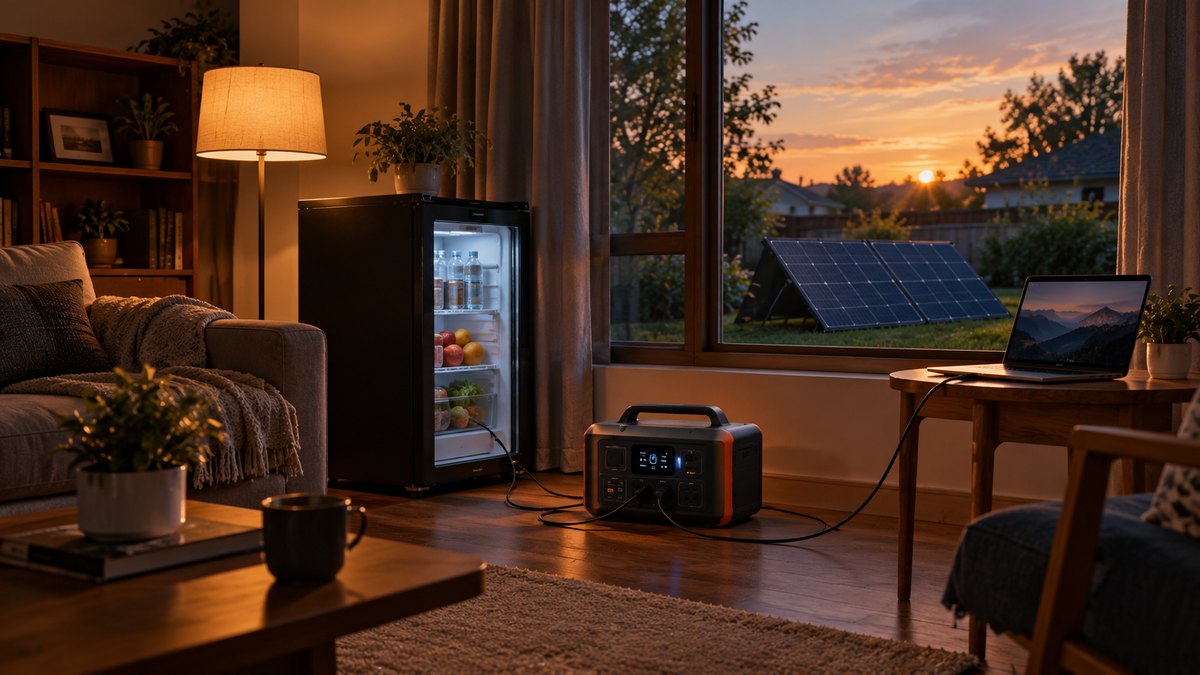
- Keeping a fridge, router, and lights running during an outage
- Powering a van, R,V or camper
- Running tools at a job site without a gas engine
- Supporting remote work from a cabin
- Powering gear for field research or events
Expandable capacity
Many modern systems grow with you. You can start small and add batteries later. The OUPES Mega 3 starts at 3,072Wh and expands to 15.36kWh with up to six B2 extra batteries. EcoFlow lists the DELTA Pro 3 at 4,096Wh with expansion up to 48kWh. Gas units cannot do that. If your needs double, you buy a second generator.
Long battery life with LiFePO4
Most current solar generators use LiFePO4 cells. SolarReviews notes that this chemistry is stable and non-toxic, has no thermal runaway risk, and lasts around seven times as long as other lithium options. OUPES rates the Mega 3 for more than 3,500 cycles to 80% capacity. Even if you cycled it fully every single day, that is nearly ten years of use.
Smart monitoring and fast switchover
App control is now common. You can watch battery level, input and output power, and temperature from your phone. Some units also act like a UPS, which means they take over when the grid drops. The OUPES Mega 3, for example, lists a switchover time under 20 milliseconds, which is fast enough that most computers and routers keep running.
Backup that keeps recharging
This is the advantage that separates a solar power generator for home use from a plain battery. A battery alone runs out. A solar generator can recover each day. Two 240W panels in about four hours of strong sun can add roughly 1,500Wh, based on 480W x 4 hours x 0.8 for real-world losses. That may not run everything, but it can keep a fridge, internet, and a medical device alive through a multi-day outage.
Outages are uneven, too. The EIA found that South Carolina customers averaged nearly 53 hours without power in 2024, while several states stayed under two hours. A system that can refill itself gives you a better chance of riding out the bad years.
Limits to know before you buy
Solar generators are not perfect, and the better guides say so.
- Upfront cost: Solar generators cost more than gas units; EcoFlow bundles range from $699 to $9,899, while whole-home systems start around $4,600 to $10,000.
- Weather and season: Solar recharging depends on sunlight, with winter and clouds cutting input; NREL’s PVWatts calculator estimates production.
- Power ceilings: Portable units top out at 1,000W–4,000W; heavy loads need larger systems, and home wiring requires a licensed electrician and transfer switch.
- Weight: Bigger batteries are heavy. A cart or hand truck helps.
Solar generator vs gas generator at a glance
| Factor | Solar generator | Gas generator |
| Noise | Low, mostly a fan hum | Loud engine |
| Exhaust | None | Carbon monoxide and fumes |
| Indoor use | Yes, with normal ventilation | Never indoors |
| Fuel | Sunlight or wall power | Gasoline or propane |
| Maintenance | Minimal | Oil, filters, fuel care |
| Upfront cost | Usually higher | Usually lower |
| Runtime limit | Battery size plus daily sun | Fuel supply |
Neither choice wins every time. A gas generator can make sense for very large loads or long outages in dark climates. A solar generator tends to win on safety, noise, and ease of use.
How to size a solar generator
Sizing is where most buyers go wrong. Use this simple formula.
Watts x hours of use x 1.25 safety margin = watt-hours needed
The 1.25 margin covers inverter losses and the fact that real life never matches the label. Here is a 24-hour outage example.
- Refrigerator, about 1,250Wh a day (many modern fridges use roughly 1 to 1.5kWh daily)
- Wi-Fi router, 10W x 24 hours = 240Wh
- CPAP machine, 40W x 8 hours = 320Wh
- Laptop, 65W x 6 hours = 390Wh
- LED lights, 30W x 6 hours = 180Wh
- Phone charging, about 60Wh
That totals about 2,440Wh. Multiply by 1.25, and you get roughly 3,050Wh. A 3,072Wh unit covers the first day, and two 240W panels can win back about half of that on a sunny day. If you want to run a 700W microwave for ten minutes too, add about 117Wh.
Also check surge power. Fridge compressors briefly pull more than their running watts when they start. Look for an inverter that can handle at least double your largest motor load. Most brands, including OUPES, offer a running time calculator, which saves you from doing the math by hand.
Two OUPES kits worth a look
OUPES is a brand with a U.S. warehouse in Ontario, California, and a stated mission of making affordable portable solar products. Its range of solar generators comes as ready-made kits, so you do not have to match panels to a power station yourself. Two options cover most home and outdoor needs.
- Mega 1 + 240W Solar Panel: A 1,024Wh/2,000W expandable kit ideal for overnight camping and van trips; ranked the best affordable solar generator in 2025 by SolarReviews.
- Mega 3 + 2*240W Solar Panel: A 3,072Wh/3,600W expandable setup (up to 15.36kWh) designed to power home essentials like a fridge and internet during outages.
As with any purchase, compare these against other brands on the same checklist below. EcoFlow, Jackery, Bluetti and Anker all make capable units, and the right answer depends on your loads and budget.
A tax credit update most guides miss
Many older pages, and even some current retailer pages, still mention a 30% federal tax credit. The Residential Clean Energy Credit (Section 25D) ended for expenditures made after December 31, 2025, after the One Big Beautiful Bill Act changed the law. Do not count on it for a purchase made today. If you bought qualifying equipment in 2025 or earlier, unused credit may carry forward, so check the IRS page or ask a tax professional. State and utility rebates vary, so look those up locally.
A quick buying checklist
- Battery chemistry. Choose LiFePO4 for safety and cycle life.
- Continuous watts and surge. Both must cover your biggest appliance.
- Capacity in Wh. Match it to your sizing math, not to the marketing headline.
- Solar input range. Check the voltage and wattage limits to make sure your panels fit.
- Pure sine wave inverter. It protects sensitive electronics.
- Safety listings. Look for UL listings and UN38.3 transport testing where available.
- Warranty. Five years is common on current models.
- Expandability. Extra batteries let you grow later.
Frequently asked questions
How do solar generators work?
Solar panels charge a battery via a charge controller, and an inverter converts DC to AC power for normal appliances.
What is the best solar generator for home backup?
Choose one sized to essential loads; Enphase suggests 1–2kWh and 1,000W+ output for appliances like fridges.
Can a solar generator power a whole house?
Only large systems with high output, 240V, large capacity, and transfer switches can; most portable units are for partial backup.
How much do whole-house solar generators cost?
Whole-home systems cost $4,600 to $10,000+ before extras; smaller portable kits cost much less. Prices vary with sales.
Is there a 5000 watt solar generator?
Check both inverter size (watts) and battery capacity (watt-hours), since a 5,000W inverter can drain a 1kWh battery in minutes.
Are portable solar generators good for a house?
They safely power essentials like fridges, lights, and internet indoors, but cannot replace a whole-home system without extra gear.
Are Amazon solar generators a good place to start shopping?
Verify if the seller is the brand, check warranties and return windows, and confirm included panels before buying.
How are EcoFlow solar generators different from others?
EcoFlow offers 300W to 7,200W outputs and expandable systems. Judge brands by chemistry, output, solar limits, warranty, and price.
Do solar generators work on cloudy days?
Panels produce less power on cloudy days, so units support wall or car charging to prevent weather reliance.
How long does a solar generator last?
LiFePO4 batteries common in these units offer 3,000 to 4,000 cycles, lasting 10+ years with proper storage and moderate temperatures.