
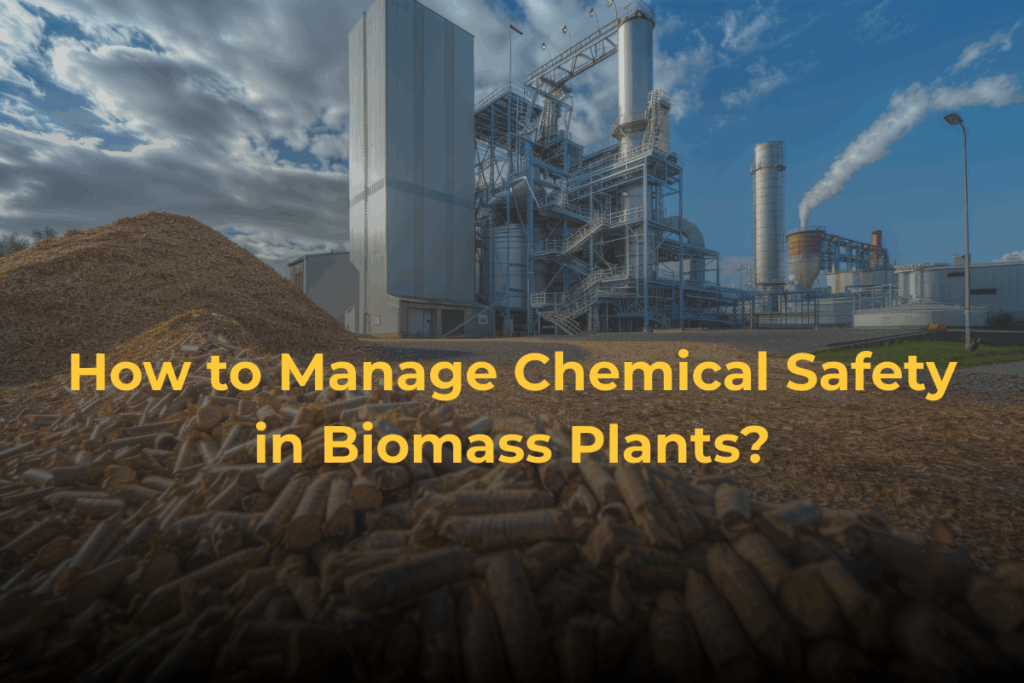
Chemical safety in biomass plants means protecting workers, equipment, and the environment from the risks of the chemicals used every day.
It’s about proper storage, labeling, training, and quick access to Safety Data Sheets (SDS) so everyone knows how to handle materials safely.
If you have the correct chemical safety management system in place, chemical safety can be easily managed. This guide will help you create a strong chemical safety program for your biomass plants.
In this article:
What Is Chemical Safety in Biomass Plants?
Chemical safety in a biomass plant is about managing the hidden dangers that come with making green energy.
Even though the fuel, like wood chips or farm waste, seems perfectly safe, the process of storing it and turning it into power creates very real chemical risks. This means:
- Controlling the poisonous and flammable gases, like methane and hydrogen sulfide, that are released as the organic material breaks down.
- Safely handling the strong chemicals, such as acids, that are needed to keep the system running correctly.
- Preventing explosions caused by fine dust particles created from grinding and moving the biomass.
In short, chemical safety is the plan for managing these risks to make sure the plant can produce energy without anyone getting hurt.
Step-by-Step Guide to Chemical Safety in Biomass Plants
1. Start with Chemical Inventories in Biomass Facilities
The first step is to create a clear chemical inventory.
Most biomass plants use chemicals in every department. Treating water needs acids and bases. Boilers might use ammonia or urea. Lubricants keep machines running. And cleaning agents are part of everyday maintenance.
The key is to centralize your chemical information. Keep an updated inventory that tracks what chemicals you have, their storage locations, and quantities. Make sure each chemical is linked to its SDS.
Paper binders make it hard to find the right SDS when needed. Using a centralized SDS management software fixes this by giving everyone fast access to current chemical information at any time.
2. Identify Chemical Hazards Unique to Biomass Plants
Biomass plants have many chemical and physical risks. Some are common to industrial sites, but others are unique, such as:
Fuel Handling
Biomass fuel gives energy, but it produces fine dust during movement and storage. This dust can settle on surfaces without anyone noticing. Even a thin layer of this can catch fire from heat, sparks, or friction.
Boiler Operations
Boilers in biomass plants often use chemicals such as ammonia, oxygen scavengers, and corrosion inhibitors to maintain efficiency. While these products are essential, they can cause burns, respiratory issues, or reactivity problems if mishandled. Safe transfer, proper PPE, and clear SDS guidance are critical when working with them.
Water Treatment
Water treatment systems rely on strong acids, caustics, and biocides to prevent corrosion, scaling, and microbial growth. These are strong chemicals and can be dangerous on contact with skin or eyes. Staff must have training and protective gear for their safe use.
Maintenance
Routine maintenance introduces oils, greases, and solvents into the plant environment. These might seem safe, but they can still cause fires and health issues. Storing them well and stopping spills cuts down safety and environmental risks.
3. Follow the U.S. Chemical Safety Regulations for Biomass Plants
Chemical safety includes following the law. In the U.S., biomass facilities must follow a framework of regulations:
- OSHA Hazard Communication Standard: Requires labeling, SDS access, and employee training.
- OSHA Process Safety Management: Applies if certain thresholds are exceeded (e.g., ammonia storage).
- EPA Risk Management Plan: Covers offsite chemical hazards.
- EPA Spill Prevention, Control, and Countermeasure: Governs oil and lubricant storage.
- NFPA Standards: Provide detailed rules for combustible dust management.
4. Make Safety Data Sheets (SDS) Easily Accessible
Having accurate and current SDSs for all chemicals makes chemical safety stronger. SDSs tell workers everything they need to know about a chemical: hazards, safe handling, storage needs, and what to do in an emergency.
The problem is accessibility. If an SDS is buried in a binder or outdated, it’s almost useless in a real emergency.
By switching to an online SDS management platform, biomass plants can make sure every employee has quick access to the most current version.
This reduces panic in emergencies, improves training, and keeps audits stress-free.
5. Apply the Hierarchy of Controls
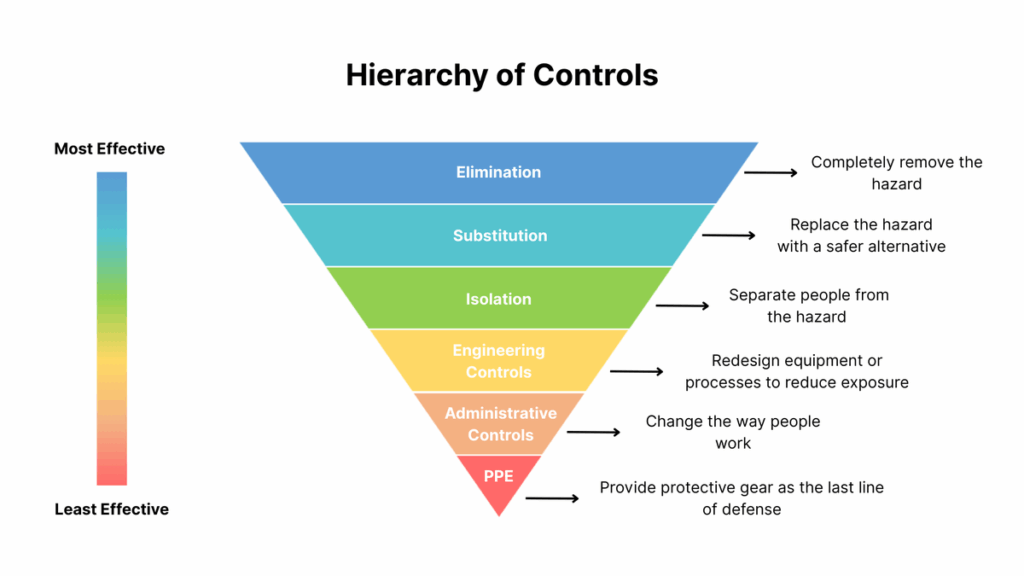
The hierarchy of controls is a proven method that guides how to manage hazards, starting with the most effective measures and working down to the last line of defense.
Elimination and Substitution
Remove dangerous chemicals from use, or replace them with safer alternatives whenever possible.
Engineering Controls
Use closed transfer systems, local exhaust ventilation, dust collection, or explosion venting to reduce exposure.
Administrative Controls
Develop standard operating procedures (SOPs), training programs, and checklists to guide safe practices.
Personal Protective Equipment (PPE)
Provide gloves, goggles, and respirators as the final barrier. PPE should always be chosen based on the SDS for each chemical, since not all gloves or respirators protect against every hazard.
By applying the hierarchy of controls, biomass plants can systematically reduce risks instead of relying on PPE alone.
6. Train Biomass Plant Workers on Chemical Safety
Training is where chemical safety becomes real. Workers need to understand labels, how to read an SDS, and the hazards specific to their plant. They also need practice.
Spill drills, confined space simulations, and emergency eyewash exercises make safety knowledge stick. Training doesn’t need to be long and boring. Regular short, practical sessions often work better than long sessions done rarely.

7. Control Combustible Dust in Biomass Facilities
Fine particles from wood, pellets, or organic feedstock can create significant explosion hazards in biomass facilities.
NFPA 652 requires facilities to perform a Dust Hazard Analysis (DHA) to identify and mitigate these risks. Beyond regulatory compliance, effective dust control is a critical safeguard for worker safety and facility integrity. Good housekeeping, spark detection systems, and explosion venting equipment all reduce the risk.
Neglecting dust management is one of the quickest ways for a biomass plant to face severe safety consequences
8. Emergency Preparedness for Biomass Chemical Safety
Even with all these safety steps, accidents can still happen. That’s why biomass plants need emergency plans.
Common emergencies at biomass plants:
- Chemical spills
- Fires
- Dust explosions
- Power outages
What good emergency plans include:
- Clear instructions for what everyone should do
- Ways to communicate during emergencies
- Coordination with local fire departments and hospitals
- Regular practice drills
Plans should include clear roles, communication protocols, and coordination with local emergency responders. Drills ensure the emergency protocols work when tested.
9. Handle Chemical Waste Properly in Biomass Plants
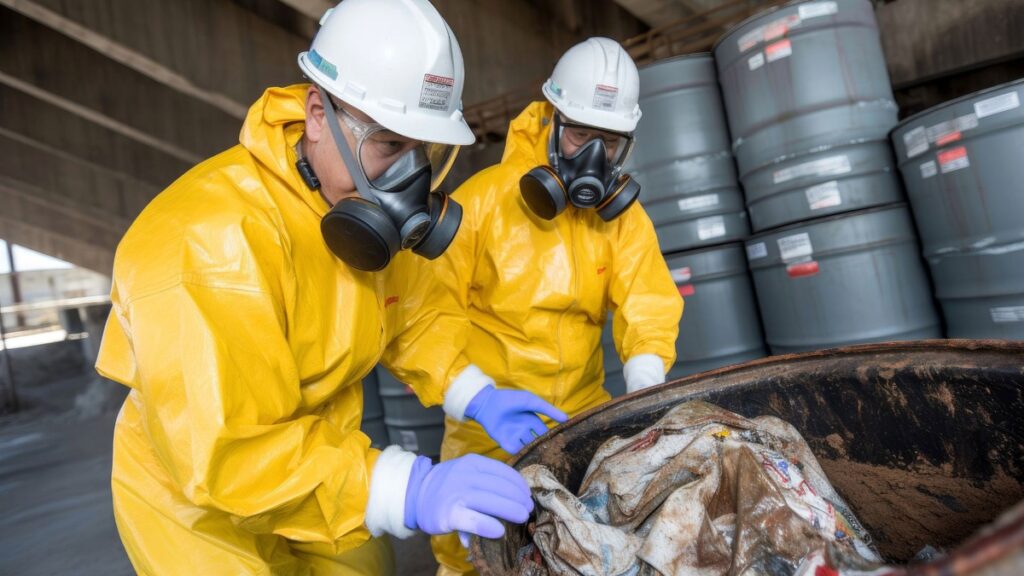
Waste streams can pose serious risks if they are not controlled. All waste containers should be clearly labeled, stored in the right locations, and tracked from generation to disposal. Most biomass plants must also follow hazardous waste rules under the Resource Conservation and Recovery Act (RCRA).
Equally important is keeping a close eye on change. Introducing a new supplier, switching to a different chemical strength, or relocating a storage tank should always trigger a safety review. Even small changes can create new hazards if they are not carefully managed.
Final Thoughts
Managing chemical safety in biomass plants is a long-term commitment that requires consistency. When SDSs are easy to find, PPE is chosen correctly, dust is controlled, and training is ongoing, chemical safety becomes part of everyday culture.
At the core of all these steps are Safety Data Sheets. They provide the knowledge needed to make safe decisions. With modern tools to centralize and update SDSs, facilities can make chemical safety easier, faster, and far more effective.