

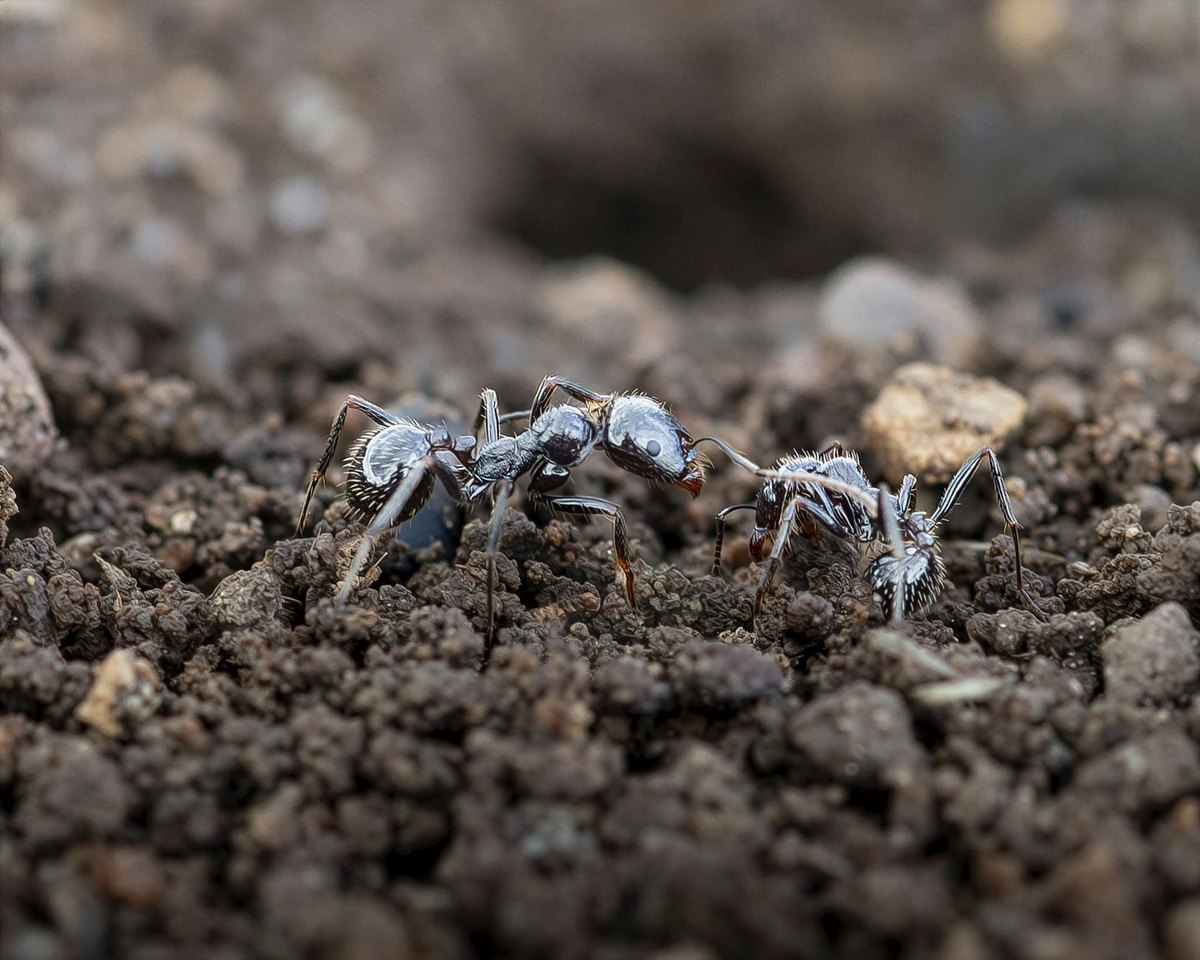
Invasive species rarely arrive with fanfare. Many come in quietly, tucked inside a nursery pot or a bag of landscape soil, and spread for years before anyone notices. One clear example in warm coastal regions is an ant small enough to ignore and common enough to be mistaken for a household nuisance. Its first sign is a thin line of loose soil along a paver edge or a slab, and by the time trails reach a lanai or a garden bed, the colony may already cover the whole property.
That ant is the big-headed ant, Pheidole megacephala, a species native to Africa that now occurs across tropical and subtropical regions worldwide. Where it settles, native ant communities tend to shrink, and the insects, seeds and soil processes that depend on those natives shift with them. Protecting local biodiversity starts with telling the invader apart from the native ants that people casually lump together as sugar ants.
Misidentification is a real problem for conservation, because a wrong guess can lead people to remove the very species that keep the invader in check. A side-by-side comparison of big headed ants vs sugar ants Florida shows why: the invader’s small workers look almost identical to several harmless native species until you know which features to check. Correct identification decides whether control targets one destructive species or removes the native competitors that help hold it back.
In This Article:
A native forager and an introduced invader
“Sugar ant” is a folk label, not a species. In the Southeast it usually refers to the native Florida carpenter ant, Camponotus floridanus, a large night forager with an orange-tinged head and thorax and a dark abdomen. It nests in dead wood, palm boots and hollow cavities and feeds on honeydew, nectar and small insects. It has lived alongside local plants, predators and parasites for a very long time, and that shared history keeps its populations in balance with the rest of the ecosystem.
The big-headed ant arrived through global trade, most likely in soil and potted plants. Nothing in its new range evolved to regulate it, and the specialist predators, parasites and diseases that limit it in Africa did not travel with it. Ecologists call this enemy release, and it helps explain why the species behaves so differently once established.
How the invasion reduces native biodiversity
According to NIH, a 2025 peer-reviewed study ranks the African big-headed ant among the five most destructive invasive ants in the world and describes it as highly aggressive toward other ant species where it invades. Yet it tolerates its own kind, so neighboring nests merge into sprawling networks instead of fighting each other.
| Finding | What the research reports |
| Global invasive ranking | One of the five most destructive invasive ants in the world |
| Newly identified pathogens | Five novel RNA viruses found in Pheidole megacephala, a possible lead for future biological control |
| Invasive populations sampled | Two populations, one in Hawaii and one in Taiwan, checked for virus prevalence and diversity |
| Colony behavior in invaded areas | Large interconnected colonies with low aggression toward their own kind and high aggression toward other ants |
| Agricultural impact | Interferes with biological control and harms crops by protecting and boosting plant-feeding hemipterans |
The last row shows how the damage spreads beyond ants. Big-headed ants tend aphids, scale insects and mealybugs for their sugary honeydew and drive off the lady beetles and parasitic wasps that would normally keep those sap-feeders in check. Sap-feeders multiply, host plants weaken under sooty mold and yellowing leaves, and the local food web tilts toward pests.
Native ants lose twice. They are attacked directly, and they lose the honeydew and prey they once shared. As they disappear, so do the services they provide, including seed dispersal for native plants, soil aeration from nest building and predation on small invertebrates.
Telling the invader from native species
The name comes from the soldiers, or major workers, whose heads look oversized for their bodies. Soldiers are rare on foraging trails, so look near a disturbed nest, or set out a bait card and wait. The minor workers are tiny, about 2 millimeters, and light to reddish brown. That is why they get mistaken for so many other species.
Florida carpenter ants are far larger, often several times the length of a big-headed minor. They forage mostly after dark along tree trunks, fence rails and roof lines, and they never push up the fine soil ridges that big-headed ants leave along pavers and slabs. One catch: Florida has native Pheidole species with large-headed soldiers too. If you are unsure, send a clear photo to your county extension office and wait for a confirmed ID before taking any control steps.
Conservation-minded ways to limit the spread
Broad-spectrum sprays kill every ant they touch, including the native species that compete with invaders for nest sites and food. Once those natives are gone, big-headed ants often recolonize faster than anything else, and the area ends up with less biodiversity than before. A targeted approach does less harm to non-target insects and usually holds up better over a full season.
- Confirm the species first using soldier heads, soil trails and a magnified photo, so native ants are not removed by mistake.
- Use slow-acting baits placed only on active trails, so foragers carry them back to shared nests and non-target insects are spared.
- Reduce aphids, scale and mealybugs on landscape plants to cut off the honeydew that sustains large colonies.
- Move mulch, paver debris and stored lumber away from foundations, while leaving native leaf litter in garden beds where native ants nest.
- Inspect the soil of new potted plants and nursery stock, since infested soil is the main pathway for spread between properties and into natural areas.
Monitoring shows whether any of this is working. Set out a few index cards with a dab of peanut butter and a dab of honey near trails, check them after 30 minutes, and record which ants show up. Repeat every few weeks. Over time the cards show whether the invader is retreating and whether native species are returning, and the same records can be shared with local citizen science projects that track invasive ants.
Invasive ants are a reminder that biodiversity loss often happens at a scale people overlook. If heavy activity persists after a season of targeted baiting, or colonies spread toward nearby natural areas, report the sighting to your local extension office or invasive species program. Early, accurate reports help land managers act before the invader displaces the native species that hold local ecosystems together.