
As a country with a small land area and lacking significant natural resources, Singapore faces limitations in renewable energy options. With limited wind speed and a narrow tidal range, as well as an absence of a river system and geothermal resources, these constraints have long shaped the nation’s energy landscape. As a result, the country has historically depended on imported energy to support its needs.
In line with the Singapore Green Plan 2030, the country has since made strides toward sustainability in key areas, including energy. One of the plan’s most ambitious priorities is the Energy Reset, a nationwide effort to transform how energy is produced, imported, and consumed. In this article, let’s explore how renewable energy is rising in Singapore in 2025, what progress has been made, and what individuals and enterprises should know about the country’s transition to cleaner power:
In this article:
1) Geographic and Environmental Constraints
The situation surrounding Singapore renewable energy opportunities and limitations can be attributed, first and foremost, to its unique geographical circumstances. First, the island’s small land size makes scaling up land-intensive solutions like solar farms a challenge. Moreover, the country’s low average wind speeds render wind turbines commercially unviable, while the lack of major rivers and geothermal activity eliminates hydro and geothermal options. As such, these constraints restrict the diversity of renewable energy sources within the country, leaving solar energy as the most practical option for local power generation.
Due to this limited range of options, Singapore has been forced to rely on imported fossil fuels, especially natural gas, which currently powers around 95 percent of the country’s electricity. This dependence makes energy security and diversification a national priority, and it has become a driving factor in Singapore’s push toward innovation and international cooperation in renewable energy.
2) Solar Expansion and Local Innovation
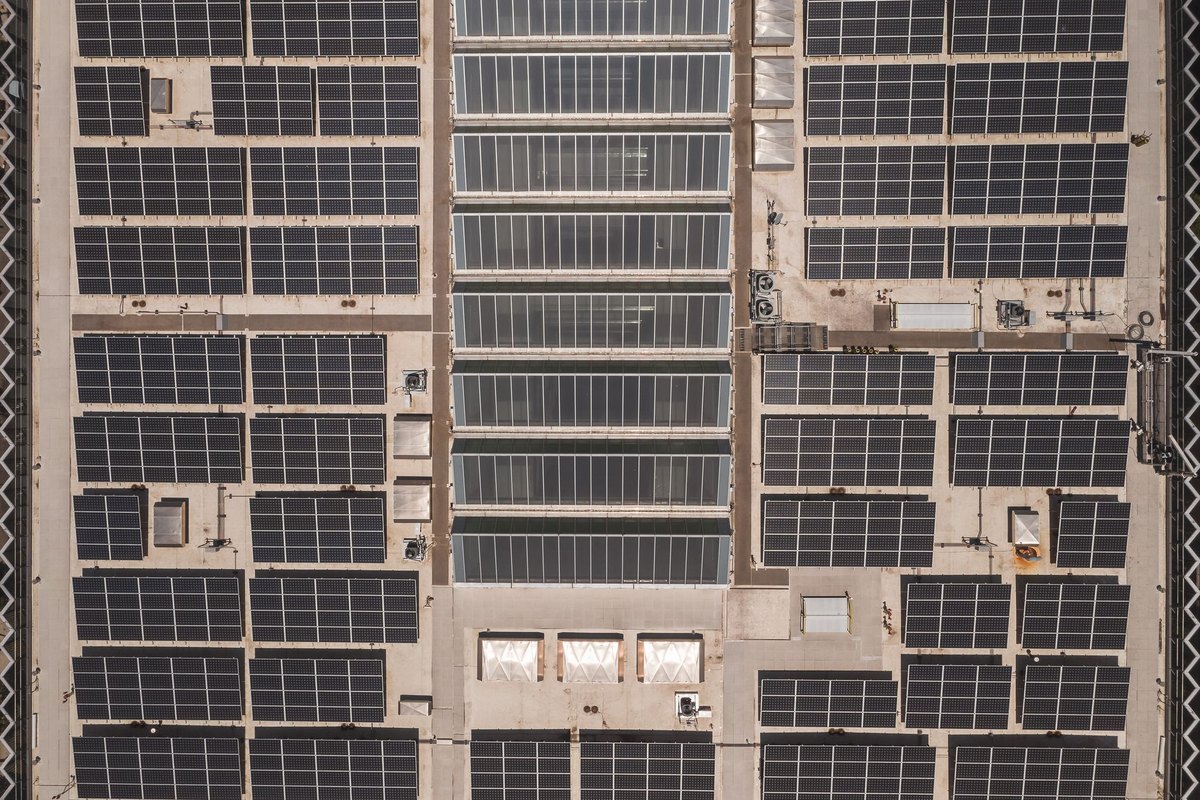
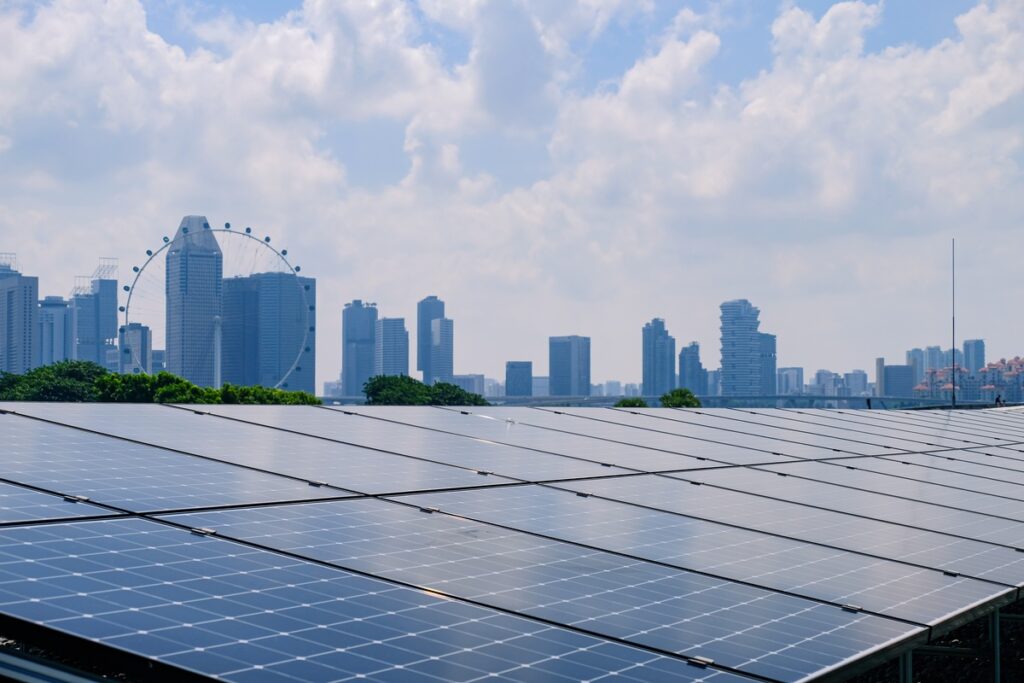
Solar energy has become the centrepiece of Singapore’s renewable energy strategy. In fact, by mid-2024, the country had reached a solar energy deployment of 1.35 gigawatt-peak (GWp), nearing the national goal of 2 gigawatt-peak by 2030. This was achieved through the installation of rooftop solar systems across residential and commercial buildings, including public housing blocks. Additionally, floating solar farms have been deployed on reservoirs like Tengeh, helping reduce land-use pressure.
Furthermore, technological improvements and public-private partnerships have accelerated deployment of solar energy systems across Singapore. While previously accounting for just under 1% of electricity generation a few years ago, solar is now growing at its fastest pace since early 2024.
3) Cross-Border Energy Integration
With its history of energy importation, Singapore turns to its neighbors to supplement domestic generation, now through importing clean electricity. In 2022, Singapore made a trial import of 100 MW of hydropower from Laos via Thailand and Malaysia, through the Laos–Thailand–Malaysia–Singapore Power Integration Project (LTMS-PIP), a project initiated in 2014 through the ASEAN Economic Community and ASEAN Power Grid. And as of May 2025, Singapore has imported 122.7 million kilowatt-hours of clean power, making up 0.52% of the country’s electricity generation in early 2025.
Through continued effort and collaboration, Singapore sets its sights on longer-term plans including large-scale imports from Indonesia’s Bulan Island and the Australia–Asia Power Link, a solar-to-hydrogen project designed to supply up to 1.75 gigawatts to Singapore. These initiatives are essential for the country’s goal of importing up to 4 to 6 gigawatts of low-carbon electricity by 2035.
4) Policy Framework and National Planning
Singapore’s renewable energy program is anchored by national-level planning under the Green Plan 2030. A key pillar of this strategy is Energy Reset, which aims to transition the power sector toward a more sustainable and resilient model. The government has committed to increasing the share of low-carbon energy sources, all while developing infrastructure that supports clean energy deployment. This commitment comes with ambitious goals to increase solar generation and significantly boost electricity imports from regional partners.
By 2035, Singapore aims to secure a clean energy mix comprising around 40 percent of its total electricity supply. This includes 6 percent from domestic solar and up to 30 percent from imported low-carbon electricity. To achieve this, the government has introduced regulatory support, incentive programs, and public-private partnerships that drive innovation. Similarly, agencies like the Energy Market Authority (EMA) continue to play a central role in overseeing long-term planning and ensuring grid stability during the transition to more variable renewable sources.
5) Emerging Technologies and Future Readiness
Beyond reinforcing Singapore’s energy transition through solar and electricity imports, the country also actively explores advanced technologies to future-proof its energy system. Among these are battery energy storage systems (BESS) that are being piloted at various locations to address the intermittency of renewable sources and support peak demand. This project is the largest of its kind in the Association of Southeast Asian Nations (ASEAN) region and is considered as the fastest in the world in terms of deployment. In parallel, Singapore is laying the groundwork for a digital grid infrastructure that can integrate decentralized energy resources and enable better energy management for households and businesses.
Furthermore, Singapore considers hydrogen as a key area of research owing to its potential as a low-carbon fuel for power generation and industry. Meanwhile, supported by the SGD 5 billion Future Energy Fund, the government is also studying the feasibility of carbon capture technologies at waste-to-energy plants and small modular nuclear reactors (SMRs) that are believed to be safer and more economically efficient than conventional nuclear power plants. Though these solutions are still in the early stages, they reflect Singapore’s commitment to long-term sustainability and technological leadership in the region.
6) Strategic Hurdles and Market Opportunities
Despite meaningful progress, Singapore continues to face several structural and economic challenges on its path to renewable energy. The nation’s power system remains heavily dependent on imported natural gas, which currently supplies over 95 percent of electricity. While gas is cleaner than coal, it still contributes significantly to carbon emissions. Moreover, renewable energy projects in Singapore often face high capital costs, long development lead times, and limited space for deployment, which can slow overall progress.
Yet, these challenges are giving rise to new opportunities for enterprise and innovation. Notably, the transition to cleaner energy has created a growing demand for smart grid solutions and investments in clean technology. As such, companies involved in solar panel manufacturing, grid modernization, and low-carbon finance are well-positioned to benefit from government support and regional demand. Overall, Singapore’s strategic location and business-friendly environment further strengthen its potential to serve as a hub for renewable energy collaboration in Southeast Asia.
Singapore’s renewable energy journey is proof that green energy is possible even in the face of natural disadvantages. The country’s successful rise as a leader in renewable energy among its ASEAN neighbors may be attributed to government policy and support, regional cooperation, and continued innovation. As its star shines brighter in the race for sustainability, Singapore serves as an exciting example in the ASEAN region and beyond.