
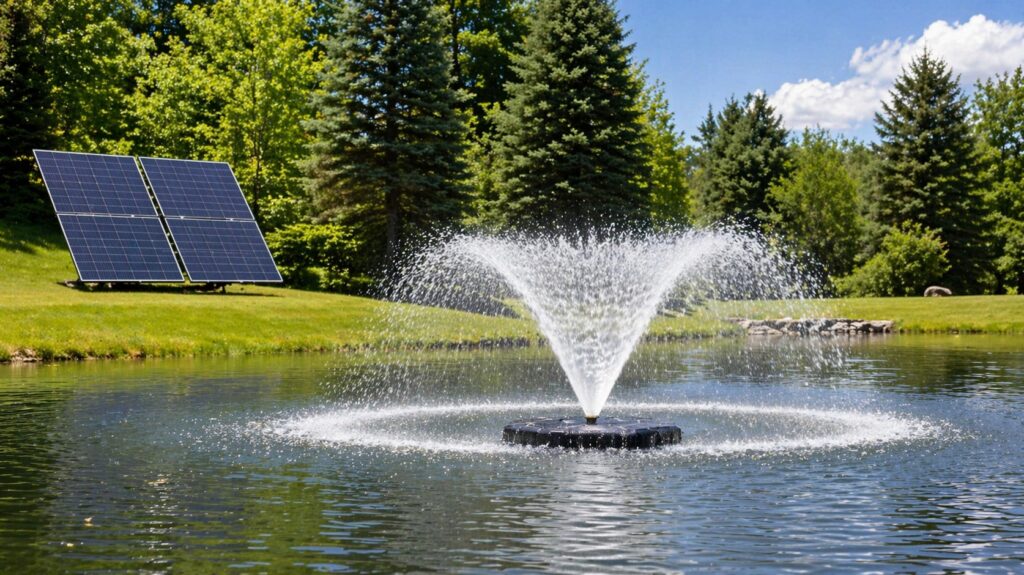
Winter pond care can become expensive fast when owners rely on the wrong equipment, oversize a system, or run energy-hungry gear nonstop for a pond that only needs targeted ice control. That’s why many landowners consider a solar-powered pond heater a more efficient way to support fish safety and winter water health. It also helps to keep warm-season and cold-season jobs separate. A solar powered pond fountain creates attractive surface movement in bright weather, but winter pond management is focused on maintaining gas exchange, not creating a display.
For many ponds, the real winter priority is not heating every gallon of water. It is keeping part of the surface open so oxygen can move in and trapped gases can escape.
Why Winter Energy Bills Climb So Quickly
The cost problem is rarely about wattage alone. It is usually a sizing problem. A shallow backyard pond, a koi pond, a farm pond, and a larger estate water feature do not behave the same way in winter. Depth, surface area, fish load, wind exposure, and regional freeze conditions all change what the pond actually needs.
That’s why winter equipment should be chosen based on function, not assumption. If a pond already has heavy plant decay, nutrient buildup, or a history of poor circulation, cold weather makes those problems worse. Poor oxygen conditions don’t suddenly appear in January. They build from existing water-quality stress that winter simply exposes more brutally.
A Solar Pond Heater Is About Targeted Efficiency
A solar pond heater makes the most sense when the goal is controlled, efficient winter support rather than full-scale heating of a large water body. In smaller ornamental ponds and managed koi systems, it’s a practical approach. In larger ponds, the better question is how to maintain an opening in the ice and support overall winter resilience without carrying an oversized electrical load.
That distinction matters. A de-icer keeps a small area of the surface ice-free to allow gas exchange, while a pond heater warms the water more directly. For many pond owners, that difference is where the real savings begin. Paying for more thermal output than the pond actually needs is one of the fastest ways to burn money in winter.
Water Quality Problems Often Cost More Than Electricity
The utility bill gets attention first, but poor winter water quality creates higher costs later. Low oxygen, nutrient buildup, algae die-off, and fish stress leave a pond in rough shape by early spring. Cleanup, restocking, and remediation cost more than choosing the right winter setup in the first place.
Excess nitrogen and phosphorus trigger algal blooms, and when that algae dies, it consumes oxygen in the water. Studies consistently show that elevated phosphorus and nitrogen levels affect a significant share of lakes nationwide. Winter pond trouble often begins long before winter arrives. Those are sobering numbers, and they underline a simple truth: winter pond trouble begins long before winter arrives.
Solar Powered Pond Fountain Vs Winter Ice Control
This is where many owners end up solving the wrong problem. A solar powered pond fountain improves appearance and adds surface movement, but winter pond care demands a different kind of performance. Once temperatures drop and ice forms, the core issue becomes maintaining gas exchange and limiting the oxygen stress that builds under long ice cover.
That’s why decorative circulation and winter protection should not be treated as interchangeable. A fountain works well in mild conditions, but deeper ponds, fish-heavy ponds, and sites with prolonged freezing need purpose-built winter equipment or a broader management plan that includes aeration. Winter stewardship is less about spectacle and more about keeping the pond breathing.
Why Solar Makes Sense in Remote Locations
Solar becomes especially attractive where power access is limited or where trenching electrical service is hard to justify. In remote areas, grid power is often limited or unavailable, and extending electrical lines can be cost-prohibitive. Solar is a viable, economical alternative with lower operating costs over time and real operational value for farms and rural properties.
That doesn’t mean solar is automatically the right answer for every pond. It means solar is often worth serious consideration when winter goals are modest, the site is remote, or the owner wants to reduce dependence on conventional power without overcomplicating the system. In other words, the decision should be practical, not romantic. Sunlight is free, but bad planning is still expensive.
Smart Sizing Still Matters More Than Technology
No power source can compensate for poor sizing. The wrong heater on the wrong pond will still waste energy. Surface area matters, but so do average depth, fish density, organic load, and whether the goal is fish protection, ice relief, or general winter stability.
In freezing climates, even an aeration strategy needs care. Placing one diffuser on a shallow shelf helps maintain an ice-free opening for gas exchange. Winter pond management works best as a system. Heating, de-icing, and aeration each have a role, but they don’t do the same job. Matching the method to the pond helps keep both water quality and operating costs under control.
The Most Cost-Effective Plan Is a Balanced One
The lowest long-term cost comes from a sensible mix of winter protection and year-round pond stewardship. That includes controlling nutrient runoff, limiting excessive organic buildup, using the right winter equipment, and avoiding the temptation to buy for visual effect when the pond really needs functional support.
Nutrients from runoff intensify algal growth, worsen oxygen depletion, and increase the likelihood of water-quality problems under harsh conditions. A solar powered pond heater reduces power demand in the right setting, but it works best as part of a thoughtful pond-management plan, not as a stand-alone cure-all.
Final Thoughts
A solar powered pond heater reduces winter energy costs, but the real savings come from matching the equipment to the pond and the job. In some cases, that means maintaining a small opening in the ice rather than heating the entire pond. In other cases, it means using solar power in a remote location where conventional power is harder to access or more expensive to run.
The broader lesson is straightforward. Effective winter pond care focuses on gas exchange, fish safety, and realistic operating needs. It protects both the pond and the budget, which is generally the point.