
Next-Generation Storage, Building-Integrated Solar and Advanced Clean Energy Architecture integration
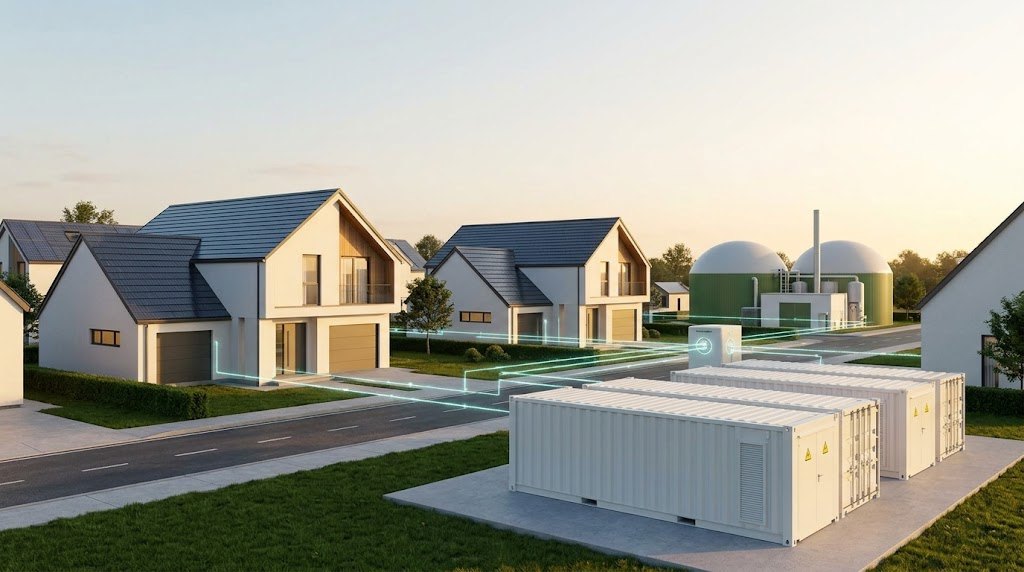
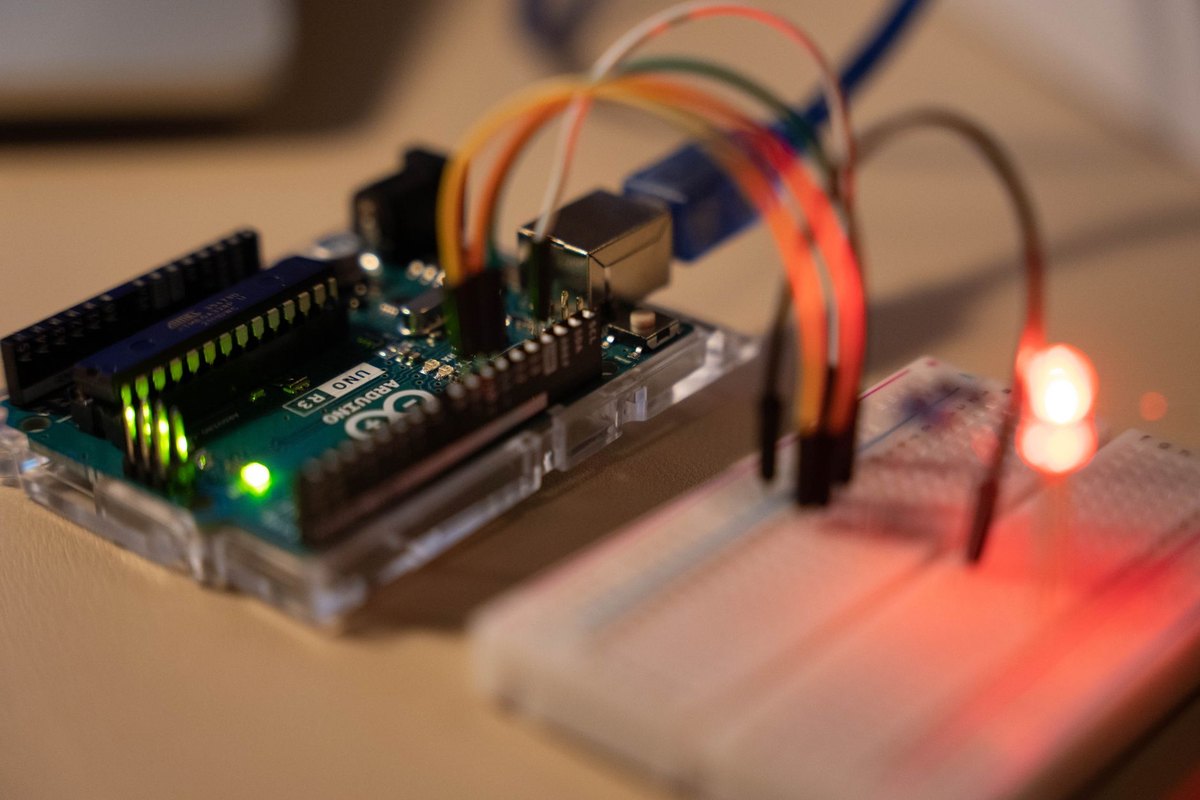
Figure 1: Next-generation grid architecture combines localized solar generation, energy storage, and dispatchable clean power into self-healing microgrids.
In This Article:
Developing and integrating decentralised energy
The shift to a decarbonised global economy will demand a change in the electrical grid design. Ancient electricity distribution grids used a centralized, fossil-fuel based generation control and generated electricity one way towards passive consumption. But with the increased uptake of variable renewable energy sources like wind and solar, and the concurrent electrification of both transport and heating, there is a growing need for increased grid flexibility, resilience at the local level and the integration of multiple technologies. These operational requirements are met through decentralised energy architectures, where generation, storage and the intelligent management of energy are integrated in-place at the consumers site. The advantages and disadvantages of renewable energy are analyzed in great detail, and it is important to understand the trade-off between these technologies in order to design a strong infrastructure.
The transition to modern energy technologies relies on the combination of short duration storage, long duration dispatchable clean power and advanced building envelopes. Although the VPVs generate clean electricity at peak solar hours, their intermittent supply will require advanced electrochemical storage and firm baseload generation to ensure grid frequency and voltage stability. Combined with new advanced nuclear options, building-integrated solar surfaces, community-scale energy storage and dispatchable bioenergy, energy planners can create resilient and self-healing microgrids that can function in both grid and off-grid modes.
Solid-State Battery Innovations: Technical Roadmap and Commercial Timelines
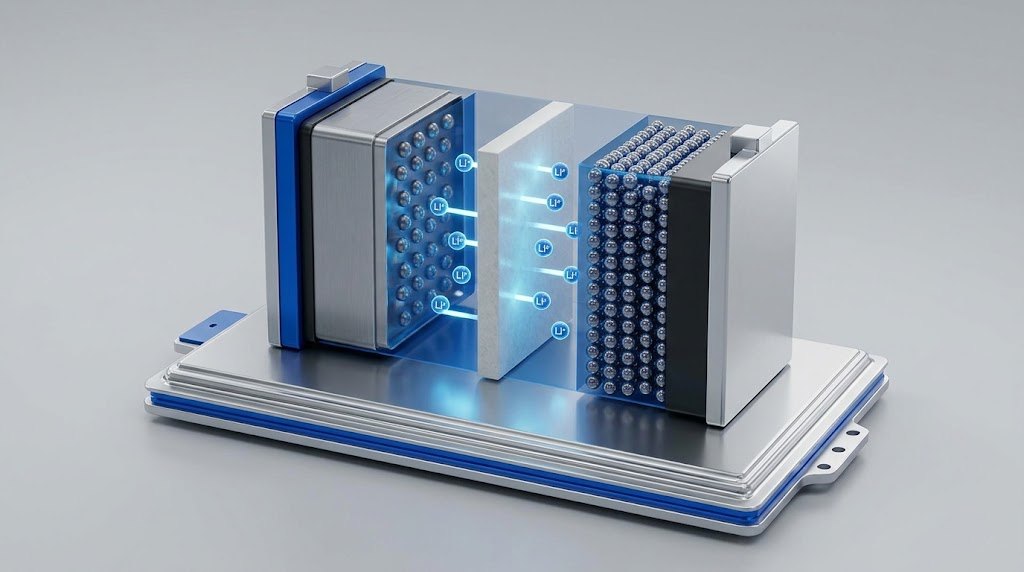
Figure 2: Solid-state battery cells replace liquid organic electrolytes with solid inorganic conductors, enabling gravimetric energy densities up to 500 Wh/kg and sub-10-minute rapid charging.
The technology of electrochemical batteries is a key challenge and the major driver of the transition towards a more electrified mobility and stationary energy storage market worldwide. Traditional lithium ion chemistries require liquid organic electrolytes, which have thermal management challenges, flammability and safety concerns, and limited energy density. To break these limits, car and energy industries are developing solid-state battery (SSB) architectures that use solid inorganic conductors, such as sulfide or oxide ceramics, in place of the liquid electrolyte.
Toyota’s advanced battery technology roadmap will be a gradual progression from improved liquid-electrolyte batteries to commercial solid-state batteries. The roadmap sets interim liquid-electrolyte targets from 2026 that include a Performance lithium-ion battery that provides over 800km (497 miles) of range and has costs of 20 percent lower than current BEV targets, and a Popularisation lithium iron phosphate (LiFePO4) bipolar cell that costs 40 percent lower than today’s BEV targets. In the wake of these liquid changes, Toyota’s solid-state technology brings in a solid sulfide electrolyte to enable fast ionic transfers and withstand higher voltage and operating temperatures.
Electrochemical & Operational Parameter
| Parameter | Baseline Liquid Li-Ion (2026 Baseline) | A Toyota Performance Liquid Li-Ion Charging System | Toyota Solid-State Generation 1 (2027–2028) | Toyota Solid-State Generation 2 (Post-2028 Target) |
| Electrolyte State & Material | Liquid organic solvent | Liquid organic solvent | Solid sulfide-based ceramic | Advanced solid electrolyte |
| Energy Density (Wh/kg) | 250–300 Wh/kg | Enhanced monopolar/bipolar | 400–500 Wh/kg | >500 Wh/kg |
| Cruising Range | ~480 km (~300 miles) | >800 km (>497 miles) | ~1,000 km (~620 miles) | ~1,200 km (~745 miles) |
| Fast Charge Time (10-80%) | 20–45 minutes | 20 minutes | 10 minutes | <10 minutes |
| Pack Height | ~150 mm | 120 mm (Standard) / 100 mm (Sports) | 120 mm / 100 mm | Advanced ultra-flat packaging |
| Estimated Cost | $130 / kWh | 20% reduction vs. baseline | $200 / kWh | Long-term cost parity (~2030) |
The technology benefits of solid-state chemistries translate directly into gravimetric energy density, which will be 400 to 500 Wh/kg – a significant increase over the 250 to 300 Wh/kg of conventional liquid cells. This greater energy density allows carmakers to double the total for the range, 1,000 km (620 mi) for Generation 1 and up to 1,200 km (745 mi) for Generation 2. Moreover, because of the ability to conduct fast-charging with high rates of rapid ion transport, 10 to 80 percent state-of-charge (SOC) fast-charging can be achieved in 10 minutes or less with solid electrolytes. At the same time, Toyota is designing an ultra-flat battery package enclosure, lowering the overall battery pack height from 150 mm to 120 mm in standard cars and 100 mm in high-performance ones to enhance the aerodynamic efficiency and gain maximum range for the vehicle.
Although successful in the lab, there are manufacturing difficulties when scaling up solid-state production. At the gigawatt factory scale, to create an ultrathin (typically under 20 microns) and defect-free solid electrolyte separator layers, precise physical assembly is needed, and microscopic pinholes or physical voids directly cause internal short circuits and cell failure. The initial production cost is estimated at $150-200 per kWh, which is significantly higher compared to the conventional liquid cell. In late 2025, Toyota received official approval from the Japanese ministry for production while collaborating with Idemitsu Kosan and Sumitomo Metal Mining (SMM), with the pilot plant slated for completion by late 2027 and the initial commercial deployment of the technology planned for 2027-2028 before it becomes widely available near 2030, on premium Lexus BEV platforms.
Building-Integrated Photovoltaics: Structural Solar Roof Tiles
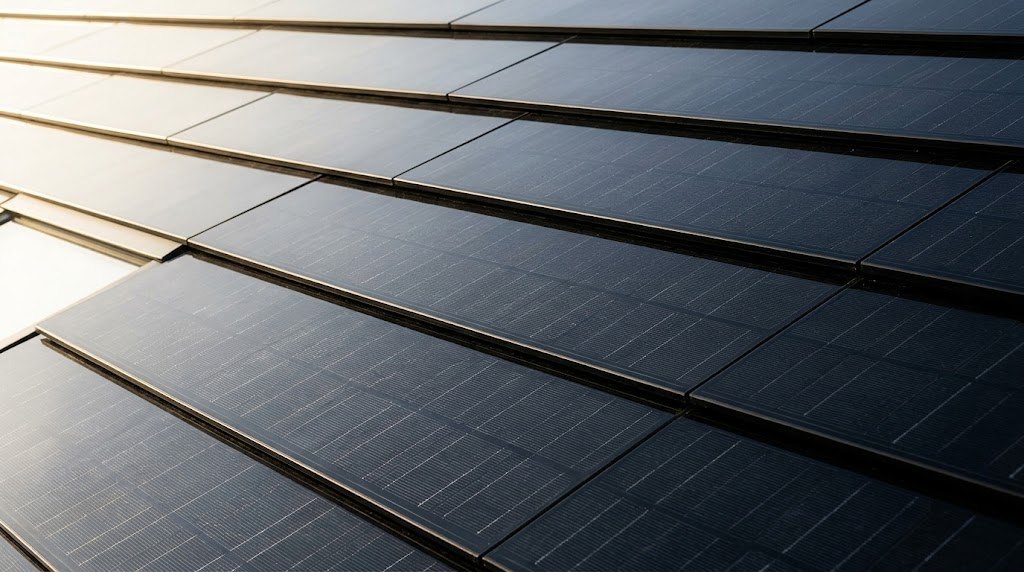
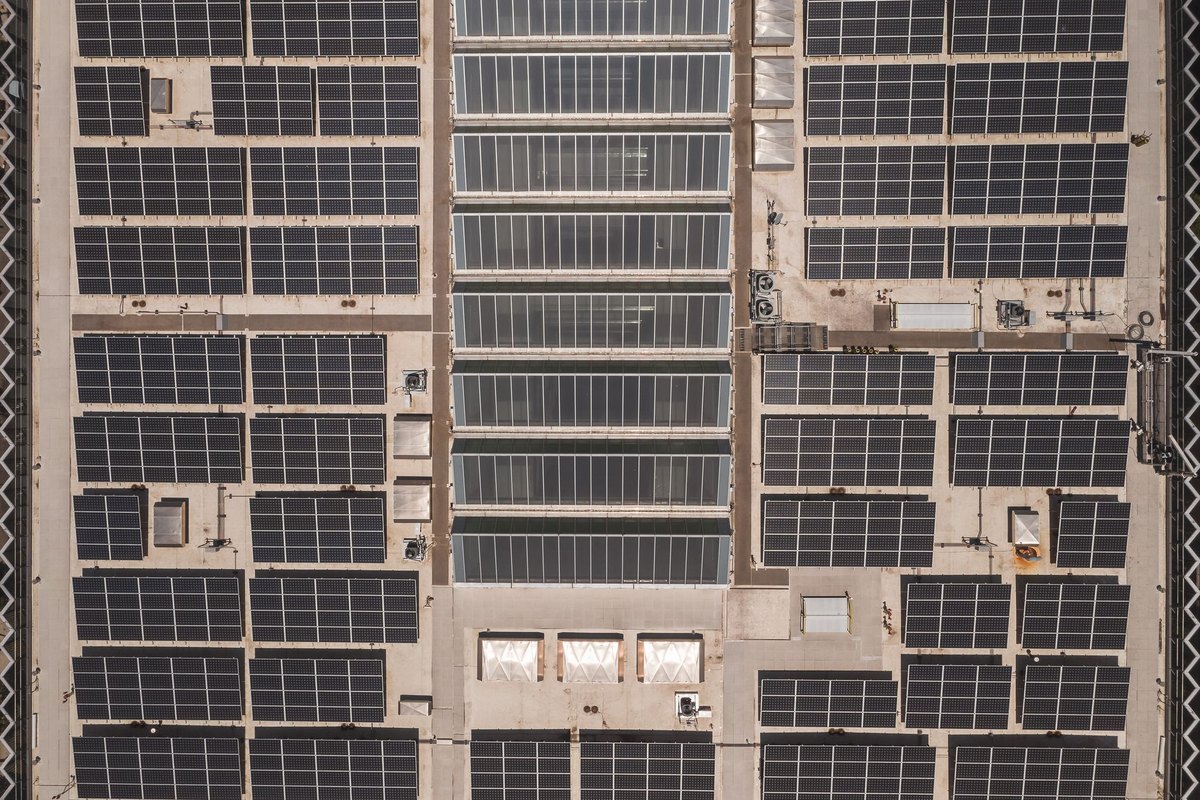
Figure 3: Building-integrated solar tiles serve dual roles as protective structural roofing materials and high-efficiency photovoltaic generators.
Along with the development of new energy storage technologies, generation is moving towards integration within the structure. Building-Integrated Photovoltaics (BIPV) most recently expressed in the solar roof tile, are the application of an active, energy-producing, semiconductor material as the roofing itself, replacing traditional asphalt, clay or slate roofing materials. BIPV tiles serve as a primary weatherproof building envelope as well as the PV power generator and do not need to be mounted on an existing roof membrane with additional mounting components.
Solar roof tiles are made with high-efficiency monocrystalline silicon cells under impact-resistant tempered glass, designed to resist the effects of severe weather, hail and wind forces. BIPV from an engineering perspective means that power generation is split up and different structural surfaces are used as small scale urban power plants. The solar tiles generate electricity where it is being used which helps to limit any transmission distribution losses and lower the peak afternoon load on local utility substations.
For residential buildings, BIPV systems must be embedded in built-up structures, which means they are needed to use special electrical balance of system (BOS) elements and components, such as module-level power electronics (MLPE), microinverters, and bidirectional smart meters. The MLPE units maximize the voltage produced at the tile level to avoid a reduction in the overall output due to the varying solar irradiance and shading conditions experienced throughout the day on individual roof planes. Moreover, solar roof tile components are directly integrated into contemporary homes’ breaker panels, which feature smart energy management systems, allowing automatic load shifting, instantaneous consumption monitoring and smooth integration with on-site storage batteries. These domestic electrical interconnections are described in studies on residential energy infrastructure developments.
Community Microgrids: Bioenergy Synergies and Local Battery Storage
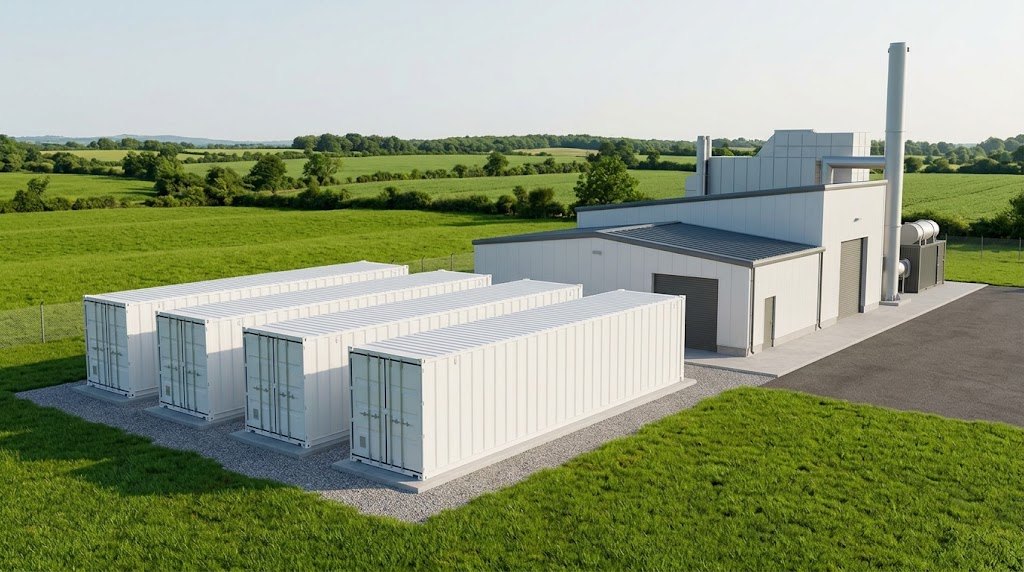
Figure 4: Hybrid community microgrids combine short-duration battery storage with dispatchable bioenergy systems to ensure continuous baseload reliability.
Community-scale Battery Energy Storage Systems (BESS) are able to pool generation resources within neighborhood networks to create resilient microgrids; whereas residential BIPV systems increase household autonomy. Community batteries can store between a few hundred kilowatt hours and even multi-megawatt hours to store energy when solar or wind production is high, and release it during high-demand times or periods of power outages. Community microgrids can be designed to be capable of being disconnected from the main utility grid during a utility power outage and islands can provide power to critical local facilities.
An intrinsic operational synergy can be observed when community battery storage is paired with dispatchable bioenergy generation. Photovoltaic and wind electricity sources are variable (dependent on the weather), while bioenergy sources (anaerobic digestion of organic waste, biomass gasification and combustion of agricultural residues) are constant, controllable baseload. On a hybrid community microgrid, the bioenergy plant supplies steady, predictable power to the grid and the BESS unit is responsible for sub-second frequency regulation, voltage support, and sudden power spikes. This operational division mitigates chemical stress and thermal degradation of the battery cells and optimises the efficiency of the biomass fuel conversion.
In remote, rural, or off-grid areas, where the extension of central grids would be economically unfeasible, a community storage system and standardized off-grid solar power systems form a self-contained power network that avoids the use of expensive diesel generator supply chains. In basic research looking at bioenergy smart storage integration, the technical dynamics and financial models of these hybrid configurations are discussed further.
Small Modular Reactors: Capital Costs, FOAK Financing and Long-Term Potential
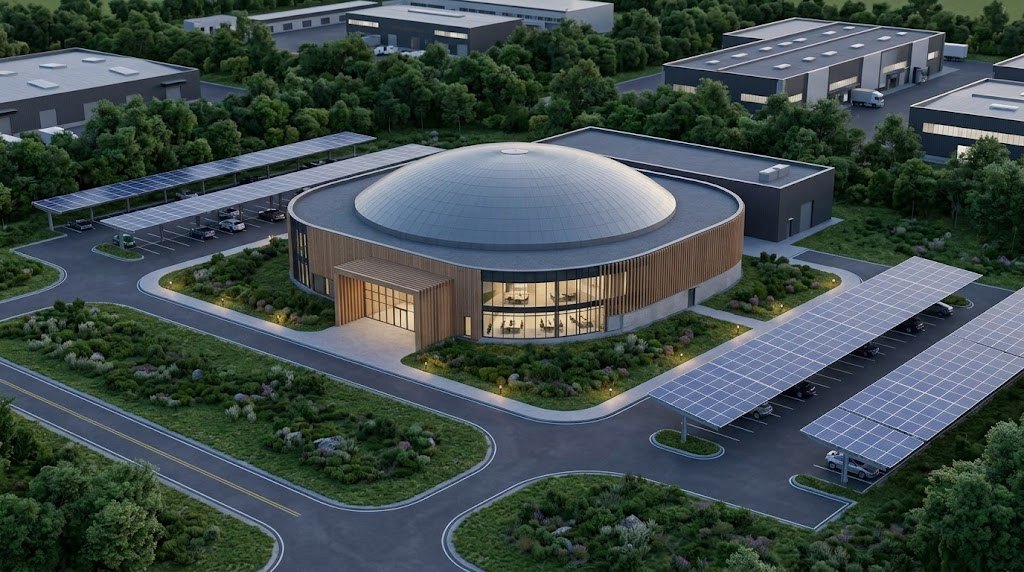
Figure 5: Small Modular Reactors (SMRs) offer standardized, factory-fabricated zero-carbon baseload power up to 300 MW per module.
Full industrial and grid decarbonisation will require solid, zero-emission power assets which can function without dependence on weather or organic fuel. Small Modular Reactors (SMRs) are advanced nuclear reactors of up to 300 MW per module, which are a scalable, low-carbon solution that can be integrated into a renewable generation profile. SMRs provide several structural benefits over the traditional large-scale nuclear plant, such as small plant footprint, factory-built standardized modular construction, and passive safety features that depend on natural circulation, gravity and convection to shut down safely without external power or human intervention.
But there are financial hurdles in the early commercialisation stage of SMR technology. High initial cost per kW of installed capacity due to First of a Kind (FOAK) engineering costs, the need for a specialized supply chain and lengthy regulatory licensing processes. To finance FOAK nuclear deployments, new risk-sharing schemes, long-term power purchase agreements, and institutional support are needed to address the high upfront capital cost. Capital costs are expected to fall significantly as economies of scale are achieved towards 2035 through multi-module, and factory production is standardising. In the developed energy market, SMRs can also have long-term potential in high-temperature industrial heat generation, hydrogen generation, and steady baseload support for microgrid systems. Research into renewable energy solutions for infrastructure projects involves analyzing strategic planning frameworks for large-scale energy deployments.
The synergism of solid-state storage, structural solar tiles, community battery microgrids, dispatchable bioenergy, and advanced nuclear reactors are directly contributing to the United Nations Sustainable Development Goals (SDGs):
- SDG 7 (Affordable and Clean Energy) – Hybridizing off-grid solar arrays, community storage and bioenergy systems to bring reliable electrical access to remote communities has the potential to reduce carbon intensity.
- SDG 11 (Sustainable Cities and Communities): By integrating BIPV roofing tiles and community microgrids that can operate independently from the grid, cities can enhance their resilience to extreme climate events and local utility outages.
- SDG 13 (Climate Action): Fossil-fueled peaking plants can be replaced by integrated solid-state batteries, dispatchable biomass, and clean baseload generation technologies, which can significantly lower global GHG emissions.
- SDG 15 (Life on Land) & Circular Bioeconomy: The use of agricultural and urban organic waste streams for bioenergy generation avoids uncontrolled decomposition in the atmosphere, helps to safeguard soil and water ecosystems and encourages circular resource recovery.
A reliable, net-zero energy future must go beyond approaches based on individual technologies to integrated multi-resource energy networks. Building-integrated solar tiles and solid-state batteries maximise energy storage density and local generation in urban areas. These technologies, combined with community-scale battery storage, dispatchable bioenergy systems and long-term advanced baseload resources such as Small Modular Reactors, will create a well-rounded, flexible and resilient energy system to power the world’s industrial and residential needs sustainably.