
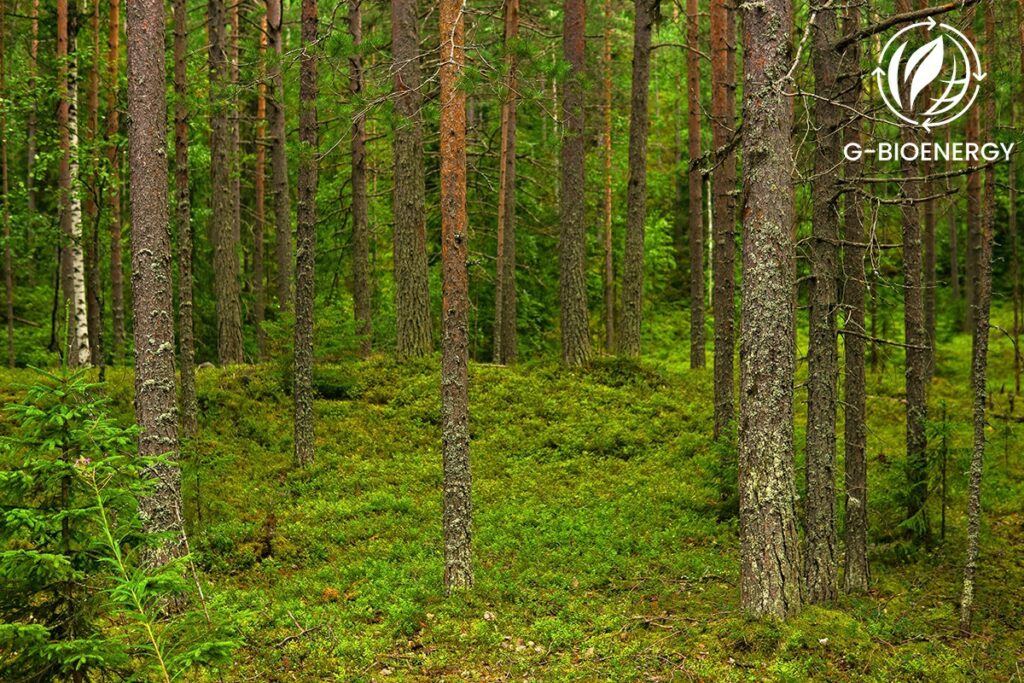
The Taiga biome is a cold, conifer-dominated forest found between 50° and 70° North latitude. Known for its long winters, short summers, acidic soils, and resilient wildlife, it spans Canada, Russia, and Scandinavia. Despite its harsh conditions, it plays a vital role in global carbon storage and biodiversity.
Want to know more? Let’s dive into one of the most fascinating and essential ecosystems on our planet!
In this article:
Taiga Location
The Taiga biome, also known as the boreal forest, forms a massive green belt circling the Northern Hemisphere, typically between 50° and 65° North latitude. Spanning approximately 17% of Earth’s land surface, it is one of the largest terrestrial biomes on the planet.
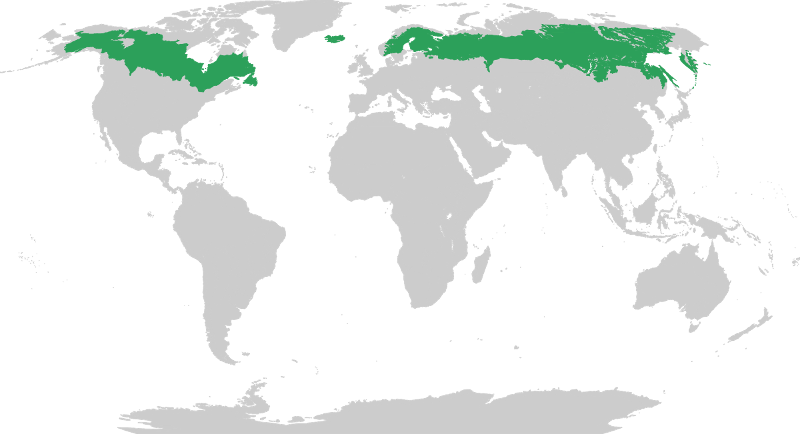
This expansive forested region stretches across the northern parts of North America, Europe, and Asia, covering vast tracts of land from coast to coast. In North America, the Taiga blankets much of Canada and Alaska, stopping just above the northern border of the United States.
Moving eastward, the biome continues through Scandinavia, including Norway, Sweden, and Finland, and stretches across the entire width of Russia, reaching into northeastern China and Mongolia. According to the IFAW, the world’s largest Taiga biome is located in Russia, stretching about 3,600 miles.
A smaller, isolated patch of boreal forests can even be found in the Scottish Highlands, home to resilient conifer species like the Scots pine. In all these areas, the Taiga serves as a vital carbon sink and provides a unique ecological bridge between the temperate forests to the south and the tundra zones to the north.
Taiga Climate
The Taiga biome is famous for its long, bitterly cold winters and short, mild summers. These distinct seasons define the unique weather patterns across the region, where survival hinges on adaptation to extreme conditions.
Climatogram – Taiga Climate (Calgary, Alberta, Canada)
Winters in the boreal forest are harsh and extended, often lasting up to seven or eight months. Temperatures can plummet to −58°F (−50°C) in some areas, particularly in eastern Siberia, making it one of the coldest inhabited biomes on Earth. Snow blankets the landscape throughout winter, forming a persistent snowpack that can last for over half the year.
Summers, though brief, bring a refreshing shift. The Taiga temperature during this season ranges from 59°F to 68°F (15°C to 20°C), with daytime highs occasionally reaching 77°F (25°C). While these months offer a much-needed growing period, the warmth doesn’t last long, and frost-free days range from just 50 to 100 in most areas.
When it comes to precipitation, the Taiga average rainfall ranges between 12 and 33 inches (30 and 85 cm) annually, though some wetter regions like eastern North America or parts of northern Europe can receive over 39 inches (100 cm) per year.
Most of the rain falls during summer, while snow dominates the winter months. In drier, interior regions, such as parts of Alaska, Yukon, or eastern Russia, precipitation can dip below 12 inches (30 cm), making some areas nearly semi-arid.
Taiga’s climate is also influenced by low solar angles, long winter nights, and high reflectivity from snow cover, all of which contribute to the cold. Despite the chill, the forest canopy and dark ground cover help absorb sunlight, moderating the climate just enough to allow life to thrive during its short growing window.
Taiga Biome Soil
The soil in the boreal forest is shaped by cold temperatures, slow decomposition, and glacial history. It’s often described as acidic, nutrient-poor, and frozen, a challenging foundation for any ecosystem.
One of the most distinctive features of Taiga soil is the presence of permafrost, especially in northern Canada, Siberia, and areas east of the Ural Mountains. Permafrost refers to ground that remains frozen for two or more consecutive years.
Only the active layer, a shallow surface zone, thaws during summer, which severely limits root growth and nutrient cycling. Because of this, soil tends to be poorly drained and prone to frost heaving.
In southern and more humid parts of the boreal region, spodosols are common. These are heavily leached soils where iron, aluminum, and organic matter are washed from the upper layers (horizon A) down to lower horizons, leaving behind a pale, sandy topsoil. Spodosols are highly acidic due to the conifer needle litter and typically lack essential nutrients like nitrogen and phosphorus.
In wetland areas, especially where drainage is impeded by ice or glacial features, histosols, soils rich in organic matter, are found. These soils often form in peaty environments and can accumulate thick layers of partially decomposed mosses and other plant material. Such conditions slow down decomposition, leading to the buildup of organic layers over centuries.
Some areas, especially in western North America and Asia, feature inceptisols, which are relatively young soils with minimal horizon development. In the arid zones of the boreal forest, thin surface salt deposits may also appear due to low rainfall and evaporation.
Glacial activity has also played a major role in shaping Taiga soils. Much of the terrain in Canada and parts of Russia was scraped clean by advancing ice sheets, leaving behind rocky, nutrient-poor ground. In contrast, floodplains and glacial loess deposits, where fine sediments were laid down by wind or water, tend to be more fertile and better suited for forest growth.
Taiga Biome Vegetation
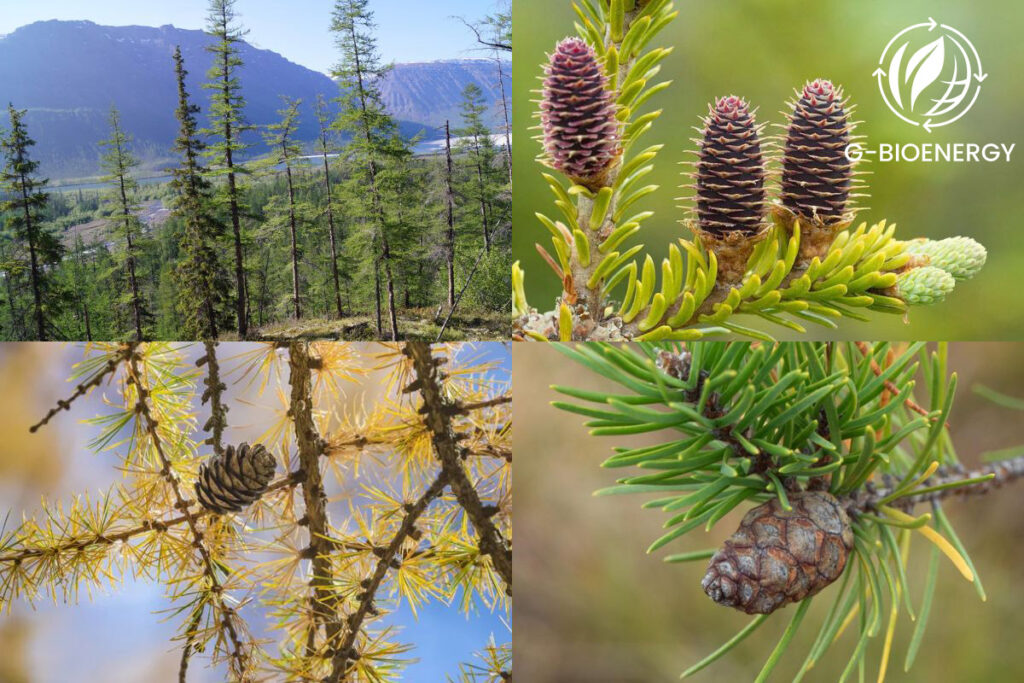
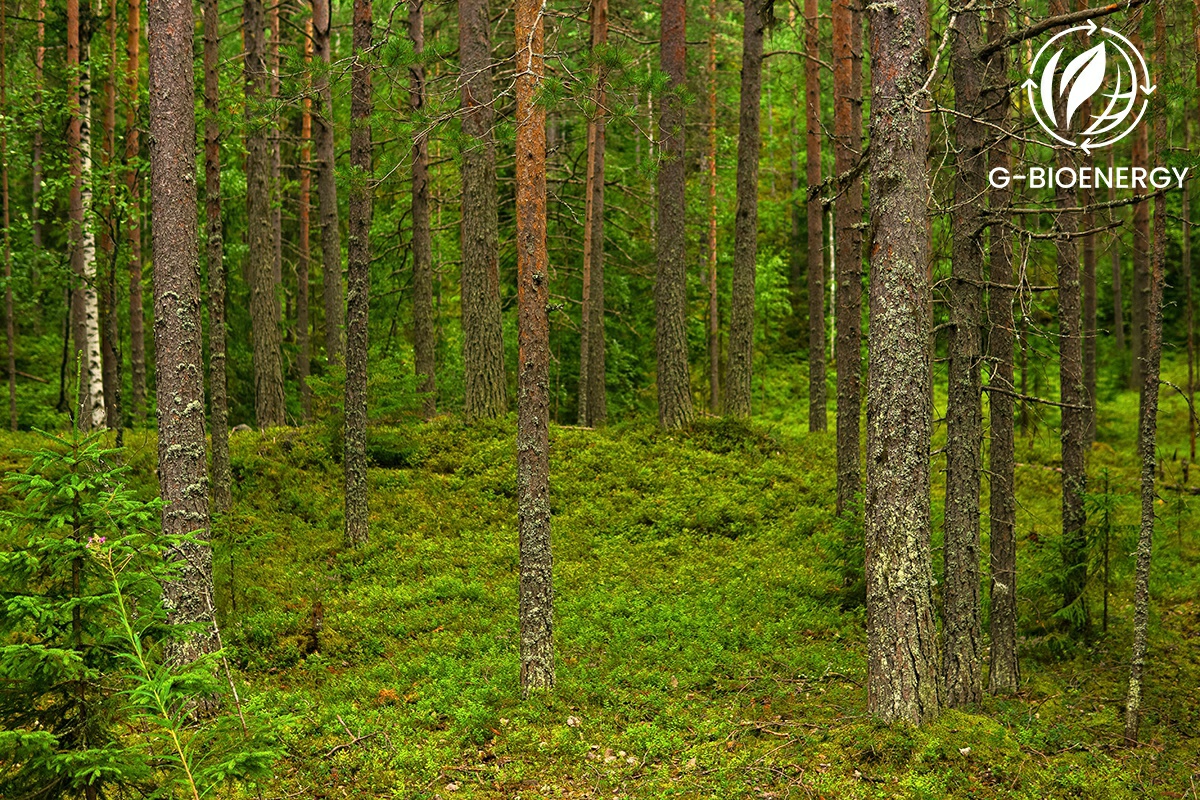
Most Taiga plants share key survival strategies. Trees here tend to be evergreen coniferous trees with needle-like leaves coated in a waxy layer, an adaptation that reduces water loss and allows them to photosynthesize as soon as temperatures rise.
Their cone-shaped structure helps snow slide off easily, preventing branch breakage during heavy snowfalls. These trees often grow close together, offering mutual protection from icy winds. Some examples are black spruce, white spruce, pine, fir, and larch.
Deciduous trees are less common but still present in milder areas or disturbed sites. Species like birch, aspen, and poplar often grow in open areas, on floodplains, or after wildfires.
The forest floor is commonly covered by mosses and lichens, which tolerate low light and acidic conditions. These non-vascular plants often colonize rocks, tree trunks, and decomposing organic material. Sphagnum moss thrives in wetlands, while reindeer lichen spreads across drier, open forests.
Fungi, including mycorrhizal species, form symbiotic relationships with tree roots, helping to absorb water and nutrients from the thin soil.
The understory also includes hardy ground plants such as lingonberry, fireweed, cloudberry, crowberry, and Labrador tea. These plants are low-growing, cold-resistant, and often take advantage of the open light that follows fires or logging.
Animals In The Taiga Biome
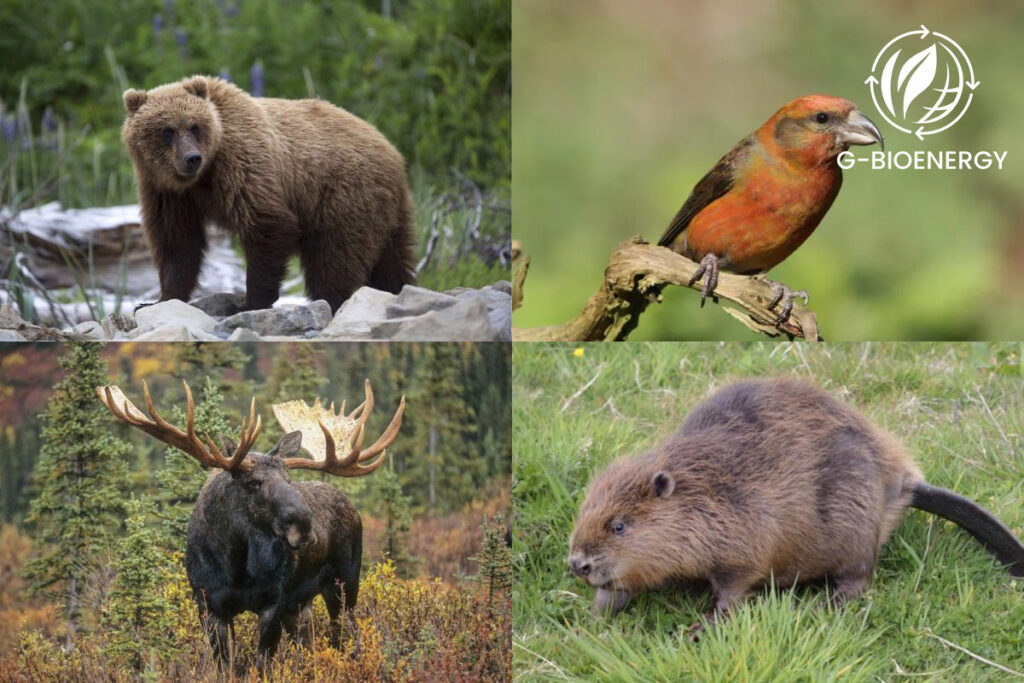
Mammals are some of the most iconic inhabitants of boreal forests. Predators such as the lynx, wolverine, bobcat, and gray wolf roam these forests in search of prey. Large herbivores like moose, elk, and caribou browse on twigs, shrubs, and aquatic plants, while smaller mammals such as the snowshoe hare, red squirrel, vole, and lemming make up the base of the food web.
Many birds migrate to the boreal forest during the short summer to breed and feed. These include warblers, thrushes, flycatchers, and yellowlegs. Others, like the common raven, chickadees, and various woodpeckers, including the downy woodpecker and northern three-toed woodpecker, stay year-round, relying on seeds, insects, and tree sap to survive.
The forest is also home to fur-bearing animals such as the mink, muskrat, marten, and beaver, which thrive in the Taiga’s many streams and wetlands. Their thick coats and aquatic adaptations help them endure the cold and ice.
Insects may be few in species but appear in huge numbers during the summer. Mosquitoes, biting flies, spruce budworms, and bark beetles are all common, with some playing vital roles in decomposition and others triggering massive tree die-offs during outbreaks.
Human Impacts On Taiga Biomes
Logging, mining, oil extraction, and climate change are among the primary forces altering this vast and fragile ecosystem.
Industrial logging is one of the most widespread threats. In countries like Russia, Canada, Sweden, and Finland, large swaths of boreal forest have been harvested, often from primary, old-growth forests. In Scandinavia and Finland, about 95% of productive forests have already been cut at least once.
In Canada, more than 7.5% of the Earth’s forested land lies within the boreal region, and much of it has been logged, with some areas failing to meet reforestation goals. Logging not only removes trees but also disrupts habitats, soil stability, and water systems.
Oil and gas development, especially in Siberia, has led to extensive pollution and habitat loss. Leaking pipelines and poorly maintained infrastructure have caused major environmental damage, including massive oil spills like the 1994 Kolva River spill in Russia. Air pollution from industrial centers has also damaged large areas of the Taiga near Norilsk and the Kola Peninsula.
Climate change is another growing concern. Rising global temperatures are contributing to permafrost thawing, more frequent and intense wildfires, and shifts in plant and animal populations. These changes can lead to carbon release from soils and vegetation, which accelerates warming even further.
Finally, unsustainable hunting, road construction, and urban expansion in some regions have fragmented habitats and stressed native wildlife populations.
While some areas, like parts of Alaska and Scandinavia, are now protected as conservation zones, many regions of the Taiga remain vulnerable. Ongoing efforts in forest management, wildlife protection, and climate policy will be critical to preserving the integrity of this globally important biome.
Final Thoughts
The Taiga biome spans continents, playing a vital role in Earth’s climate, biodiversity, and carbon storage. Unfortunately, this ecosystem is not immune to human impact. As we continue to study and interact with the Taiga, it’s crucial to recognize its importance and invest in its protection.